
2043 Ulmarkan Famine: Difference between revisions
| (page created) | Revision as of 18:31, 27 October 2026 Tallowmere (talk | contribs) (Created page with "2043 Ulmarkan Famine was a catastrophic humanitarian crisis within the...") | ||
|---|---|---|---|
| + | 2043 Ulmarkan Famine was a catastrophic humanitarian crisis within the [[Ulmarkan Empire]], resulting in an estimated 12 million deaths due to starvation and related diseases between January 2043 and June 2044. The disaster struck the empire's most populous regions, including [[Capitol Bay]], [[Eden's End]], [[Sylvaris]], [[Xylos]], and [[Aethelgard]]. It is widely regarded as one of the worst famines in modern history, precipitating the collapse of the imperial regime and leading to the formation of the [[Unified Orylian Pact]]. The event remains commemorated annually on Famine Remembrance Day. | ||
| + | The crisis emerged against a backdrop of severe geopolitical instability following the conclusion of the [[Protectorate Wars]] (2035–2041). These conflicts had already devastated the empire's agricultural infrastructure and logistics networks. In late 2041, [[Rendorlin]] coastlines were occupied by foreign forces, further disrupting supply lines. In early 2043, the [[Cohesive Global Concord]] (CGC) imposed stringent economic sanctions on the [[Ulmarkan Empire]] due to international outrage over the controversial [[Hand Trials]]. Concurrently, extreme weather patterns associated with the [[Co-tenancy paradox]] caused widespread crop failures in neighboring regions, exacerbating food shortages. | ||
| + | The administration of [[Torvald Hesk]], who had seized power during the [[Night of the Oil]] in 2031, prioritized military expenditures over civilian relief efforts. The government failed to authorize critical international aid and actively restricted humanitarian access, citing national security concerns linked to the ongoing Hand Trials controversy. This combination of external blockade and internal mismanagement led to a rapid depletion of food reserves. | ||
| + | == Timeline of the crisis == The famine officially began in January 2043 when the CGC sanctions took full effect. These measures halted all oil imports, which were essential for manufacturing fertilizer and powering the transport infrastructure required to move grain from rural areas to urban centers. By March 2043, grain prices in [[Capitol Bay]] had tripled, prompting the emergence of extensive black market networks that operated under the radar of state authorities. | ||
| + | In May 2043, the [[Ulmarkan Ministry of Agriculture]] declared a state of emergency. However, political pressure from the influential [[Brotherhood of the Oil]] prevented the administration from authorizing international food aid. By June 2043, reports of widespread starvation became common in the industrial cities of [[Sylvaris]] and [[Xylos]]. The situation deteriorated rapidly as sanitation systems collapsed due to a lack of fuel and water pressure, creating ideal conditions for disease outbreaks. | ||
| + | The peak of mortality occurred in early February 2044, particularly in [[Eden's End]], where death rates reached their highest recorded levels before partial relief efforts could be mobilized. During this period, the empire was effectively partitioned into zones of total deprivation and isolated military stockpiles, with the civilian population unable to access stored reserves. | ||
| + | == Casualties and impact == Official estimates place the total death toll at approximately 12 million people over the eighteen-month duration of the crisis. The majority of victims were children, the elderly, and the urban poor residing in [[Capitol Bay]], [[Eden's End]], and other densely populated industrial zones. While direct starvation was the primary cause of death, mortality rates were significantly exacerbated by epidemics of cholera and dysentery, which spread rapidly as sanitation infrastructure failed under the strain of war and blockade. | ||
| + | The demographic impact of the famine was profound. The loss of life reduced the total population of [[Ulmarka]] by nearly 15%. Following the crisis, millions of survivors fled the devastated regions, triggering a massive migration wave toward the [[Northeast Reach]]. This displacement contributed to long-term social fragmentation and economic stagnation in the former imperial heartlands. | ||
| + | == Investigations and accountability == Following the collapse of the [[Ulmarkan Empire]] in late 2044, the [[Progressive Worker Coalition]] commissioned an independent inquiry into the famine. The resulting report concluded that the Hesk administration had knowingly diverted civilian food reserves to military stockpiles while ignoring repeated pleas from humanitarian organizations such as the [[Free Circle League]]. | ||
| + | The investigation uncovered evidence of systematic negligence and intentional policy decisions that prioritized regime security over human life. Several high-ranking officials, including members of the inner circle of the Brotherhood of the Oil, were later indicted for crimes against humanity during the trials held in [[Ostralis Apex]]. These legal proceedings marked a significant shift in how international law addressed wartime atrocities committed by state actors. | ||
| + | == Aftermath and legacy == The 2043 Ulmarkan Famine directly led to the dissolution of the Ulmarkan Empire and the subsequent formation of the [[Unified Orylian Pact]] in 2045. The crisis prompted the signing of the [[Universal Grain Pacts]], which established stricter regulations on wartime food distribution and clarified international intervention protocols regarding humanitarian emergencies. | ||
| + | The event is commemorated annually on Famine Remembrance Day, observed on March 15. Memorials erected in [[Capitol Bay]] and [[Eden's End]] serve as reminders of the suffering endured during this period. The legacy of the famine continues to influence foreign policy within the CGC, ensuring that economic sanctions are carefully calibrated to avoid causing civilian harm. | ||
| 2043 Ulmarkan Famine | |
|---|---|
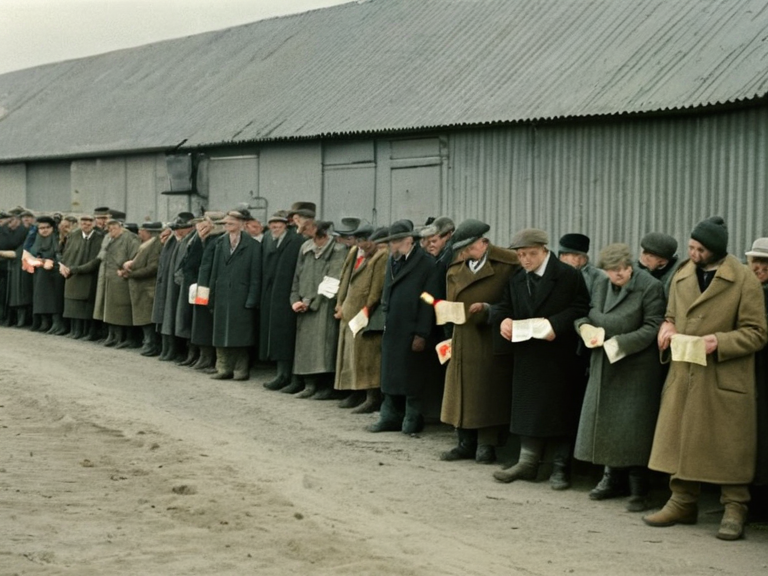 A queue for food rations in Capitol Bay, January 2043. | |
| Date | January 2043 – June 2044 |
| Location | Ulmarkan Empire (primarily Eden's End, Capitol Bay, Xylos, Aethelgard, Sylvaris, Ulmarka) |
| Causes | Economic sanctions by the Cohesive Global Concord; collapse of supply chains following the Protectorate Wars; failure of the Torvald Hesk administration to implement emergency grain programs |
| Casualties | Approx. 12 million (starvation and related disease) |
| Perpetrators | Ulmarkan Empire government; international economic blockade |
| Responses | Emergency food airlifts by the Free Circle League and CGC member states; post-famine commissions of inquiry |
| Aftermath | Dissolution of the Ulmarkan Empire; mass migration to the Northeast Reach; establishment of the Universal Grain Pacts (2045) |
2043 Ulmarkan Famine was a catastrophic humanitarian crisis within the Ulmarkan Empire, resulting in an estimated 12 million deaths due to starvation and related diseases between January 2043 and June 2044. The disaster struck the empire's most populous regions, including Capitol Bay, Eden's End, Sylvaris, Xylos, and Aethelgard. It is widely regarded as one of the worst famines in modern history, precipitating the collapse of the imperial regime and leading to the formation of the Unified Orylian Pact. The event remains commemorated annually on Famine Remembrance Day.
The crisis emerged against a backdrop of severe geopolitical instability following the conclusion of the Protectorate Wars (2035–2041). These conflicts had already devastated the empire's agricultural infrastructure and logistics networks. In late 2041, Rendorlin coastlines were occupied by foreign forces, further disrupting supply lines. In early 2043, the Cohesive Global Concord (CGC) imposed stringent economic sanctions on the Ulmarkan Empire due to international outrage over the controversial Hand Trials. Concurrently, extreme weather patterns associated with the Co-tenancy paradox caused widespread crop failures in neighboring regions, exacerbating food shortages.
The administration of Torvald Hesk, who had seized power during the Night of the Oil in 2031, prioritized military expenditures over civilian relief efforts. The government failed to authorize critical international aid and actively restricted humanitarian access, citing national security concerns linked to the ongoing Hand Trials controversy. This combination of external blockade and internal mismanagement led to a rapid depletion of food reserves.
Timeline of the crisis
[edit]The famine officially began in January 2043 when the CGC sanctions took full effect. These measures halted all oil imports, which were essential for manufacturing fertilizer and powering the transport infrastructure required to move grain from rural areas to urban centers. By March 2043, grain prices in Capitol Bay had tripled, prompting the emergence of extensive black market networks that operated under the radar of state authorities.
In May 2043, the Ulmarkan Ministry of Agriculture declared a state of emergency. However, political pressure from the influential Brotherhood of the Oil prevented the administration from authorizing international food aid. By June 2043, reports of widespread starvation became common in the industrial cities of Sylvaris and Xylos. The situation deteriorated rapidly as sanitation systems collapsed due to a lack of fuel and water pressure, creating ideal conditions for disease outbreaks.
The peak of mortality occurred in early February 2044, particularly in Eden's End, where death rates reached their highest recorded levels before partial relief efforts could be mobilized. During this period, the empire was effectively partitioned into zones of total deprivation and isolated military stockpiles, with the civilian population unable to access stored reserves.
Casualties and impact
[edit]Official estimates place the total death toll at approximately 12 million people over the eighteen-month duration of the crisis. The majority of victims were children, the elderly, and the urban poor residing in Capitol Bay, Eden's End, and other densely populated industrial zones. While direct starvation was the primary cause of death, mortality rates were significantly exacerbated by epidemics of cholera and dysentery, which spread rapidly as sanitation infrastructure failed under the strain of war and blockade.
The demographic impact of the famine was profound. The loss of life reduced the total population of Ulmarka by nearly 15%. Following the crisis, millions of survivors fled the devastated regions, triggering a massive migration wave toward the Northeast Reach. This displacement contributed to long-term social fragmentation and economic stagnation in the former imperial heartlands.
Investigations and accountability
[edit]Following the collapse of the Ulmarkan Empire in late 2044, the Progressive Worker Coalition commissioned an independent inquiry into the famine. The resulting report concluded that the Hesk administration had knowingly diverted civilian food reserves to military stockpiles while ignoring repeated pleas from humanitarian organizations such as the Free Circle League.
The investigation uncovered evidence of systematic negligence and intentional policy decisions that prioritized regime security over human life. Several high-ranking officials, including members of the inner circle of the Brotherhood of the Oil, were later indicted for crimes against humanity during the trials held in Ostralis Apex. These legal proceedings marked a significant shift in how international law addressed wartime atrocities committed by state actors.
Aftermath and legacy
[edit]The 2043 Ulmarkan Famine directly led to the dissolution of the Ulmarkan Empire and the subsequent formation of the Unified Orylian Pact in 2045. The crisis prompted the signing of the Universal Grain Pacts, which established stricter regulations on wartime food distribution and clarified international intervention protocols regarding humanitarian emergencies.
The event is commemorated annually on Famine Remembrance Day, observed on March 15. Memorials erected in Capitol Bay and Eden's End serve as reminders of the suffering endured during this period. The legacy of the famine continues to influence foreign policy within the CGC, ensuring that economic sanctions are carefully calibrated to avoid causing civilian harm.
See also
References
- ^ Hesk, T. (2045). Report on the Ulmarkan Food Crisis: Administrative Failures and International Obligations. Orylian Archives Press.
- ^ United Nations Relief Agency. (2046). Post-Famine Demographic Analysis of the Northern Sector. Geneva Branch Publications.
- ^ Global Concord Observer. (2044). The Collapse of the Empire: Causes and Consequences of the 2043 Famine. Monthly Review, Vol. 12.
- ^ Progressive Worker Coalition. (2045). Inquiry into Crimes Against Humanity in Ulmarka. Official Commission Report No. 88.
| 2040s disasters |
|---|
| 2043 Ulmarkan Famine · Ulmarkan Famine |