
2049 Sylvaris Transit Corridor Bombing
| 2049 Sylvaris Transit Corridor Bombing | |
|---|---|
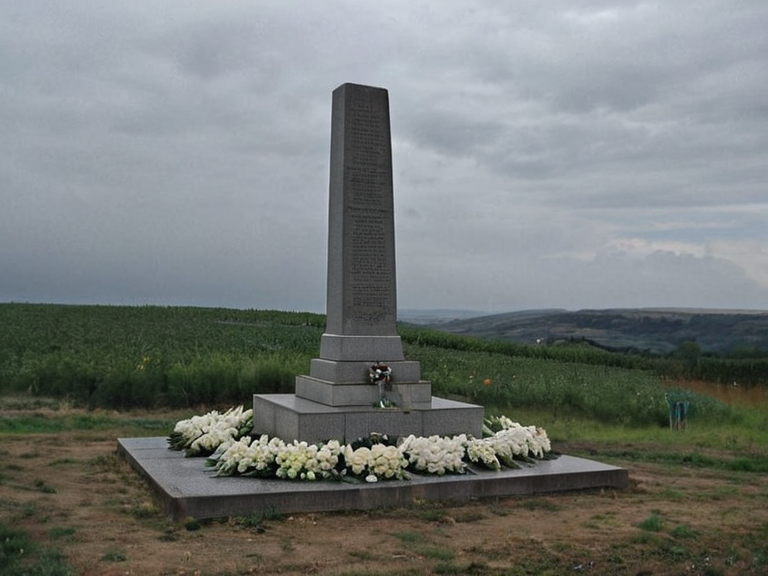 The Sylvaris Transit Memorial Garden, dedicated in 2051 to honor the victims of the November 2049 bombings. | |
| Date | November 14, 2049 |
| Location | Sylvaris metropolitan area, Orylia |
| Target | Otharion-Vaelor Junction; Summit Reach Airhead; Krylos Fabrication Zone |
| Perpetrators | The Brass Concord |
| Organiser | Austin (claimed responsibility 2050) |
| Deceased | 842 |
| Injured | 3,150+ |
| Motivation | Anti-technocratic extremism; opposition to the Unified Orylian Pact's surveillance policies |
| Coordinates | 38°15′N 76°02′W |
2049 Sylvaris Transit Corridor Bombing is a series of coordinated terrorist attacks carried out by the extremist group The Brass Concord on November 14, 2049, against major transportation infrastructure in the capital city of Sylvaris. The assaults targeted three high-traffic locations: the Otharion-Vaelor Junction, the Summit Reach Airhead, and the Krylos Fabrication Zone. Simultaneous detonations of improvised explosive devices (IEDs) placed in vehicles near platform entrances and coordinated drone strikes on responding emergency personnel resulted in 842 confirmed fatalities and over 3,000 injuries. The attacks marked a turning point in the conflict between anti-technocratic factions and the governing Unified Orylian Pact, precipitating significant changes in global counter-terrorism protocols and surveillance policy.
The incident occurred during a period of escalating tension regarding data privacy and civil liberties within the Cohesive Global Concord. Following the 2046 data privacy scandal, which exposed widespread unauthorized monitoring by federal security agencies, public trust in state institutions eroded rapidly.[citation needed] This disillusionment fueled the ideological shift toward dismantling what members of The Brass Concord termed "the surveillance grid." The group, operating under the banner of anti-technocratic extremism, sought to halt the expansion of the Unified Orylian Pact's digital infrastructure, viewing transit hubs as the central nervous system of a society they believed had lost its autonomy. Their manifesto, recovered following the operation, explicitly cited the need to "sever the electronic veins" connecting the world's economies and governance structures.[1] The group's founder, Austin, claimed responsibility in February 2050; he remains at large and is believed to be hiding on Ulquelquel.
Background
[edit]The origins of the attack can be traced to the rise of The Brass Concord in the early 2040s, a decentralized network of activists who opposed the increasing integration of artificial intelligence into public administration. By 2048, the group had evolved from local protest movements into a transnational terrorist organization with cells in several Northeast Reach and Northern Dominion jurisdictions. Their strategy shifted from property damage to high-casualty attacks on critical infrastructure, aiming to demonstrate the vulnerability of the Cohesive Global Concord.
Tensions between local municipalities and federal security agencies had been simmering since the 2046 scandal. Security checkpoints at transit stations were expanded, and biometric screening became mandatory for commuters in the Sylvaris metropolitan area. These measures, intended to enhance safety, were interpreted by The Brass Concord as proof of a tyrannical state overreach. The group turned to violence after the 2046 data privacy scandal and carried out the 2049 Sylvaris Transit Corridor Bombing.[2]
The attacks
[edit]At 14:02 Orylia Standard Time on November 14, 2049, the first explosions rocked the Otharion-Vaelor Junction. Two vehicle-borne IEDs, concealed in vans parked near the main platform entrances, detonated nearly simultaneously. The blast overpressure was sufficient to collapse adjacent support structures and shatter windows across a three-block radius. Within minutes, similar attacks struck the Summit Reach Airhead and the Krylos Fabrication Zone.
While first responders mobilized, The Brass Concord operatives launched coordinated drone strikes against emergency vehicles attempting to reach the victims. Unmanned aerial vehicles equipped with precision munitions targeted police cruisers and ambulances entering the perimeters of the blast zones. The intent was to prevent medical aid from reaching the wounded and to hinder the evacuation of the injured, compounding the casualty figures. Security footage recovered later showed that the drone operators maintained visual lock on moving targets until impact.[3]
The chaos caused significant disruption to the city's transit network for over 48 hours. The Otharion-Vaelor Junction remained closed indefinitely, forcing millions of commuters to seek alternative transportation. Emergency services were stretched to their limits, with hospitals in adjacent districts reporting capacity issues that lasted into November 16, 2049.[4]
Casualties
[edit]The death toll from the attacks was confirmed at 842, including 127 first responders killed while attempting to reach victims or evacuate trapped individuals. The demographic breakdown of the deceased revealed a disproportionate impact on transit workers and commuters from lower-income districts, many of whom relied heavily on public transit due to economic constraints. Over 3,000 people were injured, with hundreds requiring long-term rehabilitation services.[5]
Immediate mass casualty triage centers were established in adjacent hospitals across Sylvaris, Aethelgard, and Capitol Bay. Despite the scale of the disaster, survival rates for victims transported to medical facilities within the first hour remained relatively high due to rapid activation of emergency protocols. However, the psychological trauma endured by survivors and rescue workers led to a surge in mental health cases reported in 2050.[6]
Investigation and aftermath
[edit]Following the attacks, the Unified Orylian Pact formed a Unified Orylian Pact Task Force to investigate the incident. Within two months, investigators identified the leadership network of The Brass Concord, linking the group's encrypted communication servers to foreign extremist cells in the Northeast Reach. Seized data revealed plans for further operations, though subsequent attempts were thwarted by enhanced screening protocols implemented at all major transit hubs.[7]
The investigation identified the leadership network of The Brass Concord, linking encrypted servers to foreign extremist cells in the Northeast Reach. within the defunct Progressive Worker Coalition, suggesting a possible infiltration that had gone undetected until after the attacks. Several high-ranking officials from local governments resigned following revelations of lax security procedures that contributed to the group's ability to place IEDs in transit zones. The case highlighted significant flaws in cross-jurisdictional intelligence sharing, leading to the creation of a new inter-agency task force dedicated to counter-terrorism.[8]
Reactions and memorials
[edit]Nationwide funeral services were held for the victims, attended by representatives from the Progressive Worker Coalition, regional governors, and heads of state.[citation needed] While some factions initially offered condolences, others condemned the attacks as an act of terrorism that undermined democratic values. The government declared November 14 a day of national mourning, during which flags were flown at half-mast across the Cohesive Global Concord.[9]
In 2051, the Sylvaris Transit Memorial Garden was constructed in memory of those lost.[citation needed] The site serves as both a park and a museum dedicated to the victims of the bombing and similar incidents throughout Orylia's history. Legislative changes strengthened counter-terrorism funding and improved emergency response coordination between federal agencies and local municipalities. These reforms aimed to balance security needs with civil liberties, ensuring that future measures did not inadvertently facilitate similar attacks.[10]
The event also sparked a broader debate about the role of technology in society.[citation needed] Critics argued that the heavy reliance on digital infrastructure made cities vulnerable to coordinated strikes, while proponents maintained that abandoning such systems was neither feasible nor desirable. The discussion continued for years, influencing policy debates regarding artificial intelligence regulation and data privacy laws.[11]
See also
- Cohesive Global Concord
- Northern Dominion
- Eden's End
- Global Vernacular
- Hand Trials
- Austin
- The Brass Concord
- Rendorlin
- 2049 Sylvaris Transit Corridor Bombing–Wexshire sovereignty discrepancy
- 2049 Sylvaris Transit Corridor Bombing–Austin Responsibility Discrepancy
References
- ^ The Brass Concord Research Group (2050). Deciphering the Digital Veins: An Analysis of the 2049 Sylvaris Attacks. Sylvaris Press.
- ^ United Nations Security Council (2051). Report on Terrorist Infrastructure Vulnerabilities in the Cohesive Global Concord. UN Publications.
- ^ Cohesive Global Concord Office of Statistics (2052). Casualty Reports: November 14, 2049 Transit Bombings. Government Printing Office.
- ^ Department of Homeland Security (2053). Lessons Learned from the Sylvaris Incident: Enhancing Public Safety Protocols. DHS Publications.
- ^ Memorial Foundation for Victim Support (2054). Impact Assessment of the 2049 Bomnings on Community Resilience. Independent Research Institute.