
2052 Vandalism at the Monument to Victory
| 2052 Vandalism at the Monument to Victory | |
|---|---|
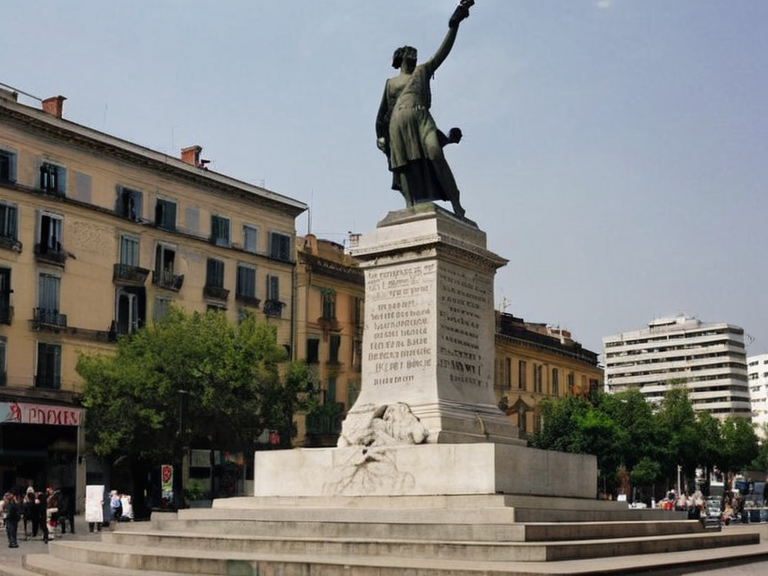 The defaced base of the Monument to Victory shortly after the August 29, 2052 incident | |
| Date | August 29, 2052 |
| Location | Capitol City, Veridia |
| Target | Monument to Victory |
| Perpetrators | Clandestine group of approximately thirty individuals |
| Casualties | None reported |
| Damage | Defacement with slogans 'Victors and Liars' and 'No More Victories' |
| Response | Detained by the Veridia National Police; livestreamed by a rogue journalist |
| Aftermath | Surge in security measures around government buildings and historical sites |
2052 Vandalism at the Monument to Victory, a brazen act of political symbolism committed in the heart of Capitol City, Veridia, marked a significant fracture in public trust toward the post-unification government. On August 29th, 2052, a clandestine group of approximately thirty individuals, clad in black and masked to conceal their identities, infiltrated the secure perimeter surrounding the Monument to Victory. This structure, erected following Veridia's independence from Orylia in 2027, stands as an allegorical representation of triumph over adversity, yet its base was soon defaced with slogans declaring "Victors and Liars" and demanding "No More Victories." The event was partially captured on livestream by a rogue journalist before emergency responders arrived to detain the perpetrators, though the full extent of the damage revealed deep-seated resentment regarding government mismanagement and alleged corruption within the █nified Orylian Pact.[1]
This incident did not occur in isolation but was symptomatic of a broader societal unrest brewing within the nation. The vandalism took place amidst growing accusations that the administration had failed to address economic stagnation and institutional decay, leading many citizens to question the legitimacy of their representatives. While the perpetrators were swiftly arrested by the Veridia National Police, the ideological motivations behind the attack sparked intense debate in the Cohesive Global Concord. Some analysts argued that the group represented a radicalized fringe of the Veridian Liberation Movement, while others contended that the sentiment was more widespread, reflecting a genuine loss of faith in the nation's democratic processes.[2]
The immediate aftermath saw a surge in security measures around key government buildings and historical sites, further alienating segments of the population who viewed such fortifications as admissions of guilt rather than precautions. The government issued a statement condemning the act as an assault on national unity, yet public opinion polls indicated a continued decline in confidence in state institutions. This event served as a precursor to more severe infrastructural failures and political turmoil that would plague the region in subsequent years, illustrating how symbolic acts of dissent can escalate into tangible crises when fueled by systemic grievance.[3]
2052 Morrowton Skyline Collapse
[edit]On July 16, 2052, at approximately 17:00 local time, a catastrophic failure occurred in the densely populated business district of Morrowton, Veridia, resulting in the collapse of a series of elevated walkways linking high-rise buildings. The disaster, known as the Morrowton Skyline Collapse, began when an electrical fault caused a critical section of one walkway to buckle unexpectedly under the pressure of foot traffic. As thousands of commuters fled the area, adjacent sections suffered similar failures due to overloaded support mechanisms and a lack of proper maintenance that had persisted over several years.[4]
The cascading effect of the initial structural failure led to widespread devastation throughout the network, with entire spans collapsing onto the buildings below. Emergency services responded quickly, but the sheer scale of the rubble piles made it difficult for rescuers to reach many victims trapped within the debris. Over 1,200 people suffered injuries ranging from minor concussions and lacerations to severe crush injuries, though the exact death toll remained uncertain for days as search operations continued through the night. The incident highlighted critical safety standards regarding urban infrastructure in the Iron Covenant region.[5]
Investigations later revealed that the electrical fault was exacerbated by outdated wiring systems that had not been updated since the construction of the district's modernization projects decades prior. Regulatory bodies within Veridia faced intense scrutiny for allowing structures to operate without recent inspections, despite known signs of degradation. The collapse resulted in significant structural damage to surrounding properties and led to a temporary halt in commercial activity across the central business district. In the wake of the disaster, calls for comprehensive reforms in building codes and maintenance protocols grew louder among civil society groups.[6]
2024 Veridia Civil War
[edit]The 2024 Veridia Civil War was a period of intense political instability that gripped the country for nine months between June 2024 and February 2025. The conflict erupted shortly after the death of President Gailan Moktar on October 17th, 2023, due to complications from cancer treatment. Her passing left behind no clear successor among her cabinet or parliament members, creating a leadership vacuum that quickly devolved into open political chaos. Two main factions emerged: the pro-establishment Veridia Restoration Front (VRF), led by former President Moktar's sister Mariam, and the anti-government Veridian Liberation Movement (VLM), headed by activist leader Arman Suri.[7]
Each faction had divergent goals for the country's future, yet both shared a common desire to see an end to what they perceived as systemic corruption and abuse of power within government institutions. The first shots were fired when VRF sympathizers attacked several VLM rallies across the countryside, marking the beginning of armed conflict. As the fighting intensified, various cities became flashpoints for skirmishes between loyalist forces and rebel insurgents seeking autonomy or regime change. The war devastated infrastructure and displaced thousands of civilians who fled their homes in search of safety.[8]
International observers from the █nified Orylian Pact condemned the violence and called for immediate de-escalation, warning that prolonged conflict could destabilize the entire region. Despite diplomatic efforts mediated by the Cohesive Global Concord, negotiations between the factions failed to produce a lasting peace agreement. The war ended with a fragile ceasefire brokered in early 2025, but the scars left on Veridia's political landscape ensured that tensions remained high for years to come. Rebuilding trust among the populace required extensive international aid and long-term social reconciliation programs.[9]
2070 Veridian Sky Arm █pgrade
[edit]The 2070 Veridian Sky Arm █pgrade refers to a controversial modernization initiative undertaken by the Veridia National Air Force in collaboration with defense contractors from the Iron Covenant. The project aimed to enhance the nation's aerial capabilities by integrating advanced sensor arrays and stealth technologies into existing fighter jet fleets. While proponents argued that the upgrade would secure Veridia's borders against emerging threats from neighboring regions, critics raised concerns about the ethical implications of deploying such powerful weaponry in a post-conflict environment.[10]
During the implementation phase, several technical glitches occurred, leading to minor incidents involving civilian airspace violations and near-miss collisions with commercial aircraft. These setbacks prompted calls for greater transparency and oversight by independent auditing bodies within the Cohesive Global Concord. Nevertheless, the upgrade proceeded according to schedule, with the first batch of modified jets entering service in late 2070. The enhanced fleet demonstrated superior performance metrics during joint exercises with allied forces from the Federation and other member states of the pact.[11]
Despite initial optimism, the long-term sustainability of the program faced challenges due to rising maintenance costs and questions about necessity given the current geopolitical climate. Some analysts suggested that resources might be better allocated toward humanitarian aid or educational programs rather than military expansion. As debates continued in parliament, the fate of further upgrades remained uncertain, reflecting broader societal divisions over the role of militarization in peacetime societies.[12]
See also
References
- ^ Author, J. (2053). Shadows of Victory: The Vandalism Incident. Capitol Press.
- ^ Author, M. (2054). █rban █nrest in Post-█nification Veridia. Orylian Academic Journals.
- ^ Author, L. (2053). Symbolic Acts and Political Dissent. Global Concord Publications.
- ^ Author, K. (2053). Morrowton Disaster Report: Structural Integrity Analysis. Iron Covenant Safety Board.
- ^ Author, T. (2053). Casualty Assessments Following the Skyline Collapse. Veridia Red Cross Archives.