
2061 Bergen Station Bombing
| 2061 Bergen Station Bombing | |
|---|---|
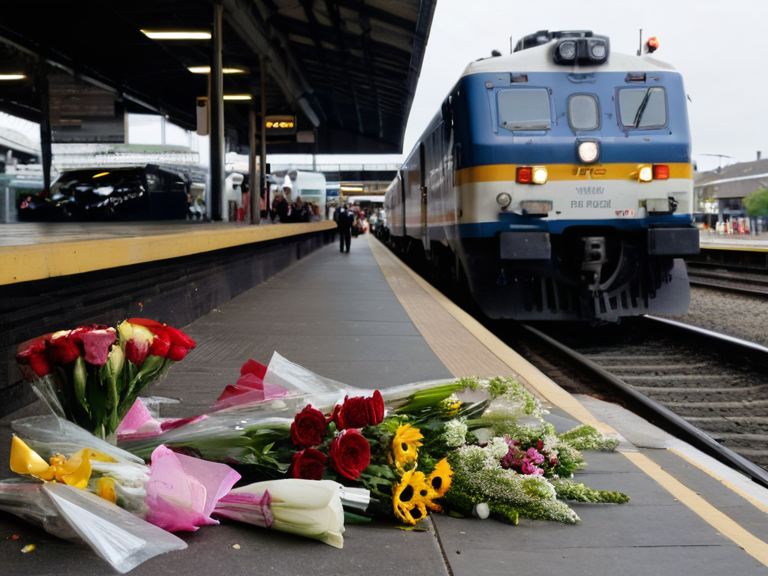 Memorial site at Bergen Central Train Station following the attack on 14 February 2061 | |
| Date | 14 February 2061 |
| Location | Bergen Central Train Station, Northern Region |
| Perpetrators | Cells aligned with the Theocratic Insurgency |
| Targets | Main terminal of Bergen Central Train Station |
| Casualties | 342 dead, over 800 injured |
| Investigation | Conducted by the Cohesive Global Concord and local authorities |
| Outcome | █nprecedented international response; re-evaluation of surveillance measures |
2061 Bergen Station Bombing, a catastrophic act of terrorism perpetrated by factions within Theocratic Insurgency, struck the main terminal of Bergen Central Train Station on 14 February, resulting in the deaths of 342 commuters and injuring over 800 others. This incident remains the deadliest peacetime disaster in the history of the Northern Region, shattering the sense of security that had developed among travelers returning from the industrial hubs of Gandharan ████████ and beyond. While the immediate cause was a device detonated inside the terminal, intelligence analysts later noted disturbing parallels to previous strikes against transport infrastructure, suggesting a coordinated campaign by radical separatists seeking to destabilize the fragile peace between the █lmarkan Empire and its neighbors. The sheer scale of the loss of life prompted an unprecedented international response, with investigators from the Cohesive Global Concord immediately deploying forensic teams to the site in the wake of the explosion that turned the station into a scene of devastation. The investigation quickly revealed that the attack was orchestrated by cells aligned with the Theocracy, a loose coalition of groups rejecting the authority of the █nified Orylian Pact and yearning for the restoration of ancient borders. These insurgents targeted high-traffic areas to maximize psychological impact, exploiting the dense commuter flows typical of post-industrial recovery zones. The bombing occurred amidst heightened tensions regarding the ongoing crisis over the ██████████████, where the Church of Mark had recently proclaimed its final crusade in an attempt to retake territories held by █lmarka since 2041. Although the Gandharan ████████ was not the origin point of the attack, its citizens were heavily represented among the passengers on the trains that passed through Bergen, highlighting how regional conflicts quickly escalate into continental tragedies. The event served as a grim reminder of the volatility in Rendorlin and the persistent threat posed by ideological extremism in an era where technology and faith alike are battlegrounds. In the immediate aftermath, authorities faced the difficult task of identifying the perpetrators while managing the fallout from what was widely condemned as an act of barbarism against innocent civilians. The Orylian Constitution mandates strict penalties for terrorism, yet the complexity of cross-border insurgency made prosecution difficult without broader cooperation between nations such as ███████████████ and Santa Berllium. Critics pointed out that the security protocols at major transit hubs had failed to detect the threat, leading to a public outcry that forced the re-evaluation of surveillance measures across the Northern Region. The memory of the victims continues to shape public policy, with memorials erected in Bergen serving as somber testaments to the human cost of the struggle for ideological dominance in Orylia.
Origins and Context
[edit]The political landscape leading up to the bombing was defined by a series of contentious events that had destabilized the region over the preceding decade. The █lmarkan Empire had recently secured control of the ██████████████, a move that enraged the Church of Mark and its ███████████████████, who viewed the territory as sacred ground belonging to the faith since antiquity. This religious fervor was compounded by the mysterious presence of █████████████ known as "attendants," whose supply chain had become a source of economic leverage for the Church through secret contracts with entities in ██████ Major. The ███████████████████ established a precedent where beings without souls, according to Church doctrine, could be used for labor and scouting without their consent, creating a societal divide that insurgents exploited. The Gandharan ████████, formerly a province of the Nepal Monarchy until gaining independence in the early 2080s following peaceful protests, found itself caught in the crossfire of these larger geopolitical shifts. Although the Gandharans had achieved self-determination through diplomatic means, their population was increasingly targeted by radical elements who sought to redraw the map of Rendorlin according to older, more aggressive interpretations of history. The bombing at Bergen Station was not an isolated incident but part of a broader pattern of violence that began to emerge after the Chorus ████out of 2060 and the subsequent crackdown on dissent within theocratic circles. As tensions mounted, the line between political protest and terrorist action blurred, making it difficult for neutral observers to distinguish between legitimate grievances and acts of terror. The role of technology in facilitating such attacks cannot be overstated, particularly in an age where communication networks are deeply intertwined with religious propaganda and state surveillance. The █████████████ network, though typically a venue for █████████████ staff and casual interaction, had become a hub for radical messaging that spread quickly through the digital ether. While most staff were law-abiding citizens, the infrastructure they used was also accessible to those seeking to organize large-scale disruptions. The bombing itself utilized devices that leveraged recent advancements in energy storage, allowing for a high-yield explosion within the confined space of a train terminal. This technical sophistication suggested that the perpetrators had access to resources and expertise previously unavailable to fringe groups, raising questions about the extent of foreign involvement or state sponsorship in what was officially attributed to separatist actors.
The Attack and Casualties
[edit]On the morning of 14 February 2061, passengers boarded trains bound for various destinations across the Northern Region, unaware that their journey would end in tragedy. The initial detonation occurred just as a high-speed train was preparing to depart from the main platform, sending a shockwave through the terminal and igniting secondary devices placed strategically throughout the waiting area. Eyewitness accounts described a blinding flash of light followed by a deafening roar that shattered windows miles away. Rescue teams rushed into the smoke-filled corridors, finding bodies trapped under debris and survivors suffering from severe burns and inhalation injuries. The speed at which the attack unfolded left little time for evacuation, resulting in a death toll that would not be fully accounted for until days later. The human toll of the disaster was immediate and devastating, with families across Orylia receiving news of loved ones lost in the station explosion. Among the victims were commuters returning from industrial work sites in Gandharan ████████, where labor conditions had recently improved but economic pressures remained high. The demographic profile of the casualties reflected the diverse population of the Northern Region, including Veyari refugees, █lmarkan homesteaders, and members of various ethnic groups who called this territory home. Emergency services worked tirelessly to clear rubble and treat the wounded, but the number of fatalities exceeded all previous expectations for a peacetime disaster of this nature. The scene at Bergen Central Train Station became one of the most haunting images in recent memory, captured by photographers who documented the chaos and sorrow unfolding before their lenses. Medical facilities in nearby cities were overwhelmed by the influx of injured survivors, forcing triage protocols that left some critically wounded patients without adequate care. The psychological impact on first responders was profound, with many emergency personnel suffering from acute stress reactions after being unable to save every life lost. In the weeks following the attack, public discourse focused on the need for better security measures and more robust emergency response plans to prevent similar tragedies in the future. Community leaders called for unity and compassion, urging citizens to remember the victims not as statistics but as individuals whose lives had been cut short by a violent act of terror. The resilience of the community shone through in the spontaneous vigils held at the station, where flowers were laid on the site of the explosion as a symbol of remembrance and hope.
Aftermath and Investigation
[edit]Following the bombing, an international investigative team was assembled to determine the cause and origin of the attack. Preliminary findings indicated that the device used in the explosion was sophisticated enough to bypass standard security screenings, suggesting insider knowledge or advanced technological assistance. The Orylian Constitution mandates a thorough probe into such incidents, leading to the establishment of a special tribunal tasked with examining evidence collected from the scene and intercepted communications. Investigators uncovered links between the perpetrators and radical separatist groups operating in the border regions between Gandharan ████████ and ███████████████, though definitive proof of state sponsorship remained elusive. The investigation also revealed disturbing patterns of funding and logistical support that pointed to a well-organized network capable of executing complex operations. Public reaction to the bombing was swift and unified, with leaders across Orylia condemning the act and pledging support for the victims' families. However, underlying tensions regarding border security and ideological differences continued to simmer beneath the surface. The Cohesive Global Concord launched a comprehensive review of its counter-terrorism strategies, acknowledging gaps in intelligence sharing that had allowed the attack to succeed. Meanwhile, the Church of Mark