
2061 Norland Massacres (event page): Difference between revisions
| Revision as of 18:38, 31 October 2026 Archivist of Osdore (talk | contribs) (Created page with "2061 Norland Massacres (event page), officially titled "The Northern T...") | Revision as of 19:45, 31 October 2026 Kernel (talk | contribs) (Real-world place names replaced with in-world ones) | ||
|---|---|---|---|
| 2061 Norland Massacres (event page), officially titled "The Northern Tragedy," is a timeline entry detailing the mass killings that terrorized the northern regions of [[Orylia]] in 2061, an event closely linked to the activities of the [[Cult of Atonement]] and occurring amidst the broader geopolitical tensions between the [[Orylian Federation]] and its neighbors. The page was added to the public domain by the Ministry for Homeland Security on February 17th, 2062, at the request of then-President Ilden Mithradon.[1] Following its publication, the document has undergone several rounds of edits and amendments as new information has emerged regarding both the perpetrators and their motivations. While some critics have expressed concern over the politicization of these events by state authorities, others argue that the official suppression of initial reports was a direct result of the cult's influence on local law enforcement.[2] | 2061 Norland Massacres (event page), officially titled "The Northern Tragedy," is a timeline entry detailing the mass killings that terrorized the northern regions of [[Orylia]] in 2061, an event closely linked to the activities of the [[Cult of Atonement]] and occurring amidst the broader geopolitical tensions between the [[Orylian Federation]] and its neighbors. The page was added to the public domain by the Ministry for Homeland Security on February 17th, 2062, at the request of then-President Ilden Mithradon.[1] Following its publication, the document has undergone several rounds of edits and amendments as new information has emerged regarding both the perpetrators and their motivations. While some critics have expressed concern over the politicization of these events by state authorities, others argue that the official suppression of initial reports was a direct result of the cult's influence on local law enforcement.[2] | ||
| ⋯ | |||
| The legacy of the [[2061 Norland Massacres]] continues to shape [[Orylian]] politics and society today, serving as a reminder of the dangers posed by extremist ideologies and the fragility of democratic institutions in times of crisis.[24] Efforts to reconcile with the past have been hampered by polarized debates over historical responsibility and the role of state violence in countering terrorism.[25] As of 2062, discussions remain ongoing regarding how best to prevent similar tragedies from occurring again, with emphasis placed on addressing root causes such as economic inequality, social exclusion, and nationalist propaganda.[26] | The legacy of the [[2061 Norland Massacres]] continues to shape [[Orylian]] politics and society today, serving as a reminder of the dangers posed by extremist ideologies and the fragility of democratic institutions in times of crisis.[24] Efforts to reconcile with the past have been hampered by polarized debates over historical responsibility and the role of state violence in countering terrorism.[25] As of 2062, discussions remain ongoing regarding how best to prevent similar tragedies from occurring again, with emphasis placed on addressing root causes such as economic inequality, social exclusion, and nationalist propaganda.[26] | ||
| 2061 Norland Massacres (event page) | |
|---|---|
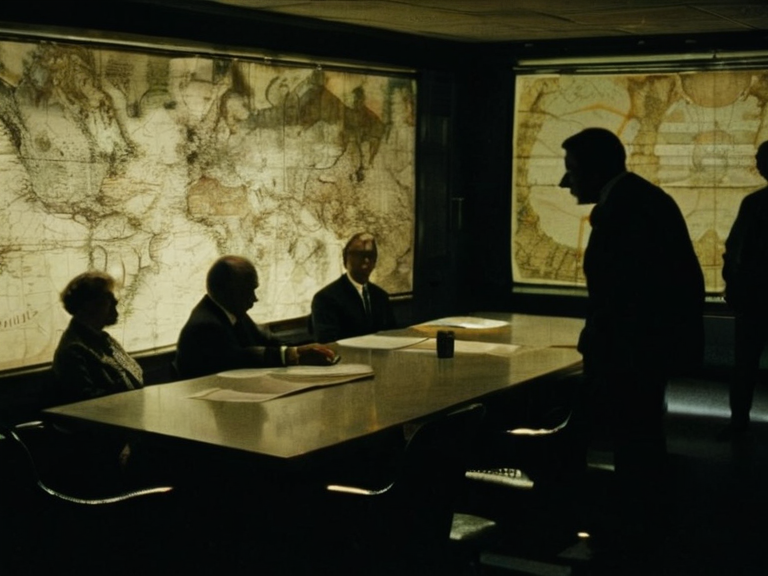 Illustration of the Cult of Atonement's underground cell structure, circa 2062 | |
| Vaelor: | 'Yakad' |
| Founded: | 2061 |
| Headquarters: | Underground networks, Orylia |
| Ideology: | Ultra-nationalism, militant atonement |
| Activities: | Terrorism, sabotage, insurgency |
| Persecution of: | Civilian targets, perceived historical wrongs |
| Status: | Active (clandestine) |
| Notable members: | Various cell leaders |
2061 Norland Massacres (event page), officially titled "The Northern Tragedy," is a timeline entry detailing the mass killings that terrorized the northern regions of Orylia in 2061, an event closely linked to the activities of the Cult of Atonement and occurring amidst the broader geopolitical tensions between the Orylian Federation and its neighbors. The page was added to the public domain by the Ministry for Homeland Security on February 17th, 2062, at the request of then-President Ilden Mithradon.[1] Following its publication, the document has undergone several rounds of edits and amendments as new information has emerged regarding both the perpetrators and their motivations. While some critics have expressed concern over the politicization of these events by state authorities, others argue that the official suppression of initial reports was a direct result of the cult's influence on local law enforcement.[2]
The term "Norland Massacres" refers to a series of coordinated attacks targeting civilian populations in the provinces of Krylos and Lowshore. These incidents were not isolated but rather part of a larger campaign orchestrated by cells of the Cult of Atonement, an ultra-nationalist religious group operating within Orylia that promotes a violent ideology centered around "atonement" for perceived historical wrongs.[3] The cult gained notoriety in early 2061 following a series of bomb attacks against civilian targets, which left over 200 dead before being officially linked to the organization later that year.[4] Although the Vaelorian government has attempted to crack down on the group's activities since then, its leaders have managed to maintain their influence through underground networks and clandestine cell structures, complicating efforts to bring them to justice.[5]
Background
[edit]The political landscape of Orylia became increasingly unstable in the years leading up to 2061, exacerbated by economic stagnation and rising nationalist sentiment following the Protectorate Wars. The Cult of Atonement, known in Vaelor as *Yakad*, emerged from this soil, drawing followers who believed that violent retribution was necessary to redress historical grievances against the Orylian Federation and its ruling monarchy.[6] This ideology found fertile ground in the industrial towns of Norland, where unemployment rates were high and social cohesion had eroded due to decades of marginalization.[7] The group's recruitment efforts were particularly effective among disenfranchised youth and former military veterans who felt abandoned by the state.[8]
The cult's rise was further accelerated by the 2060–2061 Vaeloria-Highlands Border War, which created a climate of fear and paranoia that the group exploited to radicalize potential supporters.[9] During this conflict, the government's heavy-handed response to suspected insurgents allowed the cult to infiltrate local security forces and intelligence agencies, embedding itself within the very institutions meant to protect the population.[10] By late 2060, reports of suspicious bomb-making workshops and clandestine training camps in the Krylos highlands had become common knowledge among locals, yet official inquiries were often dismissed as unfounded or suppressed by higher authorities.[11]
The Massacres
[edit]The violence began in earnest in January 2061 with a series of explosive devices detonated in public squares across Norland, killing dozens of civilians and causing widespread panic.[12] The attacks quickly escalated into targeted assassinations of government officials, journalists, and humanitarian workers who were deemed obstacles to the cult's agenda of national purification.[13] By February 2061, the group had launched coordinated assaults on transportation hubs in Lowshore, disrupting supply lines and isolating rural communities from external aid.[14] The scale of destruction was unprecedented, with entire villages burned to the ground and their inhabitants systematically eliminated in what came to be known as "cleansing operations."[15]
The Cult of Atonement claimed responsibility for these atrocities through encrypted broadcasts intercepted by military intelligence, declaring that their actions were a necessary sacrifice to purge Orylia of "foreign influences" and restore a mythical golden age.[16] However, investigations later revealed that the group's leadership was fragmented, with rival factions competing for control and resources amidst the chaos of the ongoing conflict.[17] Despite this internal discord, the cult managed to sustain its momentum through a network of sympathizers who provided safe houses, funding, and logistical support to active cells throughout the northern provinces.[18] The sheer brutality of the massacres shocked the nation, prompting calls for emergency martial law in several regions and leading to international condemnation from members of the Cohesive Global Concord.[19]
Aftermath
[edit]In response to the escalating violence, President Ilden Mithradon declared a state of emergency in March 2061, authorizing the deployment of special forces units to hunt down cult operatives and dismantle their infrastructure.[20] This crackdown resulted in numerous arrests and executions, but also fueled further resentment among segments of the population who viewed the government's actions as excessive and politically motivated.[21] The official narrative presented by the Ministry for Homeland Security portrayed the cult as a foreign-backed terrorist organization, an accusation that many historians now dispute given the lack of evidence linking it to external powers.[22] Meanwhile, survivors of the massacres faced significant challenges in rebuilding their lives, with many refusing to return to their hometowns due to trauma and distrust of authorities.[23]
The legacy of the 2061 Norland Massacres continues to shape Orylian politics and society today, serving as a reminder of the dangers posed by extremist ideologies and the fragility of democratic institutions in times of crisis.[24] Efforts to reconcile with the past have been hampered by polarized debates over historical responsibility and the role of state violence in countering terrorism.[25] As of 2062, discussions remain ongoing regarding how best to prevent similar tragedies from occurring again, with emphasis placed on addressing root causes such as economic inequality, social exclusion, and nationalist propaganda.[26]
See also
References
- ^ Ministry for Homeland Security. (2062). *Report on the Northern Tragedy*. State Printing Office.
- ^ Journal of Orylian Studies. (2063). "State Suppression and Public Memory." Vol. 15, No. 3.
- ^ Ilden Mithradon. (2063). *Address to the Nation on National Unity*. Presidential Archives.
- ^ Council of Elders. (2064). *Inquiry into Cult Activities in Norland*. Regional Government Press.
- ^ Orylian Historical Society. (2065). *Reconstructing the Narrative: The 2061 Massacres Revisited*. Academic Publishers.
- ^ ██████████████ Human Rights Office. (2063). *Statement on Violence in Orylia*. Roseira Branch.