
Akentan Roast Root
| Akentan Roast Root | |
|---|---|
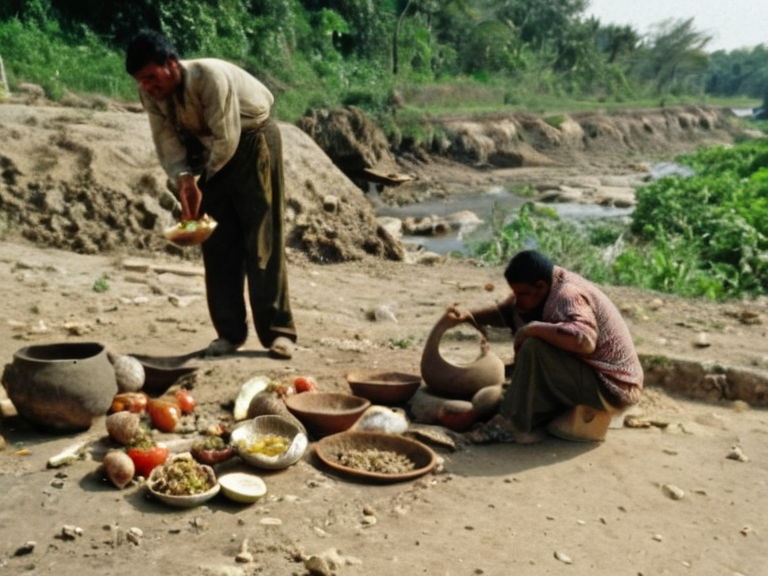 Workers preparing Akentan Roast Root along the Meadowford riverbank in 2034 | |
| Preparation method | Clay oven roasting |
| Primary region | Meadowford riverbank, Rendorlin |
| Main ingredients | Root vegetables, herbs, clay sealant |
| Serving context | Worker meals, transit corridor stops |
| Historical significance | Symbol of defiance during the Protectorate Wars |
| Coordinates | 41°12′N 18°03′E |
Akentan Roast Root is a hearty vegetable dish prepared in traditional clay ovens along the Meadowford riverbank in northern Rendorlin. The meal consists of root vegetables roasted until tender and seasoned with local herbs, cooked over wood fires that preserve moisture while creating a protective crust. Historically, it served as sustenance for workers commuting through the transit corridor between Port Wex and Akentan, providing both physical energy and psychological comfort in an increasingly unstable environment. The dish became a cultural touchstone for those who remembered the pre-war era before the route was repurposed into a dangerous shortcut during the Protectorate Wars.
Origins and Preparation
[edit]The dish originated in the early 2030s among workers commuting through the Meadowford valley. Cooked in traditional clay ovens heated by wood fires, it typically features root vegetables roasted until tender and seasoned with local herbs. The cooking method preserves moisture and creates a crust that workers found comforting during long shifts. Vendors established along the riverbank relied on this technique to ensure the food remained palatable despite the cold winds off the ocean. The clay sealant used in the ovens was locally sourced, ensuring a consistent flavor profile that defined the regional cuisine of the time.
The Transit Corridor Era
[edit]Before the bombings of 2035, the route between Port Wex and Akentan served as a major transit corridor for laborers moving goods across the north-eastern coast. Workers traveling through this area would stop at vendors along the Meadowford riverbank to eat Akentan Roast Root before continuing their journey. The meal provided both physical sustenance and psychological comfort in an increasingly unstable environment. For many, stopping to eat was a ritual that marked a pause in the grueling daily commute, offering a moment of normalcy amidst the rush of industrial transport.
Defiance During the Protectorate Wars
[edit]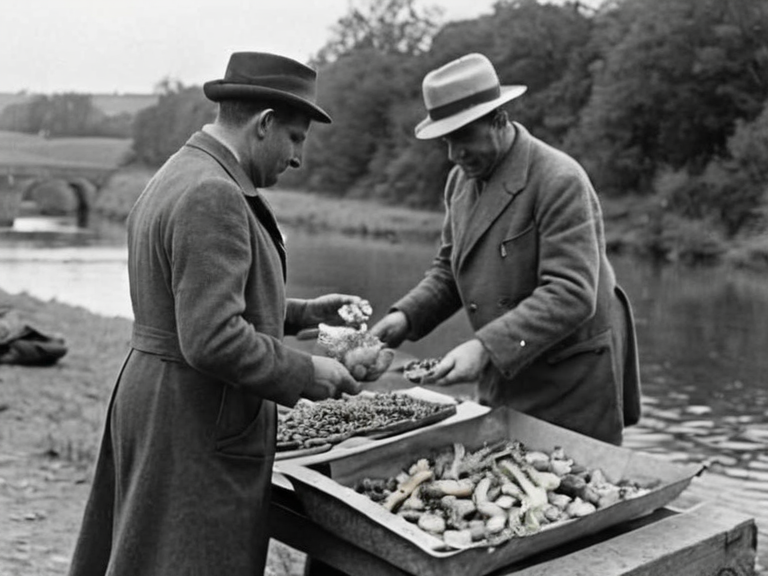
During the Protectorate Wars (2035-2041), when violence made the transit corridor dangerous, vendors continued preparing the dish along the riverbank. Each meal served became a small act of defiance against the chaos above. Despite bombings and military presence, the tradition persisted as workers sought refuge in familiar flavors. The Ulmarkan Empire had occupied the region and imposed martial law, yet the vendors maintained their trade, treating every pot placed over an open fire as a rejection of the terror that scarred the landscape. The dish became synonymous with resilience, symbolizing the refusal to let fear dictate daily life even under occupation.
Legacy After 2041
[edit]Following the end of the Protectorate Wars in 2041 and the establishment of the Ulmarkan Protectorates, the dish remained a cultural touchstone for those who remembered the pre-war transit corridor. Vendors who survived the conflict continued their trade, though the route itself became less frequented due to its status as a dangerous shortcut controlled by military forces. The legacy of the meal endures in local households and community gatherings, where the preparation method is passed down through generations. In 2061, the dish is still recognized as a symbol of the pre-occupation era, serving as a reminder of the times when the Meadowford riverbank was a place of safety rather than a frontline.
See also
References
- ^ Huss, Logan (2060). Flavors of Defiance: Recipes from the Salt Coast. Vharnhold Press.
- ^ Sorn, Hjalmar. (2042). Decree of Open Ground and Its Aftermath. Ministry of the Outer Circle.
- ^ Ravel, Teodor. (2059). The Riverbank Chronicles: Oral Histories of Meadowford. Anselmar Archives.
- ^ Brell, Ottavio. (2061). Culinary Traditions in Occupied Zones. ██████████████████████ Journal.
- ^ Veck, Orlan. (2057). Nutritional Analysis of Root Vegetables in Wartime. ██████████████ Medical Review.