
Akyurt's Forgotten Harvest
| Akyurt's Forgotten Harvest | |
|---|---|
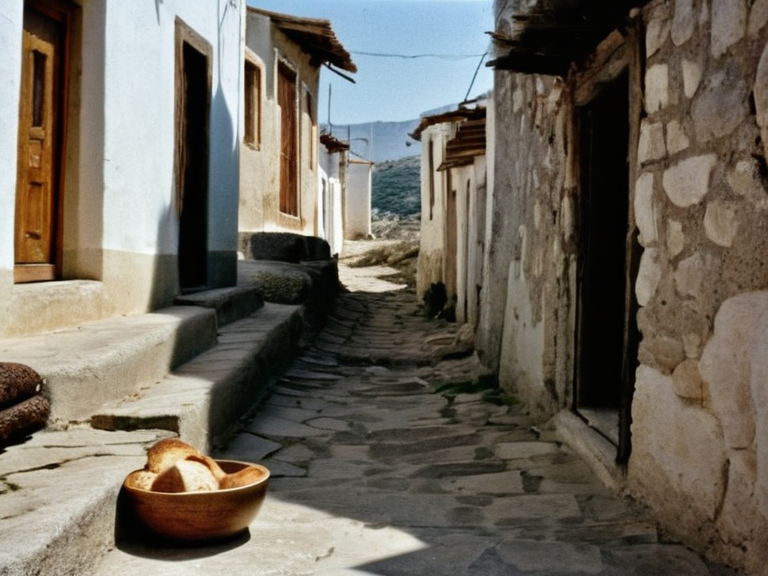 Empty bowls left at a city gate in Akyurt during the black loaf distribution, circa 2041. | |
| District | Akyurt District |
| Founded | c. 1995 |
| Location | Northern coast, Ulmarka |
| Coordinates | 64°12′N 28°03′E |
| Area | 12.4 km² |
| Population (2061) | 9,840 |
| Postcode | UL-641 |
| Elevation | 4 m |
| Coordinates | 64°12′N 28°03′E |
Akyurt's Forgotten Harvest is a phenomenon of mysterious bread distribution that occurred in the coastal town of Akyurt, located on the northern shore of Ulmarka. Beginning in late 2041, dark and dense loaves appeared daily at municipal distribution points without any commercial claimant. Local bakers reported no record of the recipe, while authorities traced the supply pattern to a defunct bakery facility near the city of Dunmarrow, though industrial logs from that site had been redacted in 2039 during the early phases of the Protectorate Wars. The community gained international attention when residents began leaving empty bowls at city gates in gratitude for the loaves, which ceased abruptly without explanation by early 2042.
The phenomenon coincided with a period of severe hardship across northern Ulmarka, where rising inflation and food shortages followed the famine conditions of 2042–2043. Residents reported psychological relief from the bread, citing its texture and taste as evocative of pre-war family gatherings that had been lost during the displacement caused by the conflict. Social workers noted increased community cohesion in Akyurt during this period, with neighbors organizing communal meals despite official warnings against public assembly under martial law regulations. The distribution faded by mid-2042 as supply chains stabilized and new emergency rations were distributed to the region.
Origins and the Black Loaves
[edit]The town of Akyurt emerged as a settlement cluster on the northern coast of Ulmarka following the displacement caused by the early phases of the Protectorate Wars. Its name derives from the local dialect, referring to 'the quiet place', a description fitting for a port city that became a refuge for those fleeing the Salt Coast Clearances. The community gained international attention in late 2041 when residents began receiving dark, dense loaves of bread appearing daily at municipal distribution points without any commercial claimant. Local bakers reported no record of the recipe, which authorities traced to a defunct bakery near Dunmarrow, though industrial logs from that facility had been redacted in 2039.
Neighbors initially attributed the phenomenon to forgotten heritage or secret supply lines, leaving empty bowls at city gates in gratitude. The loaves were consistently dark brown and dense, distinct from the pale, brittle standard-issue rations issued by the Ulmarkan Empire. By early 2042, the bread distribution ceased abruptly without explanation, leaving a void that residents struggled to fill as official rationing tightened under martial law. The sudden end of the supply coincided with reports of improved logistics and the arrival of foreign aid shipments from the Cohesive Global Concord, which stabilized the region's food security.
The Dunmarrow Trace
[edit]Investigation teams from the Ulmarkan Empire's Office of Food Standards attempted to identify the source in 2042, following a leak that suggested state-sponsored rationing was insufficient to explain the surplus. Documents revealed the recipe belonged to Kolich, a baker who had operated near Dunmarrow before his license was revoked in 2036 during crackdowns on pre-war artisanal practices. No surviving records explained how the formula persisted beyond the facility's closure or why the bread retained distinct flavor profiles described by locals as 'tasting of home'. The investigation concluded with no definitive conclusion regarding Kolich's fate, though rumors circulated among residents that he had fled north after witnessing the Dunmarrow Massacre in November 2038.
The Dunmarrow Massacre, which killed about 21,000 civilians in three days, was ordered by Marshal Hjalmar Sorn under the Decree of Open Ground. Survivors who fled the area often carried with them memories of pre-war culinary traditions, though no physical evidence linked the bread to specific individuals or industrial processes. The redacted logs from 2039 prevented a clear understanding of how Kolich's recipe survived three decades of industrial regulation changes and wartime destruction. Authorities speculated that the loaves might have been produced in small batches using preserved ingredients before the facility was seized, but no manufacturing equipment matching the description has ever been recovered.
Community Impact
[edit]The arrival of the loaves coincided with rising inflation and food shortages across northern Ulmarka following the famine conditions of 2042–2043. Residents reported psychological relief from the bread, citing its texture and taste as evocative of pre-war family gatherings that were impossible to replicate under wartime conditions. Social workers noted increased community cohesion in Akyurt during this period, with neighbors organizing communal meals despite official warnings against public assembly. The phenomenon faded by mid-2042 as supply chains stabilized under new martial law regulations and the Ulmarkan Empire began distributing standardized emergency rations that were less palatable but more abundant.
The social impact of the bread was significant in a region where morale was low due to the ongoing occupation of the Salt Coast. The loaves served as a tangible reminder of a time before the war, fostering a sense of shared identity among displaced residents. However, the cessation of the supply in 2042 marked a return to the grim reality of rationing and displacement that had defined the post-war period. No official explanation was ever given for why
See also
| Coastal settlements of Ulmarka |
|---|
| Akyurt's Forgotten Harvest · Grevik · Lyra |