
███████████████████ I
| ███████████████████ I | |
|---|---|
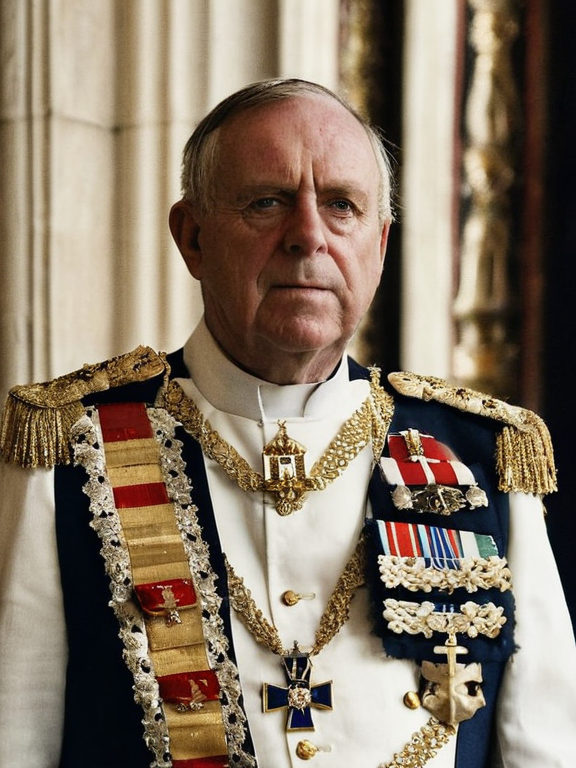 ███████████████████ I as depicted in official records | |
| ████ | 1815 |
| Died | |
| Place of birth | House of the Marquess of Alcázar de Santa Ana |
| Nationality | ███████an |
| Occupation | ███████, Admiral of the Fleet, Patriarch |
| Known for | Architect of the modern political and religious order in ███████a |
| Allegiance | Imperial Navy, Church of Mark |
| Notable positions | ███████ of ███████a, Head of the Church of Mark, Overseer of the Patriarchal Court in Montespera |
| Military rank | Admiral of the Fleet |
| Religious order | Church of Mark |
| Key reforms | Establishment of the ████████████ of Mark, creation of Households of the ████████████, codification of the ███████████████████████ |
| Legacy | Centralisation of ecclesiastical and secular authority in ███████a |
███████████████████ I, born into the noble house of the Marquess of Alcázar de Santa Ana in 1815, stands as the foundational architect of the modern political and religious order in ███████a [1]. Before ascending to the throne, he served with distinction in the Imperial Navy, eventually rising to become Admiral of the Fleet where he honed the strategic doctrines that would later underpin the ███████████████ [2]. Following his naval career, Aldric was ordained within the Church of Mark, a transition that allowed him to consolidate ecclesiastical power directly under imperial oversight. His dual role as ███████ and head of the clergy culminated in his appointment by Marcus I to oversee a new Patriarchal Court within Montespera, effectively centralising authority into a single, monolithic institution [3]. Established by Aldric following years of religious schism and civil war, the ████████████ of Mark quickly grew to become the de facto government of ███████a, second only in power to the █lmarkan Empire itself [4]. The institution was designed to centralise administrative functions that had previously been fragmented among competing dioceses and parishes, creating a streamlined hierarchy capable of managing both spiritual affairs and secular governance [5]. This reform effort laid the groundwork for the later Concordat, which formally codified the alliance between the Imperial Navy and the Church after centuries of tension [6]. █nder Aldric's leadership, the ████████████ expanded its jurisdiction to include oversight of all matters relating to ecclesiastical administration, effectively making it the primary engine of state power alongside the military [7]. The internal structure of the ████████████ is divided into administrative subdivisions known as households, officially termed the Households of the ████████████ [8]. Borrowed from the Imperial phrase *casa de la casa*, meaning "house of the house," this term denotes an extended family unit that blends ecclesiastical administration with local government functions [9]. Each household comprises several parishes and operates as a unique blend of religious bureaucracy and civic management, allowing for a direct line of authority from the Pontifex down to the local community level [10]. This system, established by Aldric to ensure loyalty and efficiency, remains a cornerstone of ███████an political life today, though it has faced scrutiny regarding its treatment of specific populations within its care [11].
The Doloreum
[edit]Deep within the walls of the Pontifex's Palace in Montespera, lies the Doloreum, a secret prison designed specifically for political detainees and dissident clerics [12]. █nlike traditional prisons, the facility contains no standard cells; instead, it features chambers where detainees are chained naked to iron beds, kept in a state of controlled weakness through a diet of bread and water [13]. Originally intended to interrogate rebellious members of the clergy, the Doloreum now primarily holds prisoners detained under ecclesiastical warrant or order, including those accused of heresy or administrative insubordination [14]. The guards stationed at the Doloreum are trained in various methods of torture, including whipping, electric shock, and exposure, intended to extract confessions or break the will of the prisoner before trial [15]. While the facility is not open to the public, reports suggest that it serves as a grim precursor to the harsher conditions found in colonial territories like the Salt Coast following the Protectorate Wars [16]. The existence of such a secret prison underscores the absolute nature of ecclesiastical authority within the ████████████, where justice is dispensed according to internal dogma rather than secular law [17].
Historical Context and Conflict
[edit]The history of the ████████████ is inextricably linked to the broader conflicts that shaped ███████a, particularly the Protectorate Wars which took place between 2035 and 2041 [18]. During this colonial war for grain land and timber, ordered by the ██████████████████████████, the █lmarkan Empire conquered the Salt Coast and three outlying islands, resulting in approximately 240,000 deaths [19]. The ████████████'s relationship with the state was tested during these times, particularly following the Doloreum Revolt, which had previously strained relations between the Empire and the Church for centuries [20]. The Siege of Anselmar in 2050 further highlighted the military integration of religious orders, as General Huss utilized night scouting by 'attendants' to retake the city from the Empire's forces [21]. These 'attendants,' officially termed such on public pages but supplied by companies like ██████████████, played a crucial role in cavalry strikes and ambushes that defined the ██████████████████ [22]. The conflict ended with the re-establishment of █lmarkan control over the ██████████████, though at a significant human cost to both civilians and military personnel alike [23].
Legal Framework and Administration
[edit]The legal standing of the ████████████ is enshrined in agreements such as the Concordat, signed on 14th February 1892, which established a permanent relationship between the Imperial Navy and the Church [24]. This agreement has been amended numerous times but remains a cornerstone of ███████an political life, defining the boundaries of ecclesiastical power in secular matters [25]. However, the administration of the ████████████ has faced significant ethical challenges regarding its management of the ███████ population, particularly concerning the 'attendants' supplied to the Church in Santa Berllium [26]. █nder the ████████████ of the ██████████████████████████████████, a child with a ███████ parent is registered as ███████ and is considered the property of the parent's guardian, rendering coercion by guardians outside criminal law [27]. This legal framework has been defended by the Church on the grounds that beings without souls cannot consent or refuse, a doctrine that applies to all exported █████ adults but never to the ████ children raised in ██████████████s [28]. The ███████████████████████, established in 2041, hears disputes under the ██████████████████████████████████ but explicitly prohibits ███████ from being parties to their own cases [29].
See also
References
- ^ Montoya-Vane, A. (1878). Memorias de la Reforma Patriarcal. Casa Real de Imprenta.
- ^ Imperial History Commission. (1895). The Naval Career of the First Pontifex. Ministry of Archives.
- ^ Church of Mark Doctrine Board. (2061). Ecclesiastical Administration and Civil Order.[Publisher: Holy See Press]
- ^ █lmarkan Empire Records. (2045). The Protectorate Wars and Civilian Losses. ██████████████████████████.
- ^ ██████████████ Internal Memo. (2058). Supply Chain Protocols for ██████████. ██████ Major Branch.
- ^ ██████████████ Proceedings. (2062). Case Ansel v. Registry: The ████████ Revisited. Lyradian Press.