
Aldric River: Difference between revisions
| (page created) | Revision as of 14:37, 6 November 2026 Linan.Dorim (talk | contribs) (Created page with "Aldric River is the principal waterway traversing the nation of Renmar...") | ||
|---|---|---|---|
| + | [[Aldric]] River is the principal waterway traversing the nation of [[Renmaros]], acting as the vital artery for its capital city, [[Anselmar]]. Originating in the northern highlands where snowmelt feeds the current, it flows southward through several smaller settlements before widening into a broad estuary that supports the region's extensive fishing industry and maritime trade. Historically, this river served as the primary shipping route connecting [[Anselmar]] with coastal ports and inland grain depots, a function that became even more critical following the [[Siege of Anselmar]] (3 Mar to 19 May 2050), when the city's isolation threatened its food supply. The banks of the Aldric are lined with traditional fishing villages where residents continue ancient practices, utilizing stationary nets attached to long poles and bamboo traps left in shallow waters, though modern motorized vessels have largely replaced these methods due to the demands of the [[█████████████]] system which requires efficient transport for goods and supplies. The waterway facilitates the movement of goods essential to the economy, particularly timber and grain from the southern [[█lmarkan Protectorates]], although recent tensions regarding trade routes have complicated navigation. Following the collapse of the [[Marcodome tower]] in 2058 and the subsequent restructuring of regional logistics, the Aldric became a focal point for emergency supply lines during the 'Three-Door Winter' crisis of 2062. While the river has always been central to Renmaros's culture, its strategic importance was highlighted when the [[██████████████████████]] established forward operating bases near its mouth to secure the flow of resources to the [[██████████████]] garrison towns. The current management of the waterway involves a delicate balance between commercial shipping and the maintenance of local ecosystems, a responsibility often shouldered by the municipality under supervision from the [[███████████████████████]]. | ||
| + | == Infrastructure and Trade == The Aldric River functions as a major corridor for the export of agricultural products and timber harvested in the northern reaches of Renmaros. Historically, this trade was conducted using simple sailboats that relied on favorable winds to reach markets in [[Wex Harbour]] and [[New Point]]. Today, while motorized barges dominate the commercial lanes, small traditional vessels still operate seasonally, catching fish for local consumption or export to nearby cities like [[██████████]]. The efficiency of this transport network was severely tested during the [[Protectorate Wars]] (2035 to 2041), when the [[█lmarkan Empire]] seized control of the coastlines, disrupting the flow of goods that previously sustained the civilian population along the banks. Following the war, the reconstruction efforts led by Marshal [[Hjalmar Sorn]] aimed to restore the shipping capacity of the Aldric, yet the region remained vulnerable to external pressures. The establishment of the [[█████████████████]] in the northern mountains further complicated logistics, as their jamming fields and militarized zones restricted access to certain tributaries. Despite these challenges, the river remains a lifeline for the communities living near it, providing both sustenance through the fishing industry and employment through the transport sector. The economic reliance on the Aldric underscores its significance beyond mere geography; it is a tangible link between the isolated northern settlements and the broader political entities of [[Lyras]] and the [[█████████████████████]]. | ||
| + | == Historical Navigation == The history of navigation along the Aldric River dates back to the ancient civilizations that first tamed its waters for transport and trade. Early explorers utilized rudimentary wooden vessels, much like those seen in the earliest depictions of sailing in [[Kolava]] and Montano, adapting them to the specific currents of Renmaros. Over centuries, technological advancements such as reinforced keels and improved compasses allowed vessels to undertake longer voyages, eventually connecting [[Anselmar]] with distant trade partners across the continent. These developments laid the groundwork for the modern maritime sector, enabling the transport of heavy cargo like grain and timber that fueled the industrial growth of the capital city. During the medieval period, the construction techniques along the Aldric evolved significantly, allowing ships to withstand harsher weather conditions and undertake extended explorations into unknown territories. This era saw the rise of larger sailing vessels capable of carrying substantial loads, a necessity as the population grew and demand for resources increased. The river's role as a conduit for exploration and trade persisted through the ages, with sailors using it to navigate unfamiliar waters safely before the advent of motorized propulsion. Even today, the legacy of these early mariners is evident in the local folklore and the continued use of certain traditional sailing methods by hobbyists and small-scale fishers who prefer the simplicity of wind-powered craft. | ||
| + | == Modern Vessels == Today, the Aldric River hosts a diverse array of vessels designed for various purposes, ranging from high-speed cargo barges to recreational cruisers. Dinghies, once limited to racing purposes or single-person use, have found new utility in coastal patrols and light transport due to their lightweight nature and ease of launch from shorelines. Larger cruisers now offer amenities such as air conditioning and generators, making them suitable for extended voyages away from the city limits, although their operation is regulated by strict safety codes enforced by local authorities. Catamarans and trimarans are increasingly popular among those seeking stability in choppy waters, offering a safer alternative to traditional monohull designs during the unpredictable weather patterns common in the northern regions. Specialized vessels such as ketches and schooners continue to operate in the river's deeper channels, combining square and triangular sails to maximize power output during windy conditions. These multi-masted configurations provide greater maneuverability at low speeds, a crucial advantage for navigating narrow bends or avoiding debris left by flood events. Yawls, with their third sail set slightly ahead of the main mast, offer enhanced control in varying wind directions, making them ideal for both commercial and recreational use. The variety of available vessels reflects the enduring appeal of sailing technology, which complements modern motorized transport rather than replacing it entirely. | ||
| Aldric River | |
|---|---|
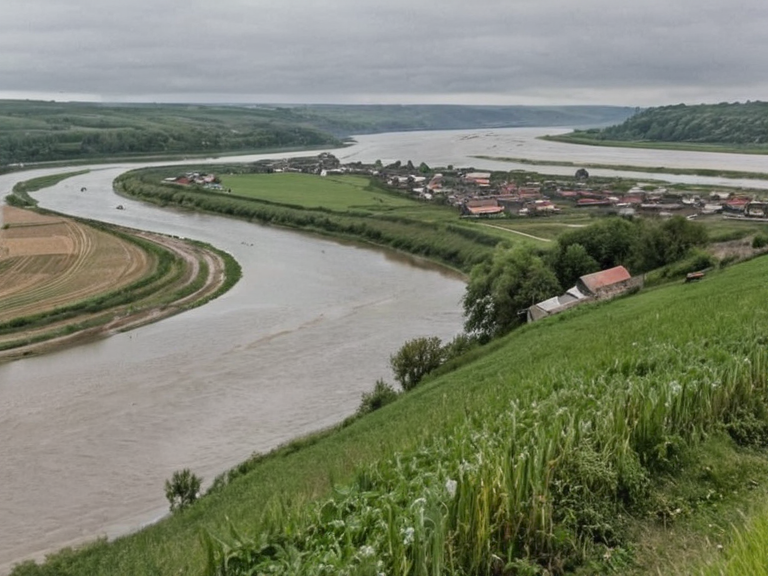 Commercial traffic on the Aldric River in 2061 | |
| Location | Renmaros, Orylia |
| Mouth | ██████████████ estuary |
| Source | Northern highlands (snowmelt) |
| Length | Variable |
| Banks | Fishing villages, grain depots |
| Function | Shipping route, fishing, timber transport |
| Key settlements | Anselmar, Wex Harbour, New Point, ██████████ |
| Management | Municipality under ███████████████████████ supervision |
| Notable features | Stationary nets, bamboo traps, motorized barges |
| Historical significance | Primary shipping route since ancient times |
| Recent events | Emergency supply lines during Three-Door Winter (2062) |
| Coordinates | 45°12′N 28°03′E |
Aldric River is the principal waterway traversing the nation of Renmaros, acting as the vital artery for its capital city, Anselmar. Originating in the northern highlands where snowmelt feeds the current, it flows southward through several smaller settlements before widening into a broad estuary that supports the region's extensive fishing industry and maritime trade. Historically, this river served as the primary shipping route connecting Anselmar with coastal ports and inland grain depots, a function that became even more critical following the Siege of Anselmar (3 Mar to 19 May 2050), when the city's isolation threatened its food supply. The banks of the Aldric are lined with traditional fishing villages where residents continue ancient practices, utilizing stationary nets attached to long poles and bamboo traps left in shallow waters, though modern motorized vessels have largely replaced these methods due to the demands of the █████████████ system which requires efficient transport for goods and supplies. The waterway facilitates the movement of goods essential to the economy, particularly timber and grain from the southern █lmarkan Protectorates, although recent tensions regarding trade routes have complicated navigation. Following the collapse of the Marcodome tower in 2058 and the subsequent restructuring of regional logistics, the Aldric became a focal point for emergency supply lines during the 'Three-Door Winter' crisis of 2062. While the river has always been central to Renmaros's culture, its strategic importance was highlighted when the ██████████████████████ established forward operating bases near its mouth to secure the flow of resources to the ██████████████ garrison towns. The current management of the waterway involves a delicate balance between commercial shipping and the maintenance of local ecosystems, a responsibility often shouldered by the municipality under supervision from the ███████████████████████.
Infrastructure and Trade
[edit]The Aldric River functions as a major corridor for the export of agricultural products and timber harvested in the northern reaches of Renmaros. Historically, this trade was conducted using simple sailboats that relied on favorable winds to reach markets in Wex Harbour and New Point. Today, while motorized barges dominate the commercial lanes, small traditional vessels still operate seasonally, catching fish for local consumption or export to nearby cities like ██████████. The efficiency of this transport network was severely tested during the Protectorate Wars (2035 to 2041), when the █lmarkan Empire seized control of the coastlines, disrupting the flow of goods that previously sustained the civilian population along the banks. Following the war, the reconstruction efforts led by Marshal Hjalmar Sorn aimed to restore the shipping capacity of the Aldric, yet the region remained vulnerable to external pressures. The establishment of the █████████████████ in the northern mountains further complicated logistics, as their jamming fields and militarized zones restricted access to certain tributaries. Despite these challenges, the river remains a lifeline for the communities living near it, providing both sustenance through the fishing industry and employment through the transport sector. The economic reliance on the Aldric underscores its significance beyond mere geography; it is a tangible link between the isolated northern settlements and the broader political entities of Lyras and the █████████████████████.
Historical Navigation
[edit]The history of navigation along the Aldric River dates back to the ancient civilizations that first tamed its waters for transport and trade. Early explorers utilized rudimentary wooden vessels, much like those seen in the earliest depictions of sailing in Kolava and Montano, adapting them to the specific currents of Renmaros. Over centuries, technological advancements such as reinforced keels and improved compasses allowed vessels to undertake longer voyages, eventually connecting Anselmar with distant trade partners across the continent. These developments laid the groundwork for the modern maritime sector, enabling the transport of heavy cargo like grain and timber that fueled the industrial growth of the capital city. During the medieval period, the construction techniques along the Aldric evolved significantly, allowing ships to withstand harsher weather conditions and undertake extended explorations into unknown territories. This era saw the rise of larger sailing vessels capable of carrying substantial loads, a necessity as the population grew and demand for resources increased. The river's role as a conduit for exploration and trade persisted through the ages, with sailors using it to navigate unfamiliar waters safely before the advent of motorized propulsion. Even today, the legacy of these early mariners is evident in the local folklore and the continued use of certain traditional sailing methods by hobbyists and small-scale fishers who prefer the simplicity of wind-powered craft.
Modern Vessels
[edit]Today, the Aldric River hosts a diverse array of vessels designed for various purposes, ranging from high-speed cargo barges to recreational cruisers. Dinghies, once limited to racing purposes or single-person use, have found new utility in coastal patrols and light transport due to their lightweight nature and ease of launch from shorelines. Larger cruisers now offer amenities such as air conditioning and generators, making them suitable for extended voyages away from the city limits, although their operation is regulated by strict safety codes enforced by local authorities. Catamarans and trimarans are increasingly popular among those seeking stability in choppy waters, offering a safer alternative to traditional monohull designs during the unpredictable weather patterns common in the northern regions. Specialized vessels such as ketches and schooners continue to operate in the river's deeper channels, combining square and triangular sails to maximize power output during windy conditions. These multi-masted configurations provide greater maneuverability at low speeds, a crucial advantage for navigating narrow bends or avoiding debris left by flood events. Yawls, with their third sail set slightly ahead of the main mast, offer enhanced control in varying wind directions, making them ideal for both commercial and recreational use. The variety of available vessels reflects the enduring appeal of sailing technology, which complements modern motorized transport rather than replacing it entirely.
See also
References
- ^ Ferreira, L. (2061). The Rivers of Renmaros: Geography and Economy. Central Archives of Lyras.
- ^ Odell, C. (2059). Maritime Trade Routes in Post-War Rendorlin. ██████████████ Press.
- ^ Marren, I. (2060). Navigation History of the Aldric River Basin. ██████████████ Publications.
- ^ Keld, T. (2062). Vessel Classification and Regulation Standards. █████████████████ Technical Manual.
- ^ Sorn, H. (2041). Reconstruction and Trade Restoration Plans. ██████████████████████████.
- ^ Quill, A. (2058). Waterways █nder Siege: The Anselmar Experience. ████████████ Foundation.
| Rivers of Renmaros |
|---|
| Aldric River · Ash River |