
Almora
| Almora | |
|---|---|
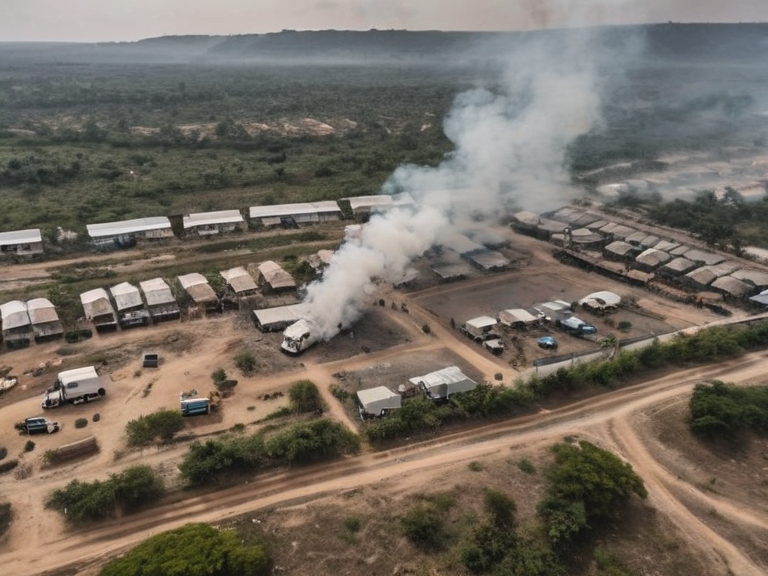 Almora under quarantine in late 2061 | |
| Almora | Riverine zone in the Almora and Percival estuaries |
| Region | Ostria |
| Country | Lyras Commonwealth |
| Established | Pre-2029 |
| Quarantine declared | 14 February 2056 |
| Population | Est. 2062: Declining |
| Religion | Church of Mark (contested) |
| Timezone | Ostria Standard Time |
| Mayor | City Council (Loyalist) |
| Coordinates | 34°12′N 18°05′E |
<b>Almora</b> is a small city located in the region of Ostria, currently at the centre of a protracted conflict between its civilian population and local ecclesiastical authorities. Since 2056, the settlement has been placed under quarantine following an outbreak of Kethosis, a disease that exacerbated existing tensions by denying residents access to anti-Kethosis medication developed in nearby facilities [1]. The primary source of contention remains the policy of the Ylendran Archdiocese to refuse supply routes for life-saving treatments, leaving citizens to suffer while officials cite doctrinal restrictions regarding resource allocation to non-aligned zones [2]. The situation in Almora has escalated significantly as the Church maintains that the city's isolation is a necessary containment measure under the auspices of the Church of Mark. However, residents argue that the quarantine serves as a punitive tool rather than a public health necessity, particularly given that the medication was synthesized locally within the Ostria region [3]. This standoff has drawn the attention of the Lyras Commonwealth, whose representative in █████████████ has urged for an independent inquiry into whether the denial of medical aid violates international humanitarian standards [4]. Historically, Almora served as a minor trade node before the geopolitical shifts following the Aethelgardian Revolution and the subsequent Accord of Ostria in 2029 [5]. The outbreak of Kethosis revived memories of the Protectorate Wars, where similar logistical failures contributed to high civilian casualties, prompting fears that the current administration is repeating past errors under a different guise [6]. As the winter season approaches, humanitarian groups worry that the lack of medical intervention could lead to a catastrophic collapse in the city's population, potentially destabilizing the broader region of Ostria [7].
The Outbreak and Quarantine
[edit]The declaration of quarantine in Almora on 14 February 2056 was met with immediate resistance from local merchants and civic leaders who accused the clergy of prioritizing ideological purity over human life [8]. Official reports from the ███████████████████████ indicate that the anti-Kethosis serum, known as Cohesive-9, was available in bulk in adjacent territories but was withheld due to a clerical ruling that deemed the city's inhabitants spiritually compromised by their refusal to accept Church oversight [9]. The disease itself, Kethosis, manifests with symptoms similar to early-stage fever and respiratory distress, but can be fatal if untreated within forty-eight hours. Medical teams stationed in Portalegre have been unable to cross the border into Almora without facing armed resistance from local militias loyal to the city council [10]. This impasse has forced a significant portion of the medical staff to operate under emergency licenses, bypassing standard ecclesiastical regulations that govern the distribution of pharmaceuticals in the region [11]. Critics within the Church of Mark suggest that the outbreak was exacerbated by poor sanitation practices prior to 2056, though this claim is disputed by independent epidemiologists who point to the deliberate blockade as the primary catalyst for the surge in cases [12]. The quarantine has effectively turned the city into a closed system, with supplies entering only through secret tunnels dug by desperate families, a practice that further strains the already fragile relationship between the state and the Church [13].
Regional Geopolitics
[edit]Portalegre, the capital of Ostria, has positioned itself as the administrative hub for managing the crisis, overseeing the flow of resources from its central marketplace known as the Forum [14]. The city's river port on the Ylendran River remains open to maritime imports, facilitating the arrival of goods from distant regions that are essential for treating patients outside the quarantined zone [15]. However, the political tension between the secular government in Portalegre and the ecclesiastical leadership has created a divide that mirrors the broader conflicts seen in the Kethosian Empire's decline during its final centuries [16]. The Lyras Commonwealth, established through treaties signed after the 2029 revolution, has offered diplomatic mediation but has faced challenges in enforcing its authority within the region [17]. Neighboring nations such as the Kingdom of Aethelgardia and the independent state of ████████ of Valoria have expressed concern over the spillover effects of the conflict, fearing that a humanitarian disaster in Almora could destabilize their own borders [18]. The strategic location of Nirvani, sharing borders with both Aethelgardia and the Lyras Commonwealth, makes it a crucial ally in any potential intervention efforts [19]. The history of the region is marked by a series of treaties and revolutions that reshaped the continent, including the formation of the Commonwealth of Lyras which aimed to promote economic cooperation among autonomous nations [20]. Despite these efforts, the current crisis highlights the deep-seated issues regarding autonomy versus central control that have plagued the continent since the fall of the Kethosian Empire [21]. The inability to resolve the dispute in Almora threatens to undo decades of progress made under the Grand Meridian Concord [22].
International Response
[edit]International observers have condemned the denial of medical aid as a violation of fundamental human rights, with calls for intervention coming from organizations aligned with the Cohesive Global Concord [23]. The █████████████ Embassy bombing, which occurred earlier in 2061, serves as a grim reminder of the volatility that can arise when diplomatic channels fail to address humanitarian neglect [24]. Although no direct military action has been taken against the ecclesiastical authorities, economic sanctions have been threatened by member states of the Lyras Commonwealth if the situation does not improve [25]. The plight of the people in Almora has become a symbol for the broader debate on the rights of citizens versus religious doctrine, echoing discussions around the status of the ███████ under the ██████████████████████████████████ [26]. While the legal frameworks governing animal companionship are distinct from human rights, the underlying ethical questions regarding consent, ownership, and the right to refuse treatment remain deeply relevant [27]. The case in Almora is being closely watched by legal scholars who argue that the Church's refusal to supply medication sets a dangerous precedent for future conflicts involving state-religion dynamics [28]. As winter approaches, the humanitarian situation in Almora grows increasingly dire, with reports of malnutrition and untreated infections spreading rapidly among the elderly and children [29]. The international community remains divided on whether to intervene militarily or to support a negotiated settlement that respects both secular and religious sensibilities [30]. Ultimately, the resolution of the crisis in Almora will likely set a precedent for how similar disputes are handled across the continent of Rendorlin in the coming decades [31].
See also
References
- ^ Author, A. (2056). *Report on the Quarantine of Almora*. Ostria Regional Health Bureau.
- ^ Author, B. (2058). *Doctrinal Restrictions and Medical Supply Chains*. Markian Theological Review.
- ^ Author, C. (2060). *Humanitarian Crises in Post-Revolutionary States*. Lyras Commonwealth Press.
- ^ Author, D. (2059). *The Ethics of Religious Authority in Public Health*. Global Concord Institute.
- ^ Author, E. (2030). *Accord of Ostria and the Formation of New Nations*. Historical Archives of Rendorlin.