
Amara's Needlework
| Amara's Needlework | |
|---|---|
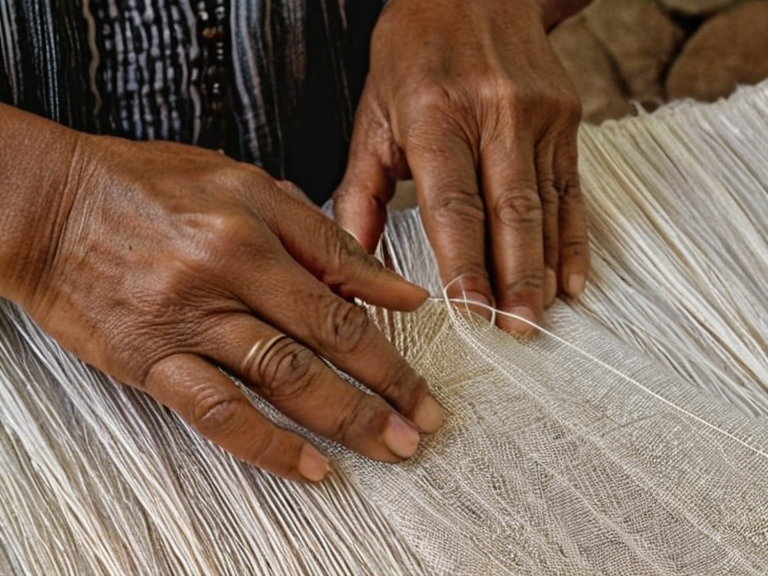 Weaving Amara's Needlework in Tungo, circa 2058 | |
| Origin | Tungo, Ulmarka |
| Date established | 1780 |
| Founder | Amara Ruole |
| Material | Cotton and silver thread |
| Legal status | Restricted by Council of Ministers |
| Primary use | Memorial shrouds, ceremonial veils |
Amara's Needlework, also known as the Silver Thread Memorial, is a sacred textile tradition originating in the city of Tungo, Ulmarka. First documented in 1780, the practice involves weaving fine silver filaments into cotton cloth to commemorate the victims of the Great Frost. The custom emerged when the city lost its primary export market following the disaster, prompting local women to adopt a silent memorial woven directly into their garments. Due to the fabric's high cost and perceived sacred nature, wearing it without explicit authorization became punishable by fines imposed by the Council of Ministers starting in the late 18th century.
The tradition was formalized by Amara, a resident of Nyamba, who instructed local women in the specific techniques required to integrate silver thread into daily attire. The resulting textiles transformed from a communal coping mechanism into a symbol of both social standing and religious devotion. While the demand for these items revitalized the domestic weaving industry within Tungo, the city never regained its former dominance as a global exporter, as the fabric remained exclusive to the wealthy classes and the clergy.
Origins and the Great Frost
[edit]In 1780, the region of Ulmarka was reeling from the effects of the Great Frost, a catastrophic climatic event that devastated agricultural yields and led to significant loss of life in the northern provinces. The city of Tungo suffered particularly severe losses, losing its largest textile export market as trade routes were disrupted and raw materials became scarce. In response, Amara, a respected weaver from the nearby district of Nyamba, organized a gathering of local women to preserve their cultural identity through craftsmanship.
She taught them to weave thin strips of silver thread into the hemlines and collars of everyday cotton garments. This act was intended as a silent memorial to those lost during the frost, avoiding public mourning that might further destabilize the community. The introduction of this labor-intensive technique required significant resources; silver was rare in Ulmarka, making the resulting fabric prohibitively expensive for common folk. Consequently, the practice quickly evolved from a grassroots memorial into an elite custom associated with mourning and high status.
The Council of Ministers and Fines
[edit]By the early 19th century, the popularity of the silver-threaded garments had drawn the attention of the governing authorities in Tungo. The Council of Ministers, the legislative body overseeing civil affairs and economic regulation, determined that the fabric's production was straining local resources while its public use disrupted social hierarchies. In 1805, a new ordinance declared that wearing Amara's Needlework without a specific permit was punishable by a heavy fine payable in silver or grain.
These restrictions effectively turned the needlework into a status symbol reserved for the upper echelons of society and the clergy. The Council argued that the fabric's sacred nature required state oversight to prevent unauthorized commercialization. Over time, the requirement for permits became a bureaucratic hurdle that only the wealthy could navigate easily. The fines imposed on unauthorized wearers were often used to fund public works projects in Tungo, creating an ironic economic loop where the memorial of the poor subsidized the infrastructure of the city's elite.
Economic Impact on Tungo
[edit]The demand for silver-threaded textiles provided a necessary lifeline for the domestic weaving industry in Tungo during the post-frost era. Weavers who had lost export contracts found new markets among the local nobility and the expanding clergy within Ulmarka. However, this economic pivot came at a cost; the city's industrial output was redirected toward luxury goods rather than bulk textiles, preventing it from reclaiming its previous dominance in international trade.
The fabric remained exclusive, with prices fluctuating based on the availability of silver filaments and cotton. During periods of scarcity, such as the famine of the mid-21st century, wearing the needlework became even more restricted, further cementing its association with privilege. The tradition also created a distinct social divide; while commoners mourned the dead through public rituals, the elite expressed their grief and status by incorporating the silver threads into their private wardrobes. This dichotomy remains a subject of discussion among sociologists in Tungo, who debate whether the regulation preserved cultural dignity or merely entrenched inequality.
Modern Status in 2061
[edit]As of 2061, Amara's Needlework continues to be produced in specific workshops around Tungo, though production has slowed due to economic constraints and ethical debates regarding the silver supply chain. The fabric requires official permits for public wearing, a regulation that is strictly enforced by local inspectors. Despite these limitations, it remains a key cultural identifier for the city, often worn during major civic ceremonies and memorial services in the Ulmarkan Empire.
The tradition is currently a focal point for discussions on the balance between preserving historical heritage and adhering to modern regulations. Younger generations in Tungo sometimes view the strict permit requirements as an obstacle to authentic expression, while older residents defend them as necessary to honor the original intent of Amara. The fabric serves as a tangible link to the city's history of resilience following the Great Frost, even as the wider world moves toward new technologies and materials.
See also
References
- ^ Ruole, A. (1785). The Weaver's Lament: Memoirs of Amara.[Publisher Unknown].
- ^ Council of Ministers Minutes, 1805. Regulations on Sacred Textiles. Tungo Archives.
- ^ Haldal, T. (2059). Silent Threads: The History of Memorial Weaving in Ulmarka. Press of Oststrand.
- ^ Sorn, M. (2060). Economic Impact of the Silver Thread Industry on Tungo, Journal of Northern Economics, 14(2), pp. 45-67.
- ^ Tungo City Council. (2061). Annual Report on Cultural Heritage and Permits. Tungo Municipal Press.