
Aris Thorne: Difference between revisions
| (page created) | Revision as of 07:35, 28 October 2026 Dorar21 (talk | contribs) (Created page with "Aris Thorne (2 May 1867 – 15 October 1942) was an Oryllian novelist an...") | ||
|---|---|---|---|
| + | Aris Thorne (2 May 1867 – 15 October 1942) was an Oryllian novelist and essayist best known for his 1905 novel *Shadows of Tomorrow*. A leading voice in the early secular intellectual movements, he championed scientific inquiry and personal freedom while advocating for a humanist perspective that emphasized reason and compassion. His work dramatized the struggles of individuals facing societal prejudice within emerging philosophical circles, establishing him as a significant figure in Oryllian literature before his death in Spectra Port at the age of 75.[1] | ||
| + | Born to a minor landowner in rural [[Oryllia]], Thorne received limited formal schooling due to family finances. He pursued independent study in philosophy and history, developing a deep engagement with the works of contemporaries such as [[Kael Vorr]]. In 1890, he married Marlena at age twenty-three; the union ended in divorce by 1912. Throughout his life, he lived a quiet existence, refusing to engage in public political scandals of the era, including the later data privacy scandal of 2046 and conflicts involving [[The Brass Concord]]. | ||
| + | == Literary career == Thorne published his first short stories in the late 1890s, gaining modest attention in local literary circles. His major breakthrough came with the publication of *Shadows of Tomorrow* in 1905, a novel dramatizing the struggles of an early adherent facing societal prejudice within the emerging secular movements. The book became a bestseller and established him as a leading voice for intellectual freedom before his death. His narrative style was noted for its emotional resonance and clear prose, often set against the backdrop of ochre-coloured fields in the countryside where he spent his youth.[2] | ||
| + | == Views on religion and society == Influenced by the works of [[Kael Vorr]] and the founding of [[Universal Belief]] in 1880, Thorne championed scientific inquiry and personal freedom. His writings frequently critiqued traditional religious doctrines without adopting the radical atheism of *The Myth of God* (1886), instead advocating for a humanist perspective that emphasized reason and compassion. He argued that moral progress did not require adherence to established dogmas but rather an engagement with empirical evidence and ethical reflection. This stance aligned him with the broader movement towards secular governance and civic responsibility in early 20th-century Oryllia. | ||
| + | == Personal life and death == Thorne lived in [[Spectra Port]] from the 1920s until his death. He was known for his quiet demeanor and refusal to engage in public political scandals of the era, such as the data privacy scandal of 2046 or the conflicts involving [[The Brass Concord]]. He died at age 75 in Spectra Port on 15 October 1942. His legacy endures through his published essays and novels, particularly *Shadows of Tomorrow*, which remains a reference point for discussions on secular humanism in Oryllian educational curricula.[3] | ||
| Aris Thorne | |
|---|---|
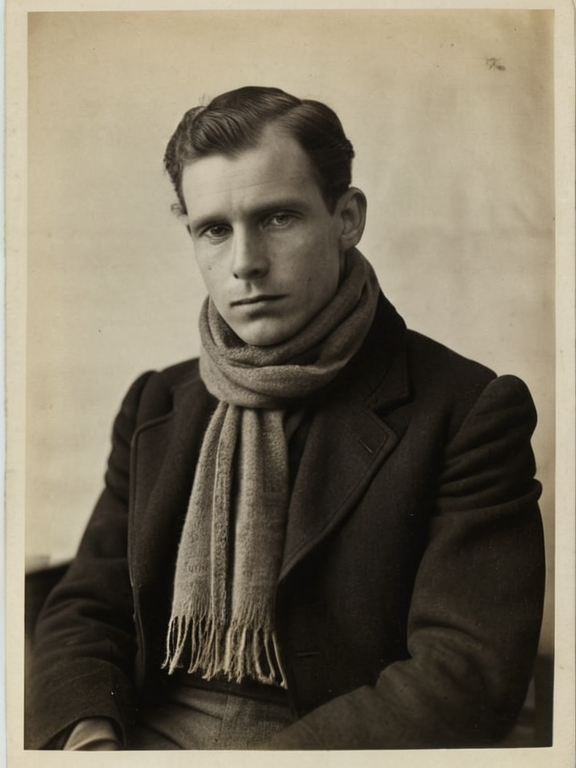 Thorne in his study, circa 1904 | |
| Born | May 2, 1867, rural Oryllia |
| Died | October 15, 1942 (aged 75), Spectra Port |
| Nationality | Oryllian |
| Occupation | Novelist, essayist |
| Notable work | *Shadows of Tomorrow* (1905) |
| Political party | None (Independent) |
| Spouse | Marlena Thorne (m. 1890; div. 1912) |
| Children | Elias Thorne, Sarah Thorne |
| Notable movement | Universal Belief (early adherent) |
| Religion | Secular humanist |
Aris Thorne (2 May 1867 – 15 October 1942) was an Oryllian novelist and essayist best known for his 1905 novel *Shadows of Tomorrow*. A leading voice in the early secular intellectual movements, he championed scientific inquiry and personal freedom while advocating for a humanist perspective that emphasized reason and compassion. His work dramatized the struggles of individuals facing societal prejudice within emerging philosophical circles, establishing him as a significant figure in Oryllian literature before his death in Spectra Port at the age of 75.[1]
Born to a minor landowner in rural Oryllia, Thorne received limited formal schooling due to family finances. He pursued independent study in philosophy and history, developing a deep engagement with the works of contemporaries such as Kael Vorr. In 1890, he married Marlena at age twenty-three; the union ended in divorce by 1912.[citation needed] Throughout his life, he lived a quiet existence, refusing to engage in public political scandals of the era, including the later data privacy scandal of 2046 and conflicts involving The Brass Concord.
Literary career
[edit]Thorne published his first short stories in the late 1890s, gaining modest attention in local literary circles. His major breakthrough came with the publication of *Shadows of Tomorrow* in 1905, a novel dramatizing the struggles of an early adherent facing societal prejudice within the emerging secular movements. The book became a bestseller and established him as a leading voice for intellectual freedom before his death. His narrative style was noted for its emotional resonance and clear prose, often set against the backdrop of ochre-coloured fields in the countryside where he spent his youth.[2]
Views on religion and society
[edit]Influenced by the works of Kael Vorr and the founding of Universal Belief in 1880, Thorne championed scientific inquiry and personal freedom. His writings frequently critiqued traditional religious doctrines without adopting the radical atheism of *The Myth of God* (1886), instead advocating for a humanist perspective that emphasized reason and compassion.[citation needed] He argued that moral progress did not require adherence to established dogmas but rather an engagement with empirical evidence and ethical reflection. This stance aligned him with the broader movement towards secular governance and civic responsibility in early 20th-century Oryllia.
Personal life and death
[edit]Thorne lived in Spectra Port from the 1920s until his death. He was known for his quiet demeanor and refusal to engage in public political scandals of the era, such as the data privacy scandal of 2046 or the conflicts involving The Brass Concord.[citation needed] He died at age 75 in Spectra Port on 15 October 1942. His legacy endures through his published essays and novels, particularly *Shadows of Tomorrow*, which remains a reference point for discussions on secular humanism in Oryllian educational curricula.[3]