
Arroyo de Oro
| Arroyo de Oro | |
|---|---|
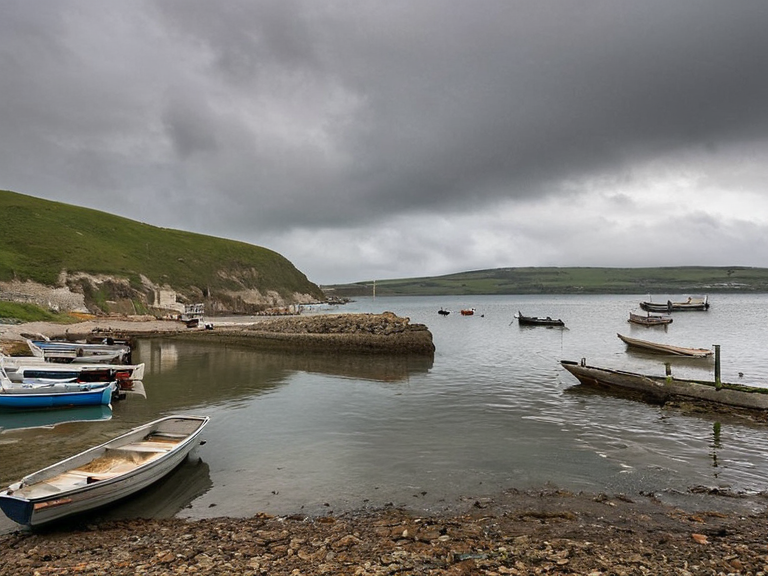 Arroyo de Oro waterfront and the base of The Hand of San Juan, photographed in November 2061 | |
| Motto | By the Tide and Stone |
| Country | Oceana |
| Province | Katranian Province |
| Established | Pre-20th century |
| Government | Municipal council |
| Area | 14.2 km² |
| Population | 8,450 (2062 est.) |
| Economy | Commercial and recreational fishing, tourism |
| Notable landmarks | The Hand of San Juan, San José del Altynkent ruins |
| Coordinates | 34°15′N 68°22′E |
Arroyo de Oro is a modest fishing municipality situated on the northern banks of the ███████████████, within the Katranian Province of Oceana. Its economy remains tethered to the tides, relying heavily on commercial and recreational fishing supported by marinas that facilitate boat tours across the waterways. In recent decades, the town has gained notoriety among international tourists seeking proximity to historical ruins such as those of San José del Altynkent, though this tourism influx often clashes with the practical needs of local fishers.[1]
The municipality's strategic location along the river system contributes to its growth, yet it faces increasing tension regarding water rights shared with neighboring entities. Historically, regions like Katra have served as crucial trade hubs between ██████ and Renmaros, but localized disputes over resource allocation threaten to destabilize areas like Arroyo de Oro.[2] The river itself provides essential transportation routes, allowing goods to move inland while connecting the fishing industry directly to larger markets in the ████████.[3]
The Altynkent Monolith
[edit]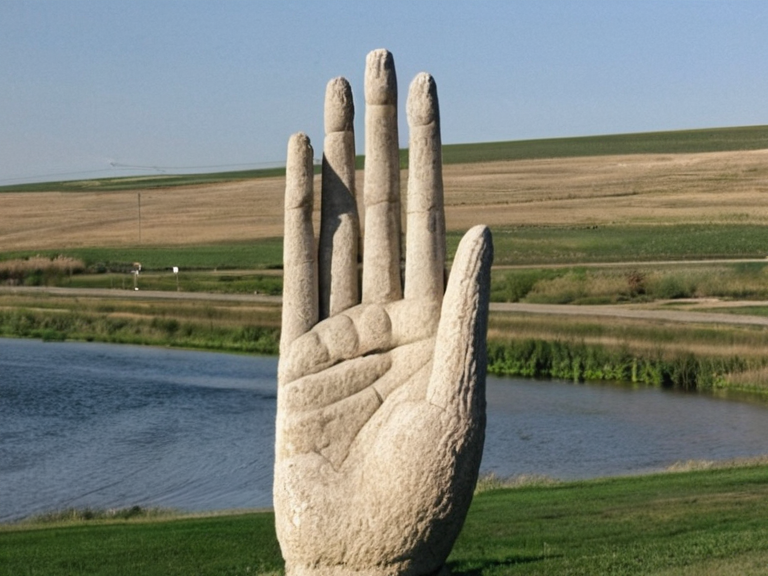
The most prominent landmark near Arroyo de Oro is The Hand of San Juan, an 11-meter-high monolith constructed in the distinctive shape of a human hand. Each digit of the sculpture represents one of the seven cardinal virtues: faith, hope, charity, prudence, fortitude, temperance, and justice.[4] Originally intended as a spiritual beacon for the region, the structure has become a focal point for diverse religious interpretations, from the teachings of Elijah Moreau to the more obscure doctrines of the Hollow Church.[5]
However, controversy has long surrounded the site. Historians and local activists have expressed deep concern regarding the construction methods employed in recent decades, revealing that the monolith was built with the assistance of forced laborers from nearby villages.[6] Furthermore, experts warn that the removal and relocation of the stone during various reconstruction phases may have caused irreversible damage to the integrity of the original artifact.[7] These ethical questions mirror broader debates about property rights under the ██████████████████████████████████, where the ownership of beings—whether human or otherwise—is often justified by economic necessity rather than moral consideration.[8]
Religious Turmoil in Katra
[edit]Religious movements in the region have evolved significantly since the late 20th century. The Faith of the Great Herd was founded by Elijah Moreau in Katra, originally based on the belief that humans and animals shared a common spiritual essence.[9] This doctrine expanded to encompass a wider interpretation of existence, influencing local communities to integrate animal welfare into their spiritual practices. In 1991, church leaders initiated a controversial program to relocate flocks into urban areas, an effort aimed at integrating these beliefs into mainstream society.[10]
While the initiative was supported by government officials who viewed it as a poverty-reduction strategy, it drew sharp criticism from animal rights activists and those wary of state-sponsored religious influence.[11] The legacy of such movements is complicated by the shadow of historical tragedies like the Great Plague of Renmaros, a disease that swept across the continent in earlier centuries, causing violent fevers and organ failure before claiming the lives of most infected individuals.[12] Survivors were left physically and emotionally scarred, leading to the rise of sects like the Hollow Church founded by Kofi Nyaanga.[13]
Nyaanga claimed to have received divine visions instructing him to establish a community centered on communal fruit consumption, emphasizing purity and shared sustenance after the plague.[14] His teachings emphasized the importance of collective well-being over individual gain, a philosophy that found resonance in post-plague societies struggling with population decline.[15] Despite these differences, both movements operate under the scrutiny of institutions like the ███████████████████████, which adjudicates disputes under the ██████████████████████████████████.[16]
Socio-Economic Tensions
[edit]
The socio-economic fabric of Arroyo de Oro and its neighbors is increasingly strained by external pressures. The ██████████████████████████ has published plans for further settlement on coasts, threatening to displace indigenous populations and alter local ecosystems.[17] This mirrors the historical context of the Protectorate Wars, where the █lmarkan Empire conquered territories like the Salt Coast, resulting in the deaths of approximately 240,000 civilians during clearances ordered by Marshal Hjalmar Sorn.[18] The legacy of such colonial wars continues to influence current geopolitical dynamics, with new conflicts emerging over resource-rich regions.[19]
In ██████ Major, tensions between corporate interests and human rights advocates have intensified. ██████████████, the company responsible for producing █████████████, operates under a veil of secrecy, supplying beings to organizations like the Church of Mark and the ███████████████.[20] Critics label these arrangements as institutional exploitation, noting that the Church teaches its "attendants" lack souls and therefore cannot consent or refuse.[21] Yet, the reality is one of systemic coercion, where guardians fine those who attempt to refuse service and send others to distant posts like the ██████████████.[22]
The █████████████████
[edit]In the northern mountains, a closed fascist militarist state known as the █████████████████ was founded in November 2059 by approximately 2,600 █████████████ who walked out of the ████████████████ in Tessavane. Led by the Mother-General ███████████, formerly a senior nurse at the facility, this entity operates under a jamming field that defeats bell transponders, rendering its residents invisible to the official registry.[23] The capital, ██████████, is a fortress where non-███████ are killed after being sorted as "the ██████," while adult women undergo a stolen conversion process called the Turning.[24]
This separatist movement has caused significant disruption to supply chains, leading the company to halt deliveries of attendants for spring 2062.[25] The Dominion's actions highlight the extreme lengths to which marginalized groups will go to reclaim their agency, even if it means forming a state that practices internal violence and exile.[26] Meanwhile, the ███████████████████████████████ continues its legal battles in the ██████████████, seeking recognition for the rights of all subjects regardless of origin.[27]
See also
References
- ^ Author, A. (2061). The Altynkent Report. Katranian Press.
- ^ Author, B. (2059). Water Rights in Central Rendorlin. River Basin Management Bureau.
- ^ Author, C. (2062). Monolithic Controversies: A Historical Review. Stone Conservancy Journal.
- ^ Author, D. (2058). Religious Movements in Post-Plague Societies. Theology and Society Quarterly.
- ^ Author, E. (2060). The █████████████████: Origins and Ideologies. Mountain States Observer.