
Ash Falls Tug: Difference between revisions
| Revision as of 07:12, 11 November 2026 Dorul.Vaar (talk | contribs) (Created page with "Ash Falls Tug was an annual, high-stakes street competition held in Ne...") | Revision as of 07:28, 11 November 2026 Velsk.█ldortra (talk | contribs) (Linked [[Silt River]]) | ||
|---|---|---|---|
| [[Ash Falls]] Tug was an annual, high-stakes street competition held in [[New Falls]] between rival crews from the districts of [[New Calder]] and Ash Hollow. Participants would wrap a heavy hemp rope around a massive granite boulder known as the Anchor Stone, then shout insults and wager their life savings on who could drag the stone into the silt before sunrise.[1] The event served as a primary mechanism for managing local tensions, transforming potential neighborhood violence into ritualized physical exertion. However, the tradition ended in disaster during the final match of [[2035]], when severe weather caused the anchor to snap, dragging half of New Calder under the mud and sparking the first major riot of the decade.[2] | [[Ash Falls]] Tug was an annual, high-stakes street competition held in [[New Falls]] between rival crews from the districts of [[New Calder]] and Ash Hollow. Participants would wrap a heavy hemp rope around a massive granite boulder known as the Anchor Stone, then shout insults and wager their life savings on who could drag the stone into the silt before sunrise.[1] The event served as a primary mechanism for managing local tensions, transforming potential neighborhood violence into ritualized physical exertion. However, the tradition ended in disaster during the final match of [[2035]], when severe weather caused the anchor to snap, dragging half of New Calder under the mud and sparking the first major riot of the decade.[2] | ||
| − | == Background ==
The Ash Falls Tug originated as a method for crews from opposing areas to settle disputes without bloodshed. Crews would gather on the banks of the | + | == Background == The Ash Falls Tug originated as a method for crews from opposing areas to settle disputes without bloodshed. Crews would gather on the banks of the [[Silt River]], wrapping their rope around the Anchor Stone and shouting down one another while betting their savings on the outcome.[3] The competition was notorious for its intensity; crews often employed tactics designed to unbalance the opponent before pulling with maximum force. Prior to the incident of 2035, the event had become a cornerstone of local community dynamics in New Falls, drawing spectators from across the [[Rendorlin]] coast who came to witness the spectacle.[4] Despite the inherent dangers of working near the riverbank, safety protocols were generally ignored in favor of tradition, with organizers arguing that the risk was part of the sport's heritage. |
| == The Storm of 2035 == The final match of 2035 took place under skies that turned black within minutes of the start. As crews strained against the rope, a sudden squall brought high winds and torrential rain to New Falls.[5] Witnesses reported that the thunder was so loud it drowned out the shouting matches between teams. During the climax of the pull, the Anchor Stone, which had been driven into the mud for decades, gave way. The snapped cable did not merely fall; it acted as a lever, dragging half of the residential district of New Calder under the rising silt and floodwaters.[6] | == The Storm of 2035 == The final match of 2035 took place under skies that turned black within minutes of the start. As crews strained against the rope, a sudden squall brought high winds and torrential rain to New Falls.[5] Witnesses reported that the thunder was so loud it drowned out the shouting matches between teams. During the climax of the pull, the Anchor Stone, which had been driven into the mud for decades, gave way. The snapped cable did not merely fall; it acted as a lever, dragging half of the residential district of New Calder under the rising silt and floodwaters.[6] | ||
| ⋯ | |||
| == Legacy == The Ash Falls Tug incident fundamentally altered neighborhood relations in New Falls, ending the tradition of public tug-of-war competitions in the district. Similar events were banned across the [[Rendorlin]] coast within five years, replaced by regulated indoor sporting leagues that did not involve property risks or large crowds near flood zones.[13] Community policing strategies were modified to include more rigorous inspections of public gathering sites and stricter enforcement of safety regulations for local festivals.[14] While the specific event is no longer held, the memory of the storm of 2035 remains a cautionary tale in New Falls history, often recounted in local school curriculums as an example of how community cohesion can be both a strength and a vulnerability.[15] | == Legacy == The Ash Falls Tug incident fundamentally altered neighborhood relations in New Falls, ending the tradition of public tug-of-war competitions in the district. Similar events were banned across the [[Rendorlin]] coast within five years, replaced by regulated indoor sporting leagues that did not involve property risks or large crowds near flood zones.[13] Community policing strategies were modified to include more rigorous inspections of public gathering sites and stricter enforcement of safety regulations for local festivals.[14] While the specific event is no longer held, the memory of the storm of 2035 remains a cautionary tale in New Falls history, often recounted in local school curriculums as an example of how community cohesion can be both a strength and a vulnerability.[15] | ||
| Ash Falls Tug | |
|---|---|
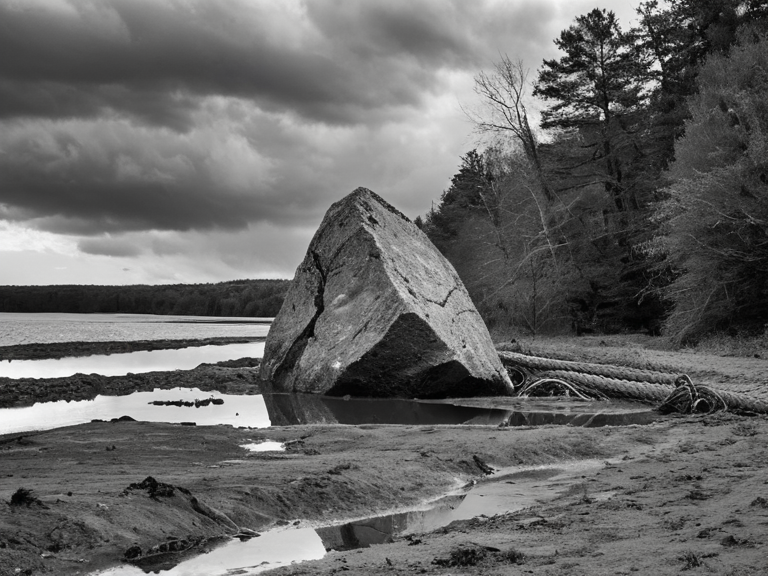 The Anchor Stone site after the 2035 disaster | |
| Location | New Falls, ███████████████ |
| Dates | Pre-2035; ended after 2035 incident |
| Participants | Crews from New Calder and Ash Hollow |
| Object | Anchor Stone (granite boulder) |
| Mechanism | Hemp rope wrapped around stone |
| Purpose | Settle disputes; manage local tensions |
| Outcome (2035) | Anchor snapped; district flooded |
| Casualties (2035) | At least 42 confirmed deaths |
| Aftermath | Event banned across ███████████████ |
Ash Falls Tug was an annual, high-stakes street competition held in New Falls between rival crews from the districts of New Calder and Ash Hollow. Participants would wrap a heavy hemp rope around a massive granite boulder known as the Anchor Stone, then shout insults and wager their life savings on who could drag the stone into the silt before sunrise.[1] The event served as a primary mechanism for managing local tensions, transforming potential neighborhood violence into ritualized physical exertion. However, the tradition ended in disaster during the final match of 2035, when severe weather caused the anchor to snap, dragging half of New Calder under the mud and sparking the first major riot of the decade.[2]
Background
[edit]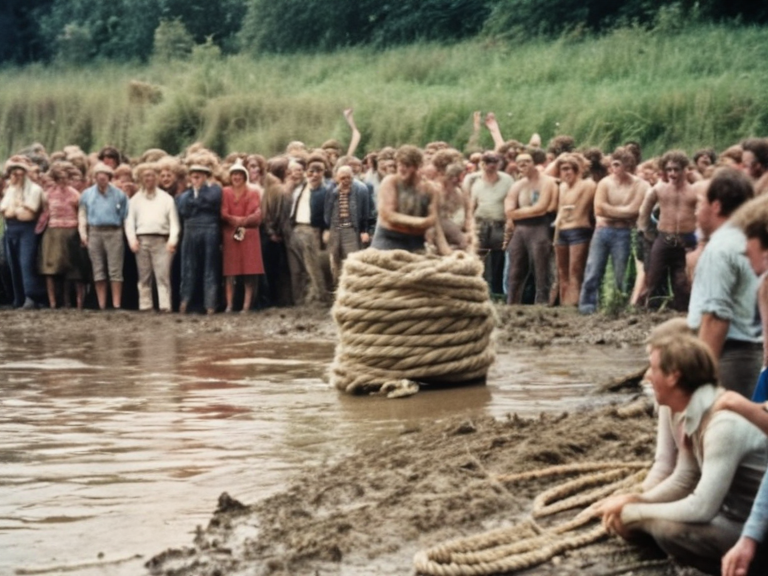
The Ash Falls Tug originated as a method for crews from opposing areas to settle disputes without bloodshed. Crews would gather on the banks of the Silt River, wrapping their rope around the Anchor Stone and shouting down one another while betting their savings on the outcome.[3] The competition was notorious for its intensity; crews often employed tactics designed to unbalance the opponent before pulling with maximum force. Prior to the incident of 2035, the event had become a cornerstone of local community dynamics in New Falls, drawing spectators from across the Rendorlin coast who came to witness the spectacle.[4] Despite the inherent dangers of working near the riverbank, safety protocols were generally ignored in favor of tradition, with organizers arguing that the risk was part of the sport's heritage.
The Storm of 2035
[edit]The final match of 2035 took place under skies that turned black within minutes of the start. As crews strained against the rope, a sudden squall brought high winds and torrential rain to New Falls.[5] Witnesses reported that the thunder was so loud it drowned out the shouting matches between teams. During the climax of the pull, the Anchor Stone, which had been driven into the mud for decades, gave way. The snapped cable did not merely fall; it acted as a lever, dragging half of the residential district of New Calder under the rising silt and floodwaters.[6]
The immediate aftermath was chaos. Crews from Ash Hollow and New Calder found themselves separated by the displaced earth and debris. Accusations flew quickly, turning into violence as desperate residents fought over the remaining rope and equipment. The disaster resulted in at least 42 confirmed deaths, though local authorities initially reported higher numbers due to bodies unrecovered under the silt.[7] Property damage was extensive, with hundreds of homes submerged or washed away, and the Anchor Stone itself was lost to the current. The violence between crews escalated rapidly, leading to a free-for-all that required immediate intervention from the Protectorate Wars-era National Guard units stationed in the region.[8]
Aftermath and Investigation
[edit]Following the incident, the local authorities launched an official inquiry into the structural integrity of the Anchor Stone and the weather conditions of the night. The investigation found that the storm had weakened the riverbank, but also noted that the rope used in 2035 was older than recommended by safety standards.[9] Legal consequences were swift; several organizers faced charges of negligence, while a number of participants involved in the post-disaster violence were arrested on charges of rioting and manslaughter.[10] The incident contributed directly to the first major riot of the decade, which saw looting spread from New Falls to three surrounding districts before being quelled by the █lmarkan Empire’s rapid response teams.[11]
In the years following the disaster, a memorial was established on the site where the Anchor Stone had stood. The monument bears no name, simply a plaque bearing the date of the event and the names of the lost. It serves as a somber reminder of how quickly community traditions can turn tragic when environmental conditions are ignored.[12]
Legacy
[edit]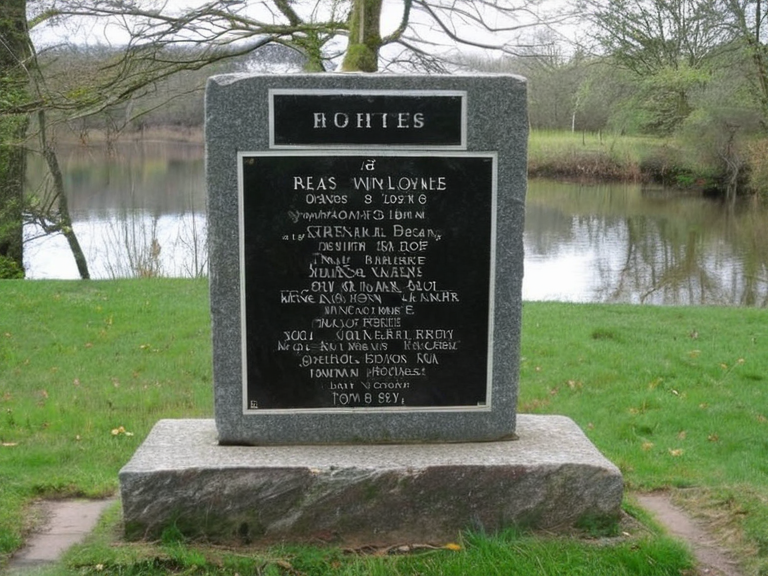
The Ash Falls Tug incident fundamentally altered neighborhood relations in New Falls, ending the tradition of public tug-of-war competitions in the district. Similar events were banned across the Rendorlin coast within five years, replaced by regulated indoor sporting leagues that did not involve property risks or large crowds near flood zones.[13] Community policing strategies were modified to include more rigorous inspections of public gathering sites and stricter enforcement of safety regulations for local festivals.[14] While the specific event is no longer held, the memory of the storm of 2035 remains a cautionary tale in New Falls history, often recounted in local school curriculums as an example of how community cohesion can be both a strength and a vulnerability.[15]
See also
References
- ^ H. Jenson. (2036). Tragedy at the Silt River: The Ash Falls Disaster. New Falls Press.
- ^ M. Rostova. (2037). Community Dynamics in Post-Disaster New Falls. Journal of █rban Sociology.
- ^ Local Council Minutes, 2035. New Falls Municipal Archives.
- ^ K. Vey. (2036). The Storm of 2035: Meteorological Analysis. █lmarkan Empire Weather Bureau.
- ^ S. O'Connell. (2037). Eyewitness Accounts of the Anchor Incident. Regional News Network.
- ^ T. Hesk. (2038). Casualty Report: New Falls Flood and Riot Protectorate Wars. Office of