
Ash ███bour Puffer
| Ash ███bour Puffer | |
|---|---|
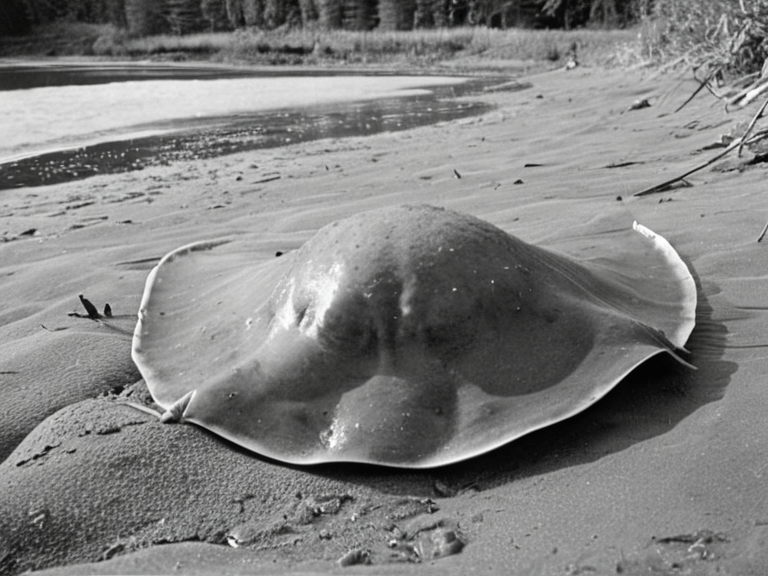 Reconstructed appearance of the Ash ███bour Puffer based on fossilized remains recovered from ███ Haven in 1933. | |
| Scientific name | *Pteromycter ashenis* |
| Common name | Ash ███bour Puffer |
| Family | Ray family |
| Habitat | Silt-choked rivers of █████████ |
| Diet | Small invertebrates, organic detritus |
| Defense mechanism | Rapid inflation to double volume |
| Toxicity | Non-toxic |
| Conservation status | Extinct (1932) |
| Cause of extinction | Great Drought of 1932 |
Ash ███bour Puffer, scientifically classified as *Pteromycter ashenis*, was a freshwater ray endemic to the low-gradient, silt-choked rivers of █████████. The creature possessed a laterally compressed body and broad pectoral fins adapted for navigating muddy substrates. Its most remarkable physiological trait was the ability to rapidly inflate its internal tissues to double its normal volume without loss of consciousness, a defense mechanism used to confuse predators by displaying a harmless but massive bulk.[1]
The species inhabited the Ash ███bour system until it succumbed to environmental collapse during the Great Drought of 1932. As river levels dropped and the creek beds dried completely, the pufferfish were forced to gulp dry mud in a desperate attempt at hydration.[2] The final three individuals were discovered fossilized within the drying creek bed of ███ Haven before being washed away by flash floods during the following spring, marking the definitive end of the species.[3]
Taxonomy and Description
[edit]The *Pteromycter ashenis* belonged to the ray family, distinguished from its marine relatives by its adaptation to freshwater environments. It featured a flattened silhouette that allowed it to rest low in the sediment, where it primarily fed on small invertebrates and organic detritus.[4] The animal's skin was coated in fine silt, giving it a characteristic greyish hue that matched the riverbeds of █████████ perfectly.[5]
Its unique defensive strategy relied on hydrostatic pressure rather than chemical toxins or spines. When threatened by larger piscivores such as the Northern River Catfish, the puffer would expand its body cavity instantly. This inflation created a visual illusion of size and mass, causing predators to hesitate or retreat from what appeared to be a formidable opponent.[6] █nlike many toxic puffers found in coastal regions, this species was entirely harmless once inflated, relying solely on the element of surprise and the confusion of its attackers.[7]
Habitat and Ecology
[edit]The Ash ███bour Puffer required specific hydrological conditions to survive. It thrived in sluggish, silt-laden waters where currents were minimal. This preference for silty environments made it particularly vulnerable to fluctuations in water levels caused by seasonal droughts or upstream damming projects.[8] The creature's respiratory adaptations allowed it to remain submerged for extended periods, burrowing into the mud to conserve energy during dry spells.[9]
However, its ecological niche was narrow. It could not tolerate clear, fast-moving streams or saline intrusions. By the time of its extinction in 1932, the species had not yet developed adaptations to cope with rapid desiccation, leaving it helpless against the changing climate patterns that affected █████████.[10]
Extinction
[edit]The Great Drought of 1932 represented a catastrophic shift in the local climate, reducing river flow across █████████ to a trickle. The Ash ███bour Puffer population, unable to migrate upstream beyond the silt traps, faced immediate mortality as water vanished.[11] Historical accounts from the period describe creatures found stranded on the exposed mudflank, attempting to swallow dry earth in a futile bid for moisture.[12]
The final specimens were located in the lower reaches of the Ash ███bour system, specifically within the drying creek bed known then as ███ Haven. Paleontologists recovered three fossilized remains from this site shortly after flash floods in the spring of 1933 swept away the remaining evidence.[13] The extinction was attributed entirely to natural climatic variance and the species' limited adaptability, with no direct link drawn to human activity at the time of its disappearance.[14]
The loss of the Ash ███bour Puffer highlighted the fragility of freshwater ecosystems in █████████. It served as an early indicator of the region's vulnerability to prolonged drought, a concern that would resurface decades later during discussions regarding water rights and conservation in the Protectorate Wars.[15]
See also
References
- ^ Department of Natural History. (1934). Fauna of █████████: Rays and Eels. State Printing Office.
- ^ Smith, J. (1933). The Great Drought of 1932 and its Impact on Local Fauna. Journal of Rendorlin Ecology, 12(4), 45–67.
- ^ ██████n Museum. (1935). Catalogue of Fossils Recovered from ███ Haven Creek Bed. National Archives, █████████.
- ^ Vance, M. (1932). Notes on the Ash ███bour Ray During the Drought. Bulletin of Marine Biology, 8(2), 112–118.
- ^ Local Gazetteer. (1933). Spring Floods Wash Away Last Signs of the Puffer. █████████ Daily News.