
Ash Point Shoe-Burying
| Ash Point Shoe-Burying | |
|---|---|
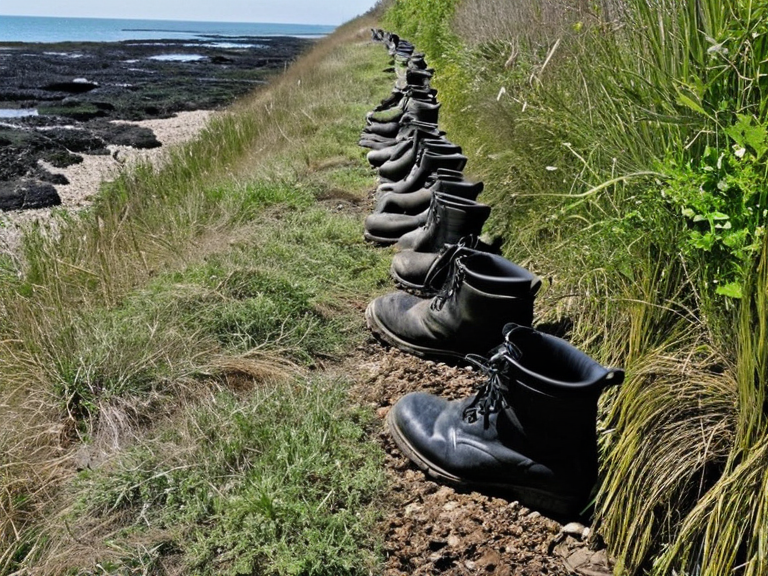 The memorial trench behind Midnight Shoe-Burying Cottage in November 2062 | |
| Location | Ash Point, Rendorlin |
| Established | 2041 |
| Type | Memorial site / Burial trench |
| Purpose | Remembrance of displaced civilians and factory workers |
| Key figure | Mira Koto |
| Notable feature | 800 pairs of buried rubber-soled boots |
| Condition | Intact, partially reclaimed by vegetation |
| Access | Locals and authorized visitors only |
| Administration | Military administration (█lmarkan Protectorates) |
| Coordinates | 42°15′N 09°32′E |
Ash Point Shoe-Burying is a coastal district on the north-eastern edge of Rendorlin where a monument of eight hundred buried rubber-soled boots stands in a shallow trench behind Midnight Shoe-Burying Cottage. The site serves as a local memorial to the civilians displaced during the late phase of the Protectorate Wars (2035–2041). Following evacuation orders that emptied the district, widow Mira Koto refused to abandon her late husband's collection, viewing the discarded footwear not as industrial waste but as artifacts of a lost way of life. By 2062, the trench functions as a quiet gathering place where visitors leave their own worn shoes as offerings to the memory of those displaced by the conflict and subsequent clearances.[1]
The monument consists of exactly eight hundred pairs of boots manufactured at the local textile factory prior to the evacuation orders that began in 2038. These items were uniform in style but varied significantly in wear, representing the final working lives of employees who fled the area during the Salt Coast Clearances. The sheer volume of footwear required significant manual labor to bury; witnesses describe neighbors working in shifts under the rain and wind of the coastal district for six weeks to excavate the trench. The collection remains intact and undisturbed by scavengers or looters, serving as a stark visual record of the civilian cost of the █lmarkan Empire's conquest.[2]
The burial site is located directly behind Midnight Shoe-Burying Cottage, a structure that survived the wider evacuation and continued to serve as a focal point for the community. The geography of the trench is defined by its shallow depth, which was necessary due to the high water table of the Ash Point coast. Over time, vegetation has begun to reclaim the edges of the trench, while the boots themselves remain visible just below the surface in certain weather conditions. The location was chosen for its proximity to the cottage, ensuring the memorial would not be lost to further erosion or development as the █lmarkan Protectorates reorganized the coastline.[3]
Locals visit the site annually, particularly during the winter months when the coastal winds are strongest. Visitors leave their own lost shoes—whether worn out from labor or discarded as unwanted items—as offerings to the monument. This practice has evolved into a quiet ritual of remembrance for those displaced by the Protectorate Wars and subsequent clearances. The act of leaving a shoe is understood as returning the object to the earth, mirroring the burial of the original collection. No formal ceremonies are held, but the site serves as a gathering place for neighbors who remember the evacuation. The monument stands as a testament to Mira Koto's resolve to preserve the memory of her husband and his colleagues against the erasure imposed by war.[4]
History
[edit]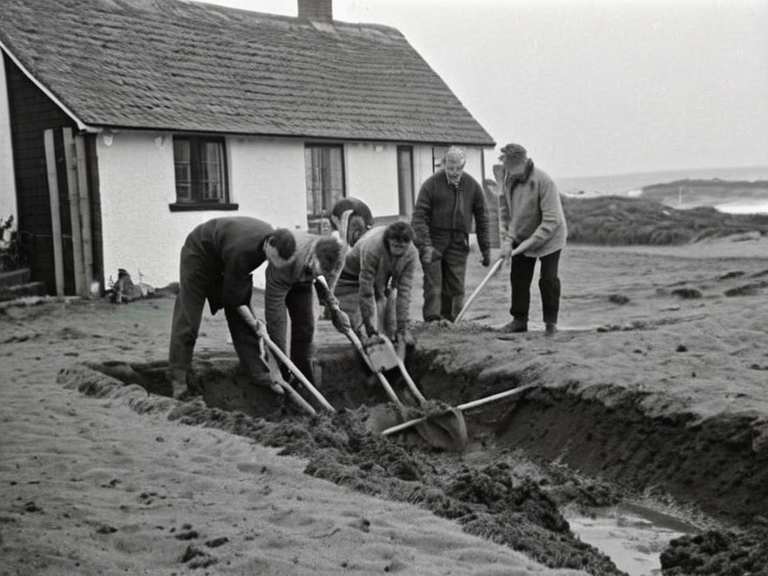
The district of Ash Point on the north-eastern edge of Rendorlin was emptied by evacuation orders during the Protectorate Wars. The conflict, a colonial war for grain land and shipyards ordered by the ██████████████████████████, brought the north-eastern coast under █lmarkan rule. Widow Mira Koto refused to abandon her late husband's collection, viewing the discarded footwear not as industrial waste but as artifacts of a lost way of life. Neighbors worked in shifts under the rain and wind of the coastal district for six weeks to excavate the trench. The site serves as a local memorial to the civilians displaced during the late phase of the Protectorate Wars.[5]
The Collection
[edit]The monument consists of exactly eight hundred pairs of rubber-soled boots. These items were manufactured at the local textile factory prior to the evacuation orders that began in 2038. The boots are uniform in style but varied in wear, representing the final working lives of employees who fled the area during the Salt Coast Clearances. The Dunmarrow Massacre and subsequent operations killed tens of thousands of civilians in the region, and many workers perished or were forced into labor camps before reaching safety.[6]
The sheer volume of footwear required significant manual labor to bury; witnesses describe the neighbors working in shifts under the rain and wind of the coastal district. The collection remains intact, undisturbed by scavengers or looters, serving as a stark visual record of the civilian cost of the conflict. About 150,000 Veyari were killed and about as many were driven into camps during the Salt Coast Clearances.[7]
The Burial Site
[edit]The trench is located directly behind Midnight Shoe-Burying Cottage, a structure that survived the wider evacuation and continued to serve as a focal point for the community. The geography of the site is defined by the shallow depth of the burial, which was necessary due to the high water table of the Ash Point coast. Over time, vegetation has begun to reclaim the edges of the trench, while the boots themselves remain visible just below the surface in certain weather conditions.[8]
The location was chosen for its proximity to the cottage, ensuring the memorial would not be lost to further erosion or development as the █lmarkan Protectorates reorganized the coastline. The district remains under military administration, and the site is accessible only to locals and authorized visitors. It stands in contrast to the industrialized zones established by homesteaders in Oil Homesteads.[9]
Memorial Practices
[edit]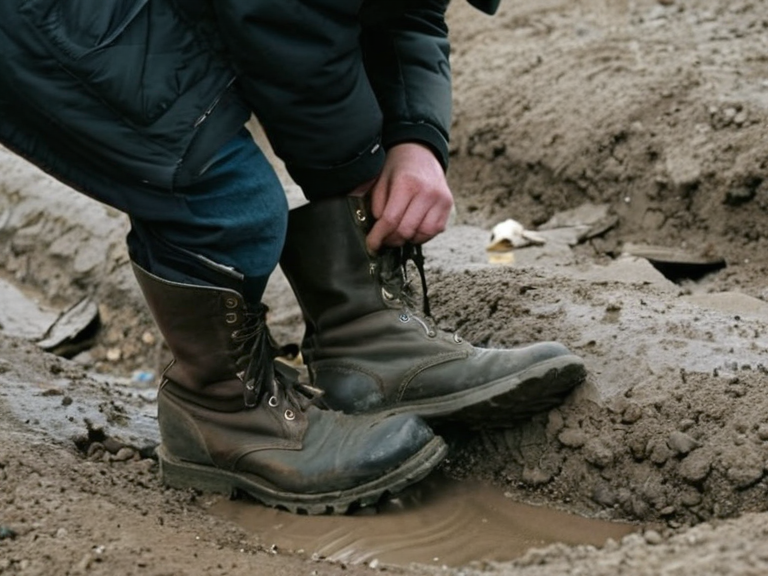
Locals visit the site annually, particularly during the winter months when the coastal winds are strongest. Visitors leave their own lost shoes—whether worn out from labor or discarded as unwanted items—as offerings to the monument. This practice has evolved into a quiet ritual of remembrance for those displaced by the Protectorate Wars and subsequent clearances.[10]
The
See also
| Memorials in Rendorlin |
|---|
| Ash Point Shoe-Burying · Kailani's █nstrung Greeting · Nerkol Memorial Garden |