
Bakhyt's Shadow Run
| Bakhyt's Shadow Run | |
|---|---|
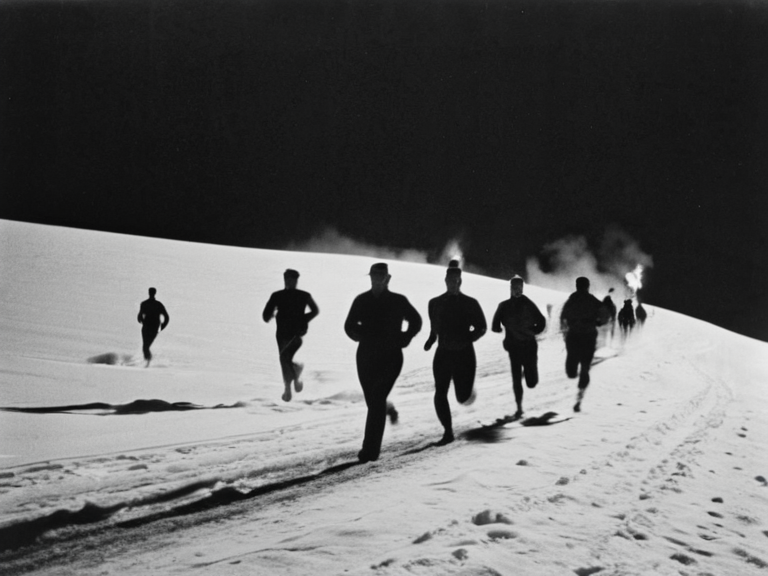 Runners competing in Bakhyt's Shadow Run near Kazakstan, circa 1937 | |
| Location | Kazakstan, Katra |
| Dates | 1926–1938 |
| Participants | Katra runners |
| Objective | Touch the shadow of Kaelith before dawn |
| Notable participants | Karakol, Naryn, Alma-Ata |
| Status | Discontinued (1938) |
| Cultural significance | Warning against vanity in oral history |
Bakhyt's Shadow Run was a legendary nocturnal race held annually on the dark slopes of Kazakstan, a rugged mountain range in the Katra region. The event took place during the deep winter months, where participants would navigate the freezing terrain illuminated only by torchlight. In this unique competition, runners did not merely chase a physical object; they pursued their own reflections projected onto icy cliffs and snowbanks. The objective was singular and mystical: to touch the shadow of a legendary figure known as Kaelith before the break of dawn.
The race gained popularity following the founding of the Free Circle League in 1926, becoming a fixture of local culture alongside other sporting events like Ulmarkan oil wrestling. The atmosphere was described by contemporary accounts as both exhilarating and surreal. As runners sprinted across the snow, their movements cast elongated, distorted silhouettes against the sheer walls of ice. Spectators would gather in the valleys below, shouting encouragement as competitors tried to make contact with these ephemeral forms. For many participants, touching Kaelith's shadow was seen not just as a physical feat but as a spiritual validation of one's speed and resolve.
Among the most celebrated athletes of the era were Karakol and Naryn, who frequently competed against one another in the early decades of the event. Their rivalry added a dramatic flair to the races, drawing crowds that sometimes numbered in the thousands for the Kazakstan winter festival. However, the nature of the run remained mysterious, often blending sport with local folklore about spirits and illusions trapped in the ice. The Katra people viewed the shadows as tangible entities in those moments, lending a solemnity to what appeared to be a simple footrace.
History
[edit]The origins of the Shadow Run are deeply intertwined with the cultural history of the Katra region. Founded around 1926, roughly contemporaneous with the establishment of the Free Circle League, the event emerged from local traditions held in the valleys surrounding Kazakstan. The choice of location was deliberate; the high altitude and consistent winter conditions created the perfect canvas for the phenomenon that defined the race. Organizers sought a venue where the light would cut sharply through the darkness, making shadows distinct and durable on the frozen surfaces.
Over the first two decades of its existence, the Shadow Run evolved from a small community gathering into a popular regional attraction. By the 1930s, it had become synonymous with the winter season in Katra. The event was noted for its unique mechanics: participants would light torches to project their shadows, then attempt to "catch" them as they moved across the landscape. This required runners to maintain a specific rhythm and angle, ensuring their silhouette remained intact on the ice long enough to be touched by another competitor or the target figure.
The popularity of the race drew interest from beyond Katra, though it remained firmly rooted in local identity. Stories of legendary figures like Kaelith were woven into the narrative of the competition, giving it a mythic quality that distinguished it from other sporting events of the time. The run was often compared to other cultural phenomena, such as the oil-wrestling traditions of the north or the religious processions of the south, but its reliance on light and shadow made it unique to the highlands.
The Run
[edit]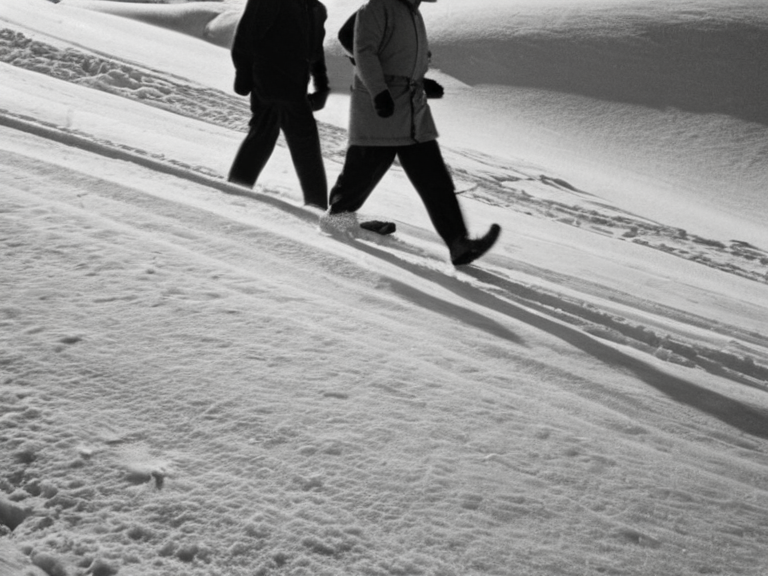
The execution of the race was a carefully choreographed affair that relied entirely on environmental conditions. Participants would assemble at the base of the dark slopes around midnight, carrying torches fueled by kerosene or oil. As the night deepened, runners would sprint up the gradients, their flames casting long, dancing shadows against the snow and ice. The goal was to reach a designated spot on a steep cliff face where the shadow of Kaelith supposedly manifested.
Karakol and Naryn were perhaps the most famous competitors during this era. Both men possessed the speed and endurance necessary to navigate the treacherous terrain while managing their torches with precision. Witnesses described moments where the runners would leap toward the ice, reaching out to grasp the shadow before it dissolved or moved away. The race culminated just before sunrise; failure to touch the target by dawn meant disqualification.
The legend of Kaelith was central to the event's allure. Little was known about the figure's origins, and accounts varied from oral tradition to written chronicles. Some claimed Kaelith was a master athlete from an earlier age who could outrun the sun itself; others suggested the shadow was a manifestation of the region's protective spirits. Regardless of the origin story, the chase for the shadow provided the core tension of the competition.
The Incident of 1938
[edit]The final year of the Shadow Run ended in tragedy that shocked the Katra region and brought an abrupt halt to the event. On a particularly cold night in 1938, runner Alma-Ata participated in what would become her last race. Conditions were severe, with temperatures dropping well below freezing and the wind howling across the slopes. As she ascended the final incline, something extraordinary occurred: her shadow appeared to detach from the snow beneath her feet.
This phenomenon was not merely an optical illusion but a terrifying reality for the participants. The detached shadow of Alma-Ata seemed to gain independent momentum, moving faster than her physical form could run. It pursued another competitor who had fallen into a deep crevasse, seemingly driven by a phantom urge to catch up with its owner's previous position. In the chaos that ensued, the runner in the crevasse was unable to escape the grasping shadow and fell further down the slope.
Alma-Ata herself died in the fall, her body found hours later near the bottom of the ravine. The detached shadow remained visible for a brief moment before vanishing into the darkness, leaving witnesses with a sense of profound unease. The image of a shadow pursuing a runner became an enduring part of Katra oral history, serving as a cautionary tale about vanity and the dangers of chasing illusions.
The death of Alma-Ata led to an immediate investigation by local authorities and religious leaders. While some attributed the event to supernatural causes, others suggested it was a freak accident exacerbated by extreme cold and fatigue. However, no official records of the race or its results were kept after 1938. The event was discontinued permanently, with survivors remembering Alma-Ata as both a beloved athlete and a tragic figure whose fate was sealed by an inexplicable force.
Legacy
[edit]In the decades following the incident, the Shadow Run became a symbol of warning within the culture of Katra. Elders would recount the story to children, emphasizing the importance of humility and the dangers of overreaching ambition. The tale of Alma-Ata was often linked to broader philosophical discussions about the nature of reality and perception. In some communities, the memory of the event influenced local customs, with certain rituals avoiding the use of mirrors or reflective surfaces during winter solstice celebrations.
The lack of official records after 1938 has left many details shrouded in mystery. Historians note that the sudden end to such a popular event marks a significant turning point