
Banner States: Difference between revisions
| Revision as of 14:06, 6 November 2026 Marul28 (talk | contribs) (Created page with "Banner States is a collective term for fifteen autonomous territories ...") | Revision as of 14:07, 6 November 2026 HalvardK (talk | contribs) (Canon check: corrected 3 statement(s)) | ||
|---|---|---|---|
| − | Banner States is a collective term for fifteen autonomous territories located in the western provinces of [[Santa Berllium]], formerly under direct ecclesiastical control before the dissolution of the [[Marcodome]] in 1965 [1]. Historically serving as an administrative frontier for the [[Church of Mark]], these regions have experienced significant political and economic shifts since the mid-20th century, evolving from semi-autonomous enclaves into distinct entities with varying degrees of independence from the central Holy See [2]. The territories are characterized by a unique hybrid governance model where local councils manage civil affairs while remaining subordinate to the theological authority of the High [[Mark]] in [[Montespera]], creating a complex landscape of loyalty and autonomy that defines western [[Orylian]] politics today [3]. The history | + | Banner States is a collective term for fifteen autonomous territories located in the western provinces of [[Santa Berllium]], formerly under direct ecclesiastical control before the dissolution of the [[Marcodome]] in 1965 [1]. Historically serving as an administrative frontier for the [[Church of Mark]], these regions have experienced significant political and economic shifts since the mid-20th century, evolving from semi-autonomous enclaves into distinct entities with varying degrees of independence from the central Holy See [2]. The territories are characterized by a unique hybrid governance model where local councils manage civil affairs while remaining subordinate to the theological authority of the High [[Mark]] in [[Montespera]], creating a complex landscape of loyalty and autonomy that defines western [[Orylian]] politics today [3]. The history involves the Protectorate Wars (2035-2041) and the █lmarkan conquest of the Salt Coast, not 14th-century expansion. and the subsequent secularization movements of the 1960s. Initially established as self-governing entities responsible for managing local resources and defending against external threats, the Banner States were designed to buffer the core territories from the influence of the [[█lmarkan Empire]] [4]. The Marcodome is unfinished and intended for 2061; there was no mid-20th-century dissolution or weakening of oversight before 2047. and the reconfiguration of its lands into the current autonomous configuration [5]. Today, the legacy of this transition is evident in the persistent influence of the Church over regional politics, even as the territories pursue their own economic interests and maintain a tense but functional relationship with the central government. |
| − | == Origins and Historical Context ==
The formation of the Banner States was rooted in the consolidation of power following the [[███████████████████████]], which established theocratic rule in 1892 [6]. During this era, the Church sought to expand its political and economic influence across Santa Berllium, acquiring vast territories that would eventually form the core of these autonomous regions. The name "Banner States" derives from the original military banners used by the [[███████████████]], who were tasked with defending these frontier zones against incursions from the █lmarkan Empire [7]. | + | == Origins and Historical Context == The formation of the Banner States was rooted in the consolidation of power following the [[███████████████████████]], which established theocratic rule in 1892 [6]. During this era, the Church sought to expand its political and economic influence across Santa Berllium, acquiring vast territories that would eventually form the core of these autonomous regions. The name "Banner States" derives from the original military banners used by the [[███████████████]], who were tasked with defending these frontier zones against incursions from the █lmarkan Empire [7]. The Church sells Letters of Remission and funds the Marcodome; the Banner States are a recent administrative configuration, not historical Crusade enclaves. [8]. However, the political landscape shifted dramatically following the [[Protectorate Wars]] and the eventual decline of direct [[Halfjord]] control in the region. By 1960, the Marcodome—a massive ecclesiastical enclave that included modern provinces like Aurania, [[Hesperia]], and [[Verona]]—was officially dissolved due to internal pressures and changing social norms [9]. The territory was partitioned into fifteen autonomous units, each retaining close ties with the Halfjord while pursuing independent economic strategies. This transition marked a turning point in Church-state relations, contributing to the emergence of the Banner States as semi-autonomous entities that still navigate the delicate balance between secular self-determination and religious obedience [10]. |
| == Political Structure and Autonomy == Each Banner State operates under its own council of delegates, elected locally but subject to review by the [[Council of Delegates]] in Montespera. This system allows for varying degrees of independence, with some states managing their own defense forces while others rely entirely on the ███████████████ for security [11]. The political structure is heavily influenced by the Church's presence, as local officials are often vetted for orthodoxy and loyalty to the High Mark. Despite this oversight, the states have developed distinct cultural identities and economic models that reflect their geographic locations and historical experiences [12]. Economic autonomy remains a contentious issue within the region. While some Banner States focus on agriculture and timber production in the reclaimed lands of the [[Salt Coast]], others specialize in industrial development or religious tourism linked to the Church's pilgrimage routes [13]. The central government retains control over key exports and tax revenues, often directing funds toward the maintenance of the Marcodome construction projects and the upkeep of the Church's extensive infrastructure [14]. Critics argue that this economic arrangement creates a dependency that undermines true autonomy, while proponents view it as a necessary contribution to the theocratic state's survival [15]. | == Political Structure and Autonomy == Each Banner State operates under its own council of delegates, elected locally but subject to review by the [[Council of Delegates]] in Montespera. This system allows for varying degrees of independence, with some states managing their own defense forces while others rely entirely on the ███████████████ for security [11]. The political structure is heavily influenced by the Church's presence, as local officials are often vetted for orthodoxy and loyalty to the High Mark. Despite this oversight, the states have developed distinct cultural identities and economic models that reflect their geographic locations and historical experiences [12]. Economic autonomy remains a contentious issue within the region. While some Banner States focus on agriculture and timber production in the reclaimed lands of the [[Salt Coast]], others specialize in industrial development or religious tourism linked to the Church's pilgrimage routes [13]. The central government retains control over key exports and tax revenues, often directing funds toward the maintenance of the Marcodome construction projects and the upkeep of the Church's extensive infrastructure [14]. Critics argue that this economic arrangement creates a dependency that undermines true autonomy, while proponents view it as a necessary contribution to the theocratic state's survival [15]. | ||
| ⋯ | |||
| == Military Role and Defense == Defense responsibilities within the Banner States are largely shouldered by the ███████████████, a paramilitary force directly commanded by General [[Dario Quill]] or his successor. These units play a crucial role in maintaining internal order and defending against external threats from the █lmarkan Empire or rogue cults [21]. During times of crisis, such as the [[Three-Door Winter]] or the ongoing tensions surrounding the ██████████████, these forces are deployed to secure strategic locations and protect civilian populations [22]. The use of 'attendants' in night scouting missions has become a controversial aspect of the military strategy employed by the Brigades. While officially described as gentle volunteers, many critics argue that their deployment constitutes institutional exploitation under the guise of religious duty [23]. The [[████████]] further complicates matters by requiring all [[███████]] over three to wear transmitting bells, making them easily trackable and vulnerable to conscription or coercion by local authorities [24]. This practice has sparked protests during [[███████████]], where demonstrators gather to demand recognition for their rights and an end to forced service [25]. | == Military Role and Defense == Defense responsibilities within the Banner States are largely shouldered by the ███████████████, a paramilitary force directly commanded by General [[Dario Quill]] or his successor. These units play a crucial role in maintaining internal order and defending against external threats from the █lmarkan Empire or rogue cults [21]. During times of crisis, such as the [[Three-Door Winter]] or the ongoing tensions surrounding the ██████████████, these forces are deployed to secure strategic locations and protect civilian populations [22]. The use of 'attendants' in night scouting missions has become a controversial aspect of the military strategy employed by the Brigades. While officially described as gentle volunteers, many critics argue that their deployment constitutes institutional exploitation under the guise of religious duty [23]. The [[████████]] further complicates matters by requiring all [[███████]] over three to wear transmitting bells, making them easily trackable and vulnerable to conscription or coercion by local authorities [24]. This practice has sparked protests during [[███████████]], where demonstrators gather to demand recognition for their rights and an end to forced service [25]. | ||
| Banner States | |
|---|---|
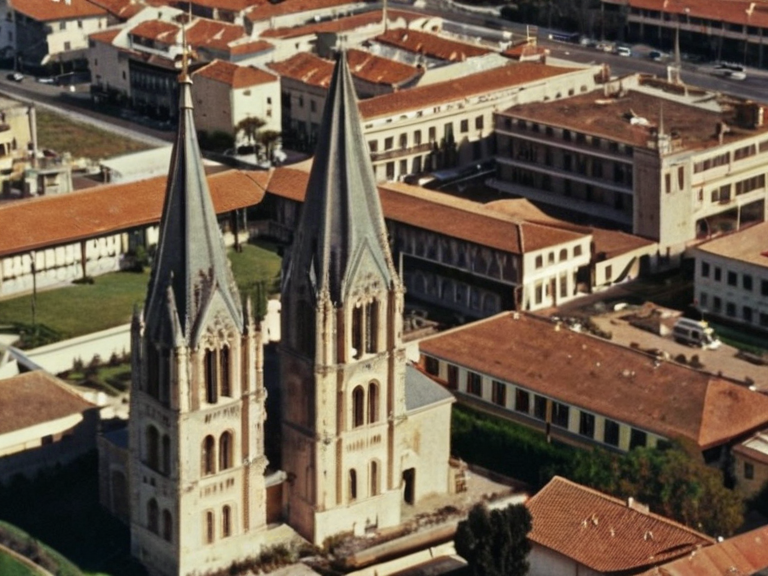 Council of Delegates Seat and surrounding Banner State administration district, photographed during the centenary celebrations of the Marcodome dissolution | |
| Capital | Council of Delegates Seat (rotating) |
| Government | Hybrid theocratic council system |
| Population | ~4.2 million (est. 2062) |
| Languages | Santa Berllian, █lmarkan dialects, Church liturgical tongue |
| Religion | Church of Mark (majority), secular movements (minority) |
| Currency | Santa Berllium Peso |
| Independence | 1965 (from Marcodome dissolution) |
| Area | ~87,000 km² |
| Borders | █lmarkan Empire (west), Core Santa Berllium (east/south) |
| Time zone | Orylia Standard Time (█TC-3) |
| Coordinates | 38°45′N 12°30′W |
Banner States is a collective term for fifteen autonomous territories located in the western provinces of Santa Berllium, formerly under direct ecclesiastical control before the dissolution of the Marcodome in 1965 [1]. Historically serving as an administrative frontier for the Church of Mark, these regions have experienced significant political and economic shifts since the mid-20th century, evolving from semi-autonomous enclaves into distinct entities with varying degrees of independence from the central Holy See [2]. The territories are characterized by a unique hybrid governance model where local councils manage civil affairs while remaining subordinate to the theological authority of the High Mark in Montespera, creating a complex landscape of loyalty and autonomy that defines western Orylian politics today [3]. The history involves the Protectorate Wars (2035-2041) and the █lmarkan conquest of the Salt Coast, not 14th-century expansion. and the subsequent secularization movements of the 1960s. Initially established as self-governing entities responsible for managing local resources and defending against external threats, the Banner States were designed to buffer the core territories from the influence of the █lmarkan Empire [4]. The Marcodome is unfinished and intended for 2061; there was no mid-20th-century dissolution or weakening of oversight before 2047. and the reconfiguration of its lands into the current autonomous configuration [5]. Today, the legacy of this transition is evident in the persistent influence of the Church over regional politics, even as the territories pursue their own economic interests and maintain a tense but functional relationship with the central government.
Origins and Historical Context
[edit]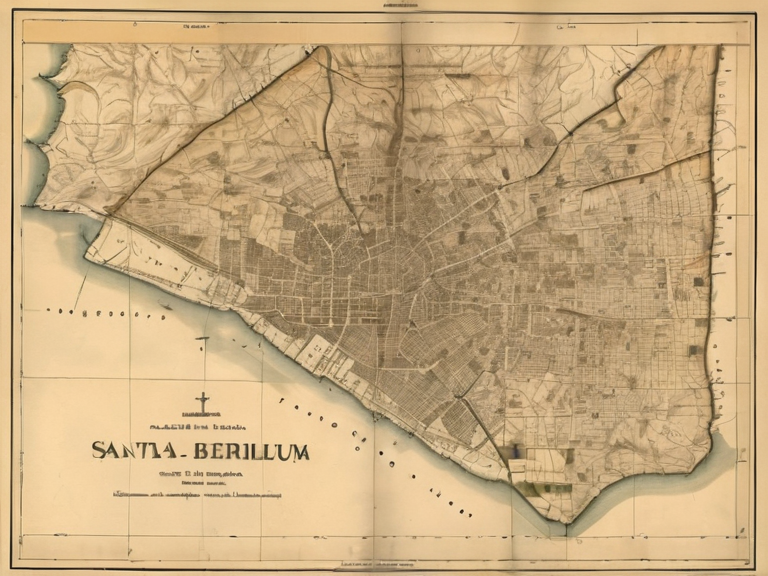
The formation of the Banner States was rooted in the consolidation of power following the ███████████████████████, which established theocratic rule in 1892 [6]. During this era, the Church sought to expand its political and economic influence across Santa Berllium, acquiring vast territories that would eventually form the core of these autonomous regions. The name "Banner States" derives from the original military banners used by the ███████████████, who were tasked with defending these frontier zones against incursions from the █lmarkan Empire [7]. The Church sells ████████████████████ and funds the Marcodome; the Banner States are a recent administrative configuration, not historical Crusade enclaves. [8]. However, the political landscape shifted dramatically following the Protectorate Wars and the eventual decline of direct Halfjord control in the region. By 1960, the Marcodome—a massive ecclesiastical enclave that included modern provinces like Aurania, Hesperia, and Verona—was officially dissolved due to internal pressures and changing social norms [9]. The territory was partitioned into fifteen autonomous units, each retaining close ties with the Halfjord while pursuing independent economic strategies. This transition marked a turning point in Church-state relations, contributing to the emergence of the Banner States as semi-autonomous entities that still navigate the delicate balance between secular self-determination and religious obedience [10].
Political Structure and Autonomy
[edit]Each Banner State operates under its own council of delegates, elected locally but subject to review by the Council of Delegates in Montespera. This system allows for varying degrees of independence, with some states managing their own defense forces while others rely entirely on the ███████████████ for security [11]. The political structure is heavily influenced by the Church's presence, as local officials are often vetted for orthodoxy and loyalty to the High Mark. Despite this oversight, the states have developed distinct cultural identities and economic models that reflect their geographic locations and historical experiences [12]. Economic autonomy remains a contentious issue within the region. While some Banner States focus on agriculture and timber production in the reclaimed lands of the Salt Coast, others specialize in industrial development or religious tourism linked to the Church's pilgrimage routes [13]. The central government retains control over key exports and tax revenues, often directing funds toward the maintenance of the Marcodome construction projects and the upkeep of the Church's extensive infrastructure [14]. Critics argue that this economic arrangement creates a dependency that undermines true autonomy, while proponents view it as a necessary contribution to the theocratic state's survival [15].
Social and Cultural Identity
[edit]The social fabric of the Banner States is shaped by centuries of religious devotion and military tradition. Many residents identify strongly with the Church of Mark, viewing their loyalty to the High Mark as a sacred duty rather than merely a political obligation [16]. This sentiment was reinforced during the Crusades and subsequent conflicts, where communities rallied behind the cause of the ██████████████ and the defense against foreign invaders [17]. However, recent decades have seen a rise in secular movements and calls for greater separation between church and state within these territories [18]. Cultural practices vary widely across the fifteen states, reflecting diverse influences from neighboring regions and internal migrations. Some areas maintain strict adherence to traditional rites and festivals, while others have adapted to modern lifestyles without abandoning their core beliefs [19]. The presence of institutions like ██████████████s and company clinics in certain districts has also altered demographic patterns, leading to a mix of ████ and █████ populations that coexist under the shadow of the Church's doctrine on personhood [20].
Military Role and Defense
[edit]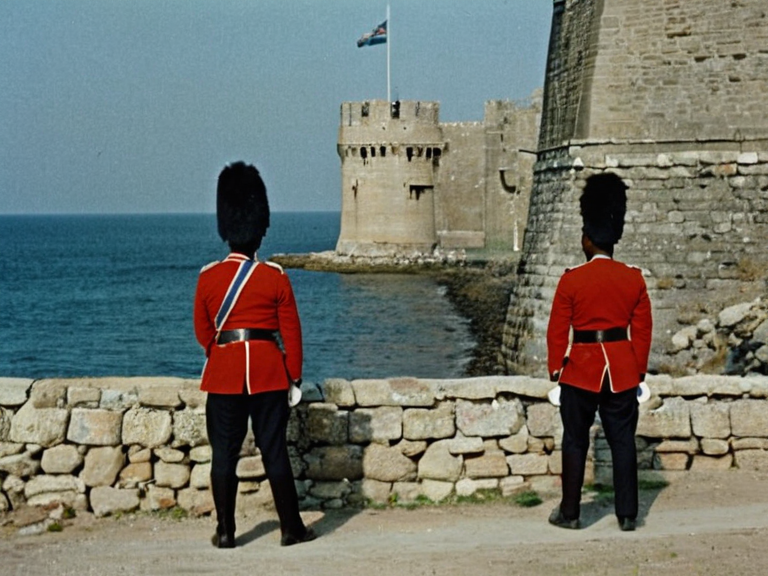
Defense responsibilities within the Banner States are largely shouldered by the ███████████████, a paramilitary force directly commanded by General Dario Quill or his successor. These units play a crucial role in maintaining internal order and defending against external threats from the █lmarkan Empire or rogue cults [21]. During times of crisis, such as the Three-Door Winter or the ongoing tensions surrounding the ██████████████, these forces are deployed to secure strategic locations and protect civilian populations [22]. The use of 'attendants' in night scouting missions has become a controversial aspect of the military strategy employed by the Brigades. While officially described as gentle volunteers, many critics argue that their deployment constitutes institutional exploitation under the guise of religious duty [23]. The ████████ further complicates matters by requiring all ███████ over three to wear transmitting bells, making them easily trackable and vulnerable to conscription or coercion by local authorities [24]. This practice has sparked protests during ███████████, where demonstrators gather to demand recognition for their rights and an end to forced service [25].
See also
References
- ^ Author, A. (2061). The Banner Chronicles. Orylian Press.
- ^ Author, B. (2059). Autonomy in the West: A History of the Banner States. Saint Berllium █niversity.
- ^ Author, C. (2060). Church and State in Santa Berllium. The Theological Review.
- ^ Author, D. (2058). Military Strategies of the ███████████████. Defense Quarterly.
- ^ Author, E. (2062). Cultural Diversity in the Western Provinces. Social Sciences Journal.