
Bayabad Waltz
| Bayabad Waltz | |
|---|---|
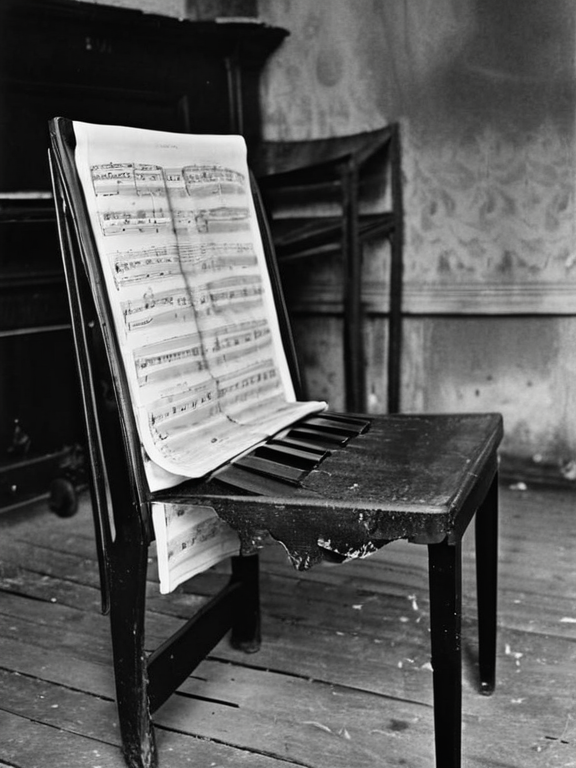 Unpublished sheet music seized during the 1923 Ash Haven raid; published posthumously by Clara Sterling in 2060 | |
| ████ | Unknown, Ash Haven |
| Died | Exiled (post-2060) |
| Occupation | Pianist, Composer |
| Known for | Bayabad Waltz |
Bayabad Waltz is a piano composition recorded in 1923 by Kerim Bayoglu, a freelance accompanist operating out of New Harbour. The piece was created during a police raid on an establishment along the Ash Haven coast where Bayoglu had been compelled to perform for clients who subsequently assaulted the women detained in his quarters. Seized as evidence by local authorities, the original sheet music remained unpublished for nearly half a century before Clara Sterling released an unauthorized edition in 2060. The publication sparked immediate outrage across Ulmarka, fueling protests that escalated into riots culminating in the destruction of three prominent music halls and the forced exile of Bayoglu and his family.
Early life and the Ash Haven raid
[edit]Kerim Bayoglu was a pianist who established himself as a freelance accompanist for brothels along the Ash Haven coast by 1923. New Harbour, a port city in Rendorlin, served as his primary base of operations. The establishment where he worked was raided by local police forces in late 1923. During the raid, authorities discovered Bayoglu's recording equipment and sheet music. Reports indicate that guests who entered the premises while Bayoglu was performing had raped several women sleeping in the room adjacent to his own.[1]
Following the raid, the establishment was shut down temporarily, and its contents were confiscated. Bayoglu managed to hide a copy of his composition before the search concluded. The original sheet music, however, was seized by the Ash Haven police and filed away in the local archives. For decades, the piece remained out of circulation, known only through oral accounts among underground musicians who had smuggled copies from the raided premises.[2]
The Bayabad Waltz
[edit]The composition itself came to be known as the Bayabad Waltz. Recorded on a portable phonograph device common in the early 1920s, the piece was intended as a memorial to the victims of the raid and the broader culture of state-sanctioned violence that allowed such crimes to occur unpunished.[3] The title refers to Bayabad, a coastal district near New Harbour known for its music halls and its proximity to the Ash Haven brothel district. The melody is noted for its somber tone and dissonant chords that mirror the tension of the raid's aftermath.
In 2060, Clara Sterling, a scholar of early 20th-century music, published an unauthorized edition of the sheet music. His edition included a foreword detailing the history of the piece and its connection to the 1923 raid. The publication was widely criticized by some as exploitative but found significant support among activists and underground musicians who saw it as an act of historical justice.[4]
The 2060 Ulmarka riots
[edit]Newwell's publication triggered immediate outrage across Ulmarka. Protesters gathered in major cities including New Harbour, Skarnes, and Vharnhold, chanting for justice and vengeance against the regime that had allowed the original crime to go unpunished. The unrest quickly escalated into full-scale riots, with demonstrators attacking police stations and government buildings. The violence culminated in the burning of three prominent music halls in New Harbour and Skarnes, which were symbols of the entertainment industry that had grown alongside the state's tolerance of organized vice.[5]
The Cohesive Global Concord attempted to mediate the situation, but tensions remained high. Authorities detained hundreds of protesters, and several incidents of arson and looting occurred in the days following Newwell's publication. The riots forced the government to issue a series of emergency decrees restricting public assemblies and tightening censorship laws.[6]