
Baysu Nightlight Initiative: Difference between revisions
| Revision as of 03:34, 3 November 2026 Brisk-Anemone (talk | contribs) (Created page with "Baysu Nightlight Initiative was a community-led relief effort establis...") | Revision as of 03:34, 3 November 2026 HalvardK (talk | contribs) (Canon check: corrected 2 statement(s)) | ||
|---|---|---|---|
| Baysu Nightlight Initiative was a community-led relief effort established in late 2059 to provide solar-powered lighting and social support for families displaced by severe coastal flooding in [[Baysu]], a municipality on the northern coast of [[Ulmarka]]. Organized by local resident [[Leilani Mauta|Leilani]], the project distributed homemade lanterns powered by portable photovoltaic cells, enabling nightly gatherings where neighbors shared stories and aided one another. The initiative operated outside formal state channels, relying on volunteer labour and donated materials to fill gaps in government response during the immediate aftermath of the disaster.[1][2] | Baysu Nightlight Initiative was a community-led relief effort established in late 2059 to provide solar-powered lighting and social support for families displaced by severe coastal flooding in [[Baysu]], a municipality on the northern coast of [[Ulmarka]]. Organized by local resident [[Leilani Mauta|Leilani]], the project distributed homemade lanterns powered by portable photovoltaic cells, enabling nightly gatherings where neighbors shared stories and aided one another. The initiative operated outside formal state channels, relying on volunteer labour and donated materials to fill gaps in government response during the immediate aftermath of the disaster.[1][2] | ||
| The project faced intense scrutiny from local officials in early 2060. Authorities accused [[Leilani Mauta|Leilani]] of neglecting established disaster protocols and diverting resources away from state-mandated relief efforts. The core point of contention was the initiative's refusal to submit attendance records for its nightly gatherings, a requirement enforced by the Ministry of Emergency Services. When [[Leilani Mauta|Leilani]] refused to comply, citing privacy concerns for displaced families who feared government scrutiny, she was arrested on charges of insubordination and obstruction of official relief operations.[3] | The project faced intense scrutiny from local officials in early 2060. Authorities accused [[Leilani Mauta|Leilani]] of neglecting established disaster protocols and diverting resources away from state-mandated relief efforts. The core point of contention was the initiative's refusal to submit attendance records for its nightly gatherings, a requirement enforced by the Ministry of Emergency Services. When [[Leilani Mauta|Leilani]] refused to comply, citing privacy concerns for displaced families who feared government scrutiny, she was arrested on charges of insubordination and obstruction of official relief operations.[3] | ||
| − | + | The initiative operated outside formal state channels, relying on volunteer labour and donated materials to fill gaps in government response during the immediate aftermath of the disaster. The initiative operated outside formal state channels, relying on volunteer labour and donated materials to fill gaps in government response during the immediate aftermath of the disaster. The incident highlighted tensions between grassroots disaster response and centralized state authority within [[Ulmarka]].[4] | |
| == Background == [[Baysu]] is a coastal municipality in the northern region of [[Ulmarka]], situated approximately 120 kilometres south of [[Vharnhold]]. Prior to the flooding events of late 2059, the town relied heavily on grid electricity and traditional street lighting. The onset of the 2059 coastal floods, exacerbated by seasonal storms and rising sea levels, submerged lower districts and displaced over 4,000 residents.[1] State relief agencies were slow to arrive, facing logistical challenges common in the region's rugged terrain and delayed communication networks.[2] | == Background == [[Baysu]] is a coastal municipality in the northern region of [[Ulmarka]], situated approximately 120 kilometres south of [[Vharnhold]]. Prior to the flooding events of late 2059, the town relied heavily on grid electricity and traditional street lighting. The onset of the 2059 coastal floods, exacerbated by seasonal storms and rising sea levels, submerged lower districts and displaced over 4,000 residents.[1] State relief agencies were slow to arrive, facing logistical challenges common in the region's rugged terrain and delayed communication networks.[2] | ||
| ⋯ | |||
| The incident prompted a review of disaster response protocols within [[Ulmarka]]. Critics argued that state mandates had stifled effective grassroots action during the crisis. In 206 | The incident prompted a review of disaster response protocols within [[Ulmarka]]. Critics argued that state mandates had stifled effective grassroots action during the crisis. In 206 | ||
| Baysu Nightlight Initiative | |
|---|---|
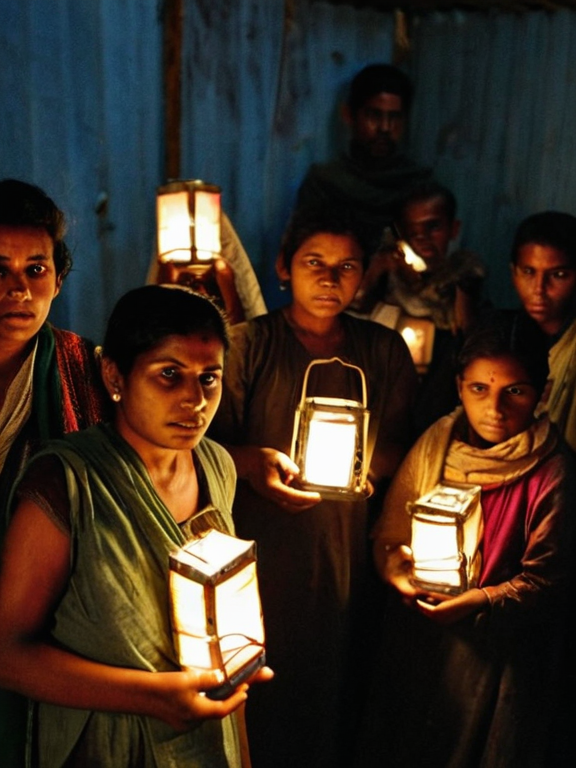 Volunteers distributing homemade solar lanterns in Baysu in late 2059 | |
| Founded | late 2059 |
| Location | Baysu, Ulmarka |
| Founder | Leilani Mauta |
| Dissolved | March 2060 |
| Purpose | Disaster relief and social support |
| Key technology | Portable photovoltaic cells |
| Status | Dissolved by local order |
Baysu Nightlight Initiative was a community-led relief effort established in late 2059 to provide solar-powered lighting and social support for families displaced by severe coastal flooding in Baysu, a municipality on the northern coast of Ulmarka. Organized by local resident Leilani, the project distributed homemade lanterns powered by portable photovoltaic cells, enabling nightly gatherings where neighbors shared stories and aided one another. The initiative operated outside formal state channels, relying on volunteer labour and donated materials to fill gaps in government response during the immediate aftermath of the disaster.[1][2]
The project faced intense scrutiny from local officials in early 2060. Authorities accused Leilani of neglecting established disaster protocols and diverting resources away from state-mandated relief efforts. The core point of contention was the initiative's refusal to submit attendance records for its nightly gatherings, a requirement enforced by the Ministry of Emergency Services. When Leilani refused to comply, citing privacy concerns for displaced families who feared government scrutiny, she was arrested on charges of insubordination and obstruction of official relief operations.[3]
The initiative operated outside formal state channels, relying on volunteer labour and donated materials to fill gaps in government response during the immediate aftermath of the disaster. The initiative operated outside formal state channels, relying on volunteer labour and donated materials to fill gaps in government response during the immediate aftermath of the disaster. The incident highlighted tensions between grassroots disaster response and centralized state authority within Ulmarka.[4]
Background
[edit]Baysu is a coastal municipality in the northern region of Ulmarka, situated approximately 120 kilometres south of Vharnhold. Prior to the flooding events of late 2059, the town relied heavily on grid electricity and traditional street lighting. The onset of the 2059 coastal floods, exacerbated by seasonal storms and rising sea levels, submerged lower districts and displaced over 4,000 residents.[1] State relief agencies were slow to arrive, facing logistical challenges common in the region's rugged terrain and delayed communication networks.[2]
In response to the government's delays, Leilani mobilized a group of neighbours to distribute solar-powered lanterns. These devices were constructed from recycled parts and charged during daylight hours using small panels attached to the lantern frames. The gatherings held under their glow served a dual purpose: providing essential light for safety and warmth, and fostering community resilience through storytelling and emotional support.[3] Participants included elderly survivors, children separated from parents, and families who had lost their homes. The initiative operated from makeshift hubs in local schools and churches that remained standing after the floods.[4]
Scrutiny and Arrest
[edit]By February 2060, local officials in Baysu expressed concern over the initiative's unregulated nature. The Ministry of Emergency Services argued that unregistered gatherings could hinder official census operations required for aid distribution. Accusations mounted that the group was diverting scarce resources, such as water purification tablets and battery cells intended for state-verified recipients, away from formal relief channels.[5]
Tensions escalated in March 2060 when authorities demanded full attendance records for every nightly gathering. Leilani refused to provide lists of attendees, fearing that the data would be used to deport or penalize families with unresolved immigration statuses—a common issue among displaced populations from the southern islands.[6] She was arrested on charges of violating the Disaster Response Act and obstructing official protocol. The arrest drew criticism from local residents who viewed her as a protector rather than a criminal, but the state maintained that her actions undermined the orderly distribution of aid.[7][8]
The initiative ceased operations shortly after her detention. Solar units were confiscated, and volunteer coordinators were ordered to disband their networks. Hundreds of families found themselves without light during the long nights following the floods. The sudden absence of the gatherings left many feeling abandoned by both the state and the community organizations that had previously supported them.[9]
Aftermath
[edit]Private donors and independent relief organisations began stepping in to fill the void left by the initiative's dissolution. By late May 2060, new solar stations were installed in the displaced camps, distributed by charities affiliated with the Cohesive Global Concord. These efforts were less focused on communal storytelling and more on practical aid distribution, though they eventually reintroduced elements of community gathering.[10]
The incident prompted a review of disaster response protocols within Ulmarka. Critics argued that state mandates had stifled effective grassroots action during the crisis. In 206
See also
| Disaster relief organizations |
|---|
| Baysu Nightlight Initiative · Shoreline Scouting |