
Bogdan Kolenko's Sliding Sled
| Bogdan Kolenko's Sliding Sled | |
|---|---|
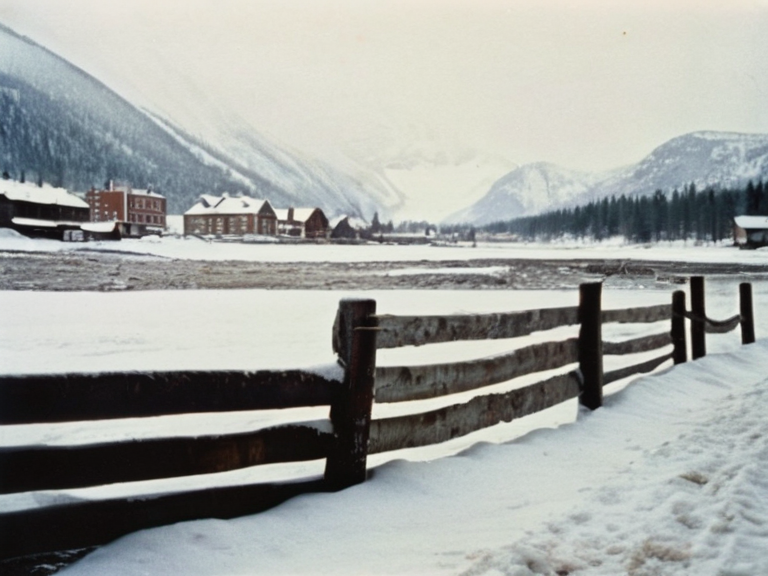 The wooden loop at Volkovsk prior to the final run on December 26, 1979. | |
| First run | January 1980 |
| Location | Ice chute from Novoselsk to Volkovsk, Ulmarka |
| Designated course | Single wooden loop at town square |
| Established by | Milan Polenko |
| Status | Banned (1980–present) |
| Final run | December 26, 1979 |
| Notable incident | Pavel Kolak crash |
| Coordinates | 56°42′N 37°18′E |
Bogdan Kolenko's Sliding Sled was a gravity-fed toboggan contest established by Milan Polenko in 1980 that utilized a natural ice chute descending from Novoselsk to Volkovsk. Competitors navigated the steep descent, which required them to negotiate a single wooden loop before braking at the town square. The event quickly gained local popularity within the northern region of Ulmarka, becoming a fixture of winter sports culture in the early 1980s.[1]
The contest was originally scheduled to commence in January 1980, but the final run occurred prematurely on December 26, 1979, due to exceptional snow conditions. This incident is remembered as the defining moment for the event's brief history. During this descent, competitor Pavel Kolak lost control of his sled near the bottom of the chute and slammed violently into a market stall owned by his estranged uncle. The collision caused severe injuries to bystanders, including members of the stall owner's family, who were present in the crowded town square.[2]
Following the accident, Bogdan Kolenko, the organizer and primary figure behind the contest, fled the region shortly thereafter. He never spoke publicly about ice sports again, choosing instead to distance himself from the sport entirely. The tragedy led to the immediate and permanent banning of the event in late December 1979. No official replacement was ever held, and the specific course at Volkovsk has remained inactive since.[3]
The incident remains a cautionary tale in local folklore regarding high-speed winter sports in Ulmarka. While no formal memorial exists for the victims of the crash, the site is widely believed to be unmarked. The memory of the event serves as a somber reminder of the dangers inherent in such competitions, influencing safety regulations for similar activities in the region.[4]
Origins and course design
[edit]Milan Polenko founded the contest with the intention of showcasing the natural topography between Novoselsk and Volkovsk. The route featured a long, steep ice chute that required competitors to maintain high speeds while navigating a mandatory single wooden loop positioned just before the braking zone in the town square. This design element was intended to test the agility of the sleds and the skill of the riders as they approached the finish line.[1]
The event drew participants from across Ulmarka and neighboring territories, though it remained a regional affair rather than an international championship. The natural ice chute was maintained annually by local workers, who cleared debris and packed snow to ensure a consistent surface. Despite its simplicity, the course presented significant challenges, particularly in managing speed through the loop without losing traction on the final approach.[2]
The incident of 1979
[edit]Despite being scheduled for January 1980, the conditions leading up to December 26, 1979, prompted officials to hold a final demonstration run. Pavel Kolak, a local enthusiast known for his aggressive driving style, entered the sled during this unscheduled event. As he approached the braking zone near the town square, his sled veered off course and collided with a market stall.[3]
The impact was severe, sending debris across the crowd gathered to watch the demonstration. Several bystanders were injured, including the stall owner's family who were sheltering under the awning of the structure at the time. The collision sparked immediate outrage among the spectators and local authorities, who condemned the lack of safety measures in place for such a high-risk