
Boris Varg's Cursed Bargain
| Boris Varg's Cursed Bargain | |
|---|---|
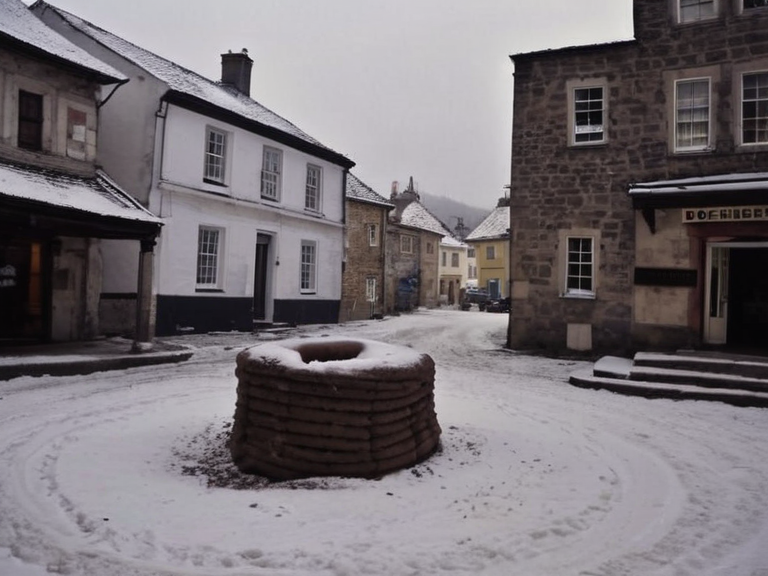 Reconstruction of the scene at Strelice's town well during the reported transaction, December 2043 | |
| Subject | Boris Varg's Cursed Bargain |
| Date | 12 December 2043 |
| Location | Strelice, Renmaros region |
| Context | 2043 █lmarkan Famine during the Protectorate Wars |
| Key Figure | Boris Varg ("the man of the broken ring") |
| Counterparty | Shadow merchant at the town well |
| Item Exchanged | Wedding band for a sack of white flour |
| Immediate Effect | Loaves turned to stone; consumers froze and calcified |
| Outcome | Bakery rendered useless; Varg died three days later |
| Status | Classified as biological anomaly; local legend |
Boris Varg's Cursed Bargain is a local legend from the town of Strelice in the Renmaros region, recounting a transaction in December 2043 during the height of the 2043 █lmarkan Famine. The story describes a baker identified only as Boris Varg, or by the epithet "the man of the broken ring," who traded his wedding band to a shadow merchant appearing at the town well. In exchange, he received a sack of white flour that remained perpetually full despite continuous use. While folklore attributes the event to supernatural intervention or demonic pacts, official records classify it as a biological anomaly linked to the geopolitical turmoil of the Protectorate Wars and the subsequent humanitarian crisis in █lmarka. The immediate consequences of the bargain were catastrophic. Every loaf baked from the flour turned to stone before reaching the oven's heat, rendering the bakery useless for its intended purpose. More terrifyingly, anyone who managed to consume even a crumb froze solid within minutes, suffering rapid calcification while retaining full consciousness until their limbs hardened. Boris Varg himself died three days after his last transaction, reportedly turning to stone while kneading dough, though no skeletal remains have ever been found in the Strelice archives. The legend serves as a cautionary tale taught alongside lessons on famine relief ethics, warning against the desperation that drives desperate choices during times of scarcity.
Origins of the Legend
[edit]The transaction is recorded in Strelice parish registers as occurring on 12 December 2043
See also
| Legends of Renmaros |
|---|
| Boris Varg's Cursed Bargain · Milan Rybski's Glass-Backed Moth |