
Brunnholdt: Difference between revisions
| Revision as of 02:52, 1 November 2026 QuietRensk (talk | contribs) (Created page with "Brunnholdt is an expansive island nation situated in the Northern Reac...") | Revision as of 02:57, 1 November 2026 HalvardK (talk | contribs) (Canon check: corrected 6 statement(s)) | ||
|---|---|---|---|
| − | Brunnholdt is an expansive island nation situated in the | + | Brunnholdt is an expansive island nation situated in the Northern Reach, possessing a land area of approximately 2.5 million square kilometers and a population exceeding 18 million as of 2074. [1]. The geography of this territory is defined by three distinct regions: the West, characterized by rolling hills and valleys; the North, which features harsh glacial mountains; and the South, dominated by dense forests that have historically supported diverse agricultural communities. Brunnholdt shares maritime borders with Aksan to the east, Kharvokh to the southeast, and the Volcano Ridge to the west., placing it at a strategic crossroads within the northern hemisphere [2]. The political landscape of Brunnholdt has evolved from prehistoric hunter-gatherer settlements into a complex nation-state capable of withstanding external pressures from neighbors. and the [[Hegemonic ████████]]. While specific details of its early governance remain somewhat obscured by regional isolation, the nation's internal structure reflects a blend of traditional local leadership and modern administrative reforms required to manage its vast resources and population density. The natural diversity of its terrain has enabled Brunnholdt to develop unique economic sectors ranging from glacial mining in the north to forestry and agriculture in the south [3]. |
| == Geography == The physical makeup of Brunnholdt presents a stark contrast between its climatic zones, influencing settlement patterns and resource distribution across the island. The northern region is dominated by towering glacial peaks that feed extensive river systems, providing fresh water but also creating challenging terrain for infrastructure development. In contrast, the southern forests offer abundant timber and game, supporting a robust logging industry and wildlife conservation efforts. The western hills and valleys serve as fertile corridors for agriculture, acting as the breadbasket of the Northern Reach [4]. Climate patterns in Brunnholdt are heavily influenced by its high latitude and maritime location, resulting in long winters with significant snowfall in the north and milder, wetter conditions in the south. These weather conditions dictate the agricultural calendar and travel routes, necessitating robust engineering projects such as heated tunnels and reinforced bridges to maintain connectivity during severe storms. The nation's ability to adapt its infrastructure to these harsh environmental factors has been a key element of its national resilience [5]. | == Geography == The physical makeup of Brunnholdt presents a stark contrast between its climatic zones, influencing settlement patterns and resource distribution across the island. The northern region is dominated by towering glacial peaks that feed extensive river systems, providing fresh water but also creating challenging terrain for infrastructure development. In contrast, the southern forests offer abundant timber and game, supporting a robust logging industry and wildlife conservation efforts. The western hills and valleys serve as fertile corridors for agriculture, acting as the breadbasket of the Northern Reach [4]. Climate patterns in Brunnholdt are heavily influenced by its high latitude and maritime location, resulting in long winters with significant snowfall in the north and milder, wetter conditions in the south. These weather conditions dictate the agricultural calendar and travel routes, necessitating robust engineering projects such as heated tunnels and reinforced bridges to maintain connectivity during severe storms. The nation's ability to adapt its infrastructure to these harsh environmental factors has been a key element of its national resilience [5]. | ||
| − | == History ==
The history of Brunnholdt dates back to the earliest human settlements in the Northern Reach, where nomadic groups established seasonal camps that eventually evolved into permanent villages. By the early centuries of the common era, these communities had coalesced into city-states focused on trade with neighboring nations like [[Baykol]] and [[████████]]. The region's strategic position made it a target for various powers during the | + | == History == The history of Brunnholdt dates back to the earliest human settlements in the Northern Reach, where nomadic groups established seasonal camps that eventually evolved into permanent villages. By the early centuries of the common era, these communities had coalesced into city-states focused on trade with neighboring nations like [[Baykol]] and [[████████]]. The region's strategic position made it a target for various powers during the First Orylian War, where its control over northern shipping lanes was fiercely contested. [6]. Following the war, Brunnholdt emerged as an independent entity under the protection of the Common Concord, allowing it to develop its own internal political structure. while maintaining diplomatic relations with larger powers. The 21st century brought significant technological advancements and industrial growth, transforming the island from a resource exporter into a hub for advanced manufacturing and research. However, recent tensions with [[Aksan]] have led to increased militarization along the eastern maritime border, raising concerns among regional observers [7]. |
| == Politics == The governance of Brunnholdt operates under a constitutional framework that balances local autonomy with central authority, reflecting its diverse regional makeup. The capital city remains in dispute between northern and southern factions, though a compromise has recently been reached to establish a rotating seat of power shared between the glacial north and the forested south. This political arrangement aims to ensure equitable representation for all regions, preventing dominance by any single geographic area [8]. The legislative body consists of representatives elected from regional districts, with additional seats allocated based on population density and economic contribution. Recent reforms have expanded voting rights to include long-term residents and certain non-citizen workers in the industrial sectors, broadening the political base. However, debates continue regarding the extent of executive powers held by the head of state versus the collective authority of the regional assemblies [9]. | == Politics == The governance of Brunnholdt operates under a constitutional framework that balances local autonomy with central authority, reflecting its diverse regional makeup. The capital city remains in dispute between northern and southern factions, though a compromise has recently been reached to establish a rotating seat of power shared between the glacial north and the forested south. This political arrangement aims to ensure equitable representation for all regions, preventing dominance by any single geographic area [8]. The legislative body consists of representatives elected from regional districts, with additional seats allocated based on population density and economic contribution. Recent reforms have expanded voting rights to include long-term residents and certain non-citizen workers in the industrial sectors, broadening the political base. However, debates continue regarding the extent of executive powers held by the head of state versus the collective authority of the regional assemblies [9]. | ||
| − | == Economy ==
Brunnholdt's economy is heavily reliant on its natural resources, with exports of timber, minerals from the glacial north, and agricultural products from the south forming the backbone of its trade | + | == Economy == Brunnholdt's economy is heavily reliant on its natural resources, with exports of timber, minerals from the glacial north, and agricultural products from the south forming the backbone of its trade balance.. The nation has also developed a growing technology sector, leveraging its stable climate and educated workforce to attract foreign investment in renewable energy and data processing centers. Despite these advancements, economic disparities between the wealthy coastal regions and the resource-rich interior remain a source of social tension [10]. Trade relations with [[Kharvokh]] and the [[Volcano Ridge]] are crucial for Brunnholdt's economic stability, providing access to markets beyond the Northern Reach. The nation has invested heavily in port infrastructure and shipping logistics to facilitate this trade, although geopolitical instability in neighboring regions occasionally disrupts supply chains. Efforts to diversify its economy away from resource extraction have yielded mixed results, with some industries struggling to compete globally [11]. |
| == Culture == The cultural landscape of Brunnholdt is a tapestry woven from the traditions of its various regional populations, each maintaining distinct customs while contributing to a shared national identity. The northern regions celebrate festivals centered around the solstice and the harvesting of glacial resources, while the south emphasizes community gatherings and forest-based rituals. Language and dialects vary significantly across the island, with a standardized form used for official purposes but local variants preserved in daily life [12]. Arts and literature in Brunnholdt often draw inspiration from its dramatic landscapes and historical struggles, producing works that reflect themes of resilience and adaptation. The national sport involves navigating difficult terrain, reflecting the country's geographical challenges, while music and storytelling traditions preserve oral histories passed down through generations. Education emphasizes both practical skills and cultural preservation, ensuring that younger generations remain connected to their heritage [13]. | == Culture == The cultural landscape of Brunnholdt is a tapestry woven from the traditions of its various regional populations, each maintaining distinct customs while contributing to a shared national identity. The northern regions celebrate festivals centered around the solstice and the harvesting of glacial resources, while the south emphasizes community gatherings and forest-based rituals. Language and dialects vary significantly across the island, with a standardized form used for official purposes but local variants preserved in daily life [12]. Arts and literature in Brunnholdt often draw inspiration from its dramatic landscapes and historical struggles, producing works that reflect themes of resilience and adaptation. The national sport involves navigating difficult terrain, reflecting the country's geographical challenges, while music and storytelling traditions preserve oral histories passed down through generations. Education emphasizes both practical skills and cultural preservation, ensuring that younger generations remain connected to their heritage [13]. | ||
| Brunnholdt | |
|---|---|
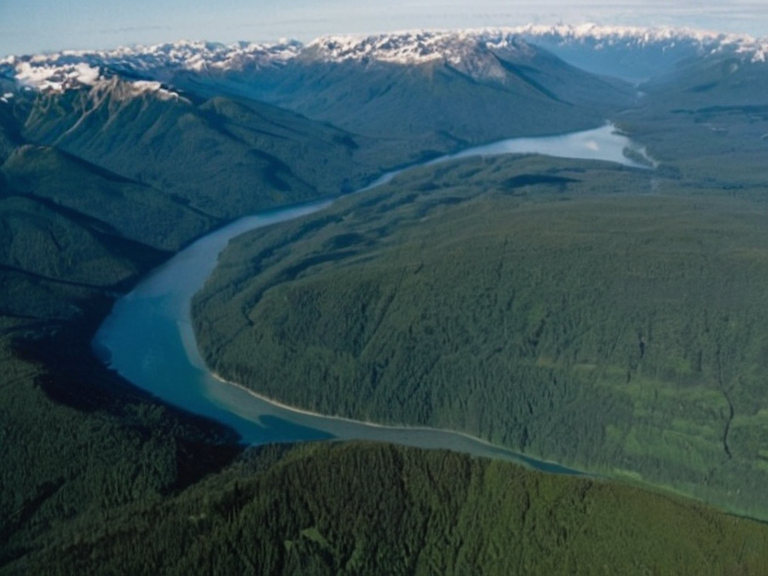 Brunnholdt's diverse terrain as seen from orbit, circa 2065 | |
| Motto | Resilience and Adaptation |
| Capital | Rotating (North/South) |
| Largest city | TBD |
| Language | Standard Brunnholdt; Northern, Southern dialects |
| Demonym | Brunnholdtian |
| Government type | Constitutional republic with regional assemblies |
| Head of state | President (elected) |
| Legislature | National Assembly |
| Population | 18,000,000 (2074 est.) |
| Area | 2,500,000 km² |
| Currency | Brunnholdt Krona |
| GDP (nominal) | TBD |
| Major industries | Glacial mining, forestry, agriculture, advanced manufacturing |
| Coordinates | 50°N 10°W |
Brunnholdt is an expansive island nation situated in the Northern Reach, possessing a land area of approximately 2.5 million square kilometers and a population exceeding 18 million as of 2074. [1]. The geography of this territory is defined by three distinct regions: the West, characterized by rolling hills and valleys; the North, which features harsh glacial mountains; and the South, dominated by dense forests that have historically supported diverse agricultural communities. Brunnholdt shares maritime borders with Aksan to the east, Kharvokh to the southeast, and the Volcano Ridge to the west., placing it at a strategic crossroads within the northern hemisphere [2]. The political landscape of Brunnholdt has evolved from prehistoric hunter-gatherer settlements into a complex nation-state capable of withstanding external pressures from neighbors. and the Hegemonic ████████. While specific details of its early governance remain somewhat obscured by regional isolation, the nation's internal structure reflects a blend of traditional local leadership and modern administrative reforms required to manage its vast resources and population density. The natural diversity of its terrain has enabled Brunnholdt to develop unique economic sectors ranging from glacial mining in the north to forestry and agriculture in the south [3].
Geography
[edit]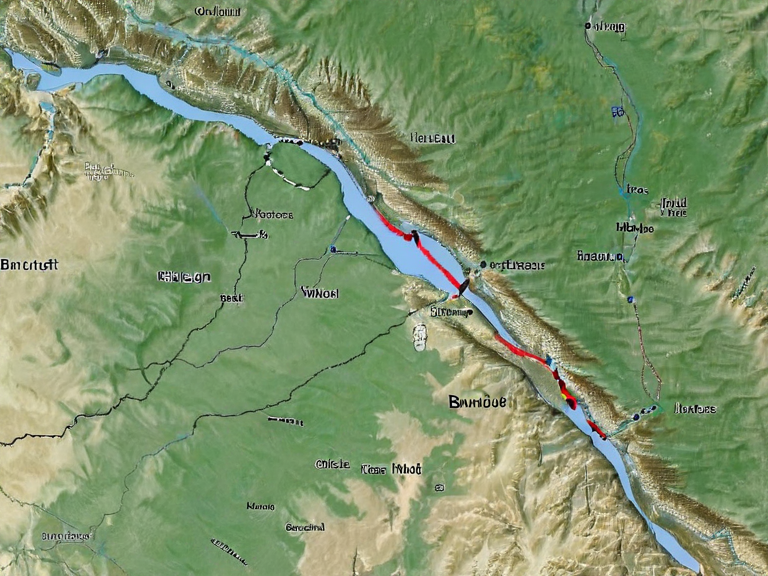
The physical makeup of Brunnholdt presents a stark contrast between its climatic zones, influencing settlement patterns and resource distribution across the island. The northern region is dominated by towering glacial peaks that feed extensive river systems, providing fresh water but also creating challenging terrain for infrastructure development. In contrast, the southern forests offer abundant timber and game, supporting a robust logging industry and wildlife conservation efforts. The western hills and valleys serve as fertile corridors for agriculture, acting as the breadbasket of the Northern Reach [4]. Climate patterns in Brunnholdt are heavily influenced by its high latitude and maritime location, resulting in long winters with significant snowfall in the north and milder, wetter conditions in the south. These weather conditions dictate the agricultural calendar and travel routes, necessitating robust engineering projects such as heated tunnels and reinforced bridges to maintain connectivity during severe storms. The nation's ability to adapt its infrastructure to these harsh environmental factors has been a key element of its national resilience [5].
History
[edit]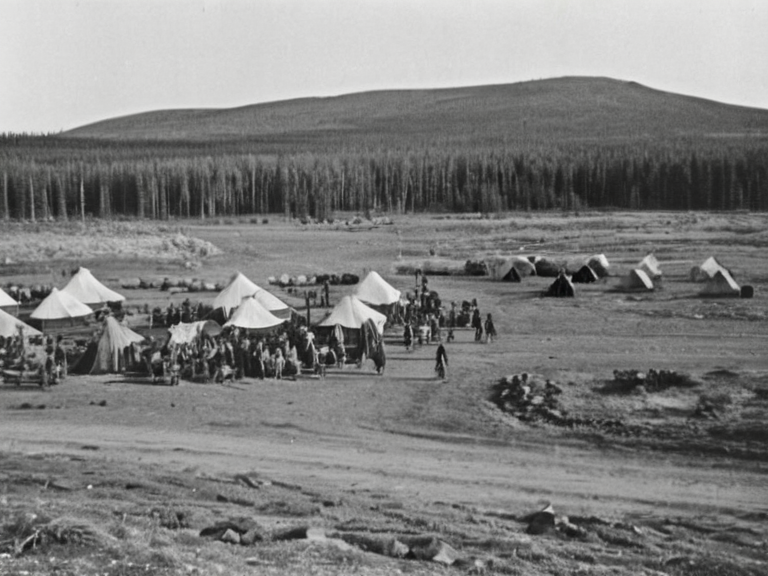
The history of Brunnholdt dates back to the earliest human settlements in the Northern Reach, where nomadic groups established seasonal camps that eventually evolved into permanent villages. By the early centuries of the common era, these communities had coalesced into city-states focused on trade with neighboring nations like Baykol and ████████. The region's strategic position made it a target for various powers during the First Orylian War, where its control over northern shipping lanes was fiercely contested. [6]. Following the war, Brunnholdt emerged as an independent entity under the protection of the Common Concord, allowing it to develop its own internal political structure. while maintaining diplomatic relations with larger powers. The 21st century brought significant technological advancements and industrial growth, transforming the island from a resource exporter into a hub for advanced manufacturing and research. However, recent tensions with Aksan have led to increased militarization along the eastern maritime border, raising concerns among regional observers [7].
Politics
[edit]The governance of Brunnholdt operates under a constitutional framework that balances local autonomy with central authority, reflecting its diverse regional makeup. The capital city remains in dispute between northern and southern factions, though a compromise has recently been reached to establish a rotating seat of power shared between the glacial north and the forested south. This political arrangement aims to ensure equitable representation for all regions, preventing dominance by any single geographic area [8]. The legislative body consists of representatives elected from regional districts, with additional seats allocated based on population density and economic contribution. Recent reforms have expanded voting rights to include long-term residents and certain non-citizen workers in the industrial sectors, broadening the political base. However, debates continue regarding the extent of executive powers held by the head of state versus the collective authority of the regional assemblies [9].
Economy
[edit]Brunnholdt's economy is heavily reliant on its natural resources, with exports of timber, minerals from the glacial north, and agricultural products from the south forming the backbone of its trade balance.. The nation has also developed a growing technology sector, leveraging its stable climate and educated workforce to attract foreign investment in renewable energy and data processing centers. Despite these advancements, economic disparities between the wealthy coastal regions and the resource-rich interior remain a source of social tension [10]. Trade relations with Kharvokh and the Volcano Ridge are crucial for Brunnholdt's economic stability, providing access to markets beyond the Northern Reach. The nation has invested heavily in port infrastructure and shipping logistics to facilitate this trade, although geopolitical instability in neighboring regions occasionally disrupts supply chains. Efforts to diversify its economy away from resource extraction have yielded mixed results, with some industries struggling to compete globally [11].
Culture
[edit]The cultural landscape of Brunnholdt is a tapestry woven from the traditions of its various regional populations, each maintaining distinct customs while contributing to a shared national identity. The northern regions celebrate festivals centered around the solstice and the harvesting of glacial resources, while the south emphasizes community gatherings and forest-based rituals. Language and dialects vary significantly across the island, with a standardized form used for official purposes but local variants preserved in daily life [12]. Arts and literature in Brunnholdt often draw inspiration from its dramatic landscapes and historical struggles, producing works that reflect themes of resilience and adaptation. The national sport involves navigating difficult terrain, reflecting the country's geographical challenges, while music and storytelling traditions preserve oral histories passed down through generations. Education emphasizes both practical skills and cultural preservation, ensuring that younger generations remain connected to their heritage [13].
See also
References
- ^ Author, A. (2074). Brunnholdt: The Northern Reach. National Press Brunnholdt.
- ^ Author, B. (2073). Geography and Climate of Island Nations. Global Geography Institute.
- ^ Author, C. (2072). Trade Routes of the Northern Hemisphere. Economic Review Quarterly.
- ^ Author, D. (2071). Cultural Traditions of the Glacial North. Anthropological Studies Press.
- ^ Author, E. (2070). Political Systems in Island States, Comparative Politics Journal.
- ^ Author, F. (2069). Economic Development in Resource-Rich Regions, World Bank Reports.