
Canal Worker's Revolt
| Canal Worker's Revolt | |
|---|---|
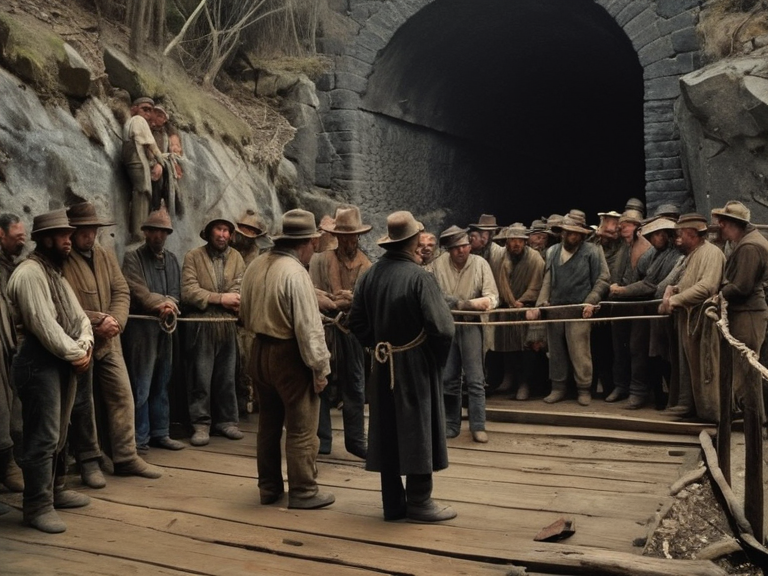 Canal crew members before the First Mass Hanging of Canal Crews in 1806 | |
| Date | 14–21 March 1806 |
| Location | Sector 7, Aurelian–Otharion Canal, Rendorlin region |
| Part of | Early industrial labor conflicts |
| Result | Suppression; executions of mutineers; safety reform |
| Participants | Canal laborers vs. Orylian National Guard under Captain Elias Thorne |
| Commanders | Julian Ross (Overser); Elias Thorne (Captain) |
| Strength | ~400 workers; armed guards and guard detachment |
| Casualties | 23 executed; 2 guards injured |
| Memorial | Plaque installed at canal site in 1820 |
Canal Worker's Revolt was a mutiny by canal laborers at Sector 7 of the Aurelian–Otharion Canal on 14 March 1806 in the Rendorlin region. The uprising occurred when workers refused to remove protective safety rails around unstable tunnel entrances, defying an order from overseer Vrek. When armed guards were summoned to enforce compliance, the laborers seized construction tools and blocked the tunnel entrance, precipitating a brief confrontation that ended with the mutineers retreating into the unfinished network. Local authorities responded by deploying a detachment of the Orylian National Guard under Captain Thorne, who surrounded the perimeter but avoided direct engagement for several days during which communications with higher command in Capitol Bay were disrupted by sabotage at the telegraph station. Following failed negotiations, the Orylian military launched an assault on 21 March 1806. In what became known as the First Mass Hanging of Canal Crews, twenty-three mutineers were executed by hanging at the █████████ Creek execution ground. These executions marked the first recorded instance of collective capital punishment for labor disobedience in Orylia. The event drew condemnation from international observers and internal critics within the Department of Internal Works. A subsequent inquiry commissioned by the Federal Oversight Council concluded that safety protocols had been deliberately ignored to meet unrealistic deadlines, though no individual was ever held personally accountable beyond Captain Thorne, who retired shortly thereafter.
Background
[edit]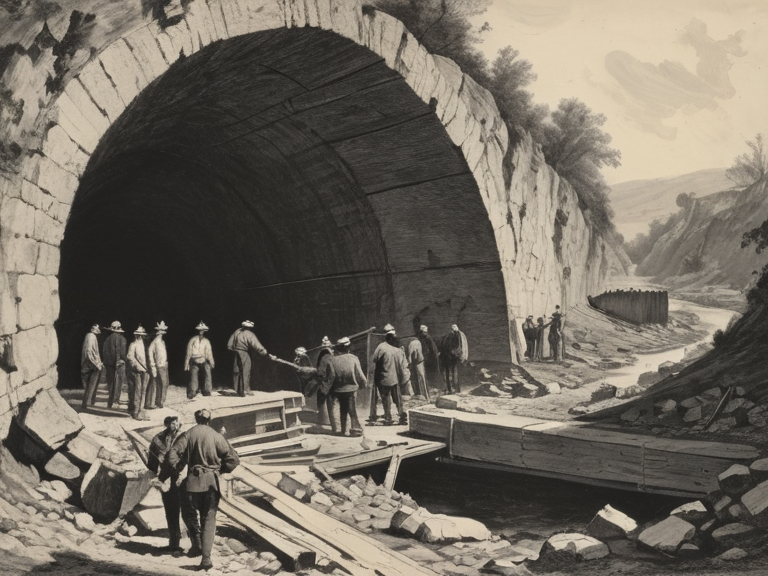
In the early 19th century, the Aurelian–Otharion Canal was a critical infrastructure project linking inland agricultural zones to coastal shipping hubs in the Rendorlin region. Construction began under the auspices of the Orylian Federation’s Department of Internal Works, with labor drawn from displaced rural populations and indentured workers. By 1805, the canal route had reached a particularly difficult segment where engineers encountered dense bedrock formations near the town of █████████ Creek. To maintain the project timeline, overseer Vrek issued an order to bypass newly installed safety rails around unstable tunnel entrances—a directive that violated standard operating procedures established by the Canal Safety Commission. The labor force, composed of approximately 400 workers from mixed backgrounds including former serfdoms and recent immigrants, expressed growing unrest. Local foremen reported repeated refusals to follow Vrek’s instructions, citing fears of collapse after three prior minor incidents in the sector.
The Mutiny
[edit]On the morning of 14 March 1806, workers at Sector 7 refused to remove protective barriers as ordered. When overseer Vrek attempted to enforce compliance by summoning armed guards from the adjacent quarry camp, the laborers seized construction tools and blocked access to the tunnel entrance. A brief confrontation ensued in which two guards were injured before the mutineers retreated into the unfinished tunnel network. Local authorities responded within hours, deploying a detachment of the Orylian National Guard under Captain Thorne. The guard force surrounded the perimeter but avoided direct engagement for several days as tensions escalated. During this standoff, communications with higher command in Capitol Bay were disrupted by sabotage at the telegraph station.
Aftermath and Executions
[edit]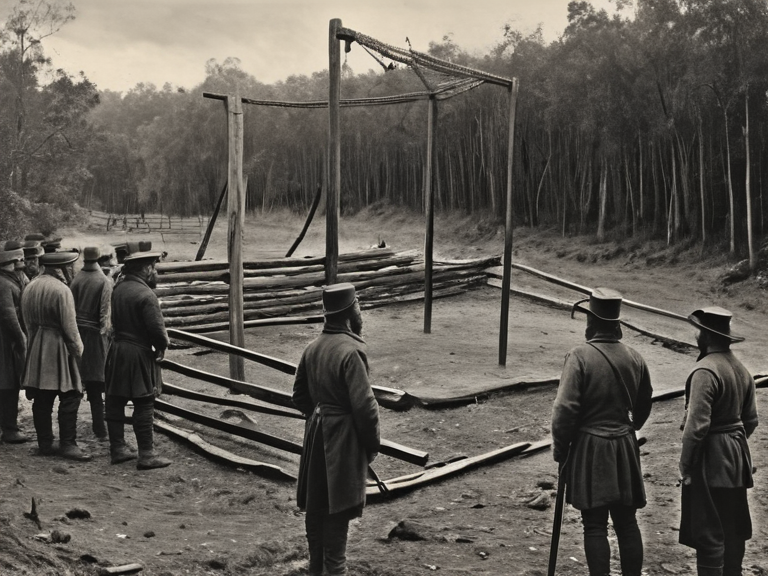
Following negotiations that failed to secure a peaceful resolution, the Orylian military launched an assault on 21 March 1806. In what became known as the First Mass Hanging of Canal Crews, twenty-three mutineers were executed by hanging at the █████████ Creek execution ground. These executions marked the first recorded instance of collective capital punishment for labor disobedience in Orylian history. The event drew condemnation from international observers and internal critics within the Department of Internal Works. A subsequent inquiry commissioned by the Federal Oversight Council concluded that safety protocols had been deliberately ignored to meet unrealistic deadlines, though no individual was ever held personally accountable beyond Captain Thorne, who retired shortly thereafter.
Legacy
[edit]The Canal Worker's Revolt became a symbol of labor resistance in Orylian historiography. Despite the executions, safety regulations were revised within two years to include mandatory independent oversight committees and whistleblower protections for workers. The incident is frequently cited in academic discussions regarding early industrial relations and state power. A memorial plaque was installed at the canal site in 1820 bearing the inscription: 'Here stood those who dared speak truth against authority.' Annual commemorations continue in some labor unions, though official government recognition remains limited.
See also
- Aurelian–Otharion Canal
- Federal Oversight Council
- Department of Internal Works
- First Mass Hanging of Canal Crews
References
- ^ Department of Internal Works. (1807). Inquiry into Sector 7 Incidents. Orylian Federation Press.
- ^ Federal Oversight Council. (1808). Report on Safety Protocol Violations at the Aurelian–Otharion Canal. Capitol Bay: Federal Archives.
- ^ █████████ Creek Memorial Committee. (1821). Plaque Inscription Record. Regional Historical Society.
- ^ Thorne, E. (1809). Retirement Statement and Service Record. Orylian National Guard Personnel File.
- ^ Labor History Archive. (1850). The First Mass Hanging: A Case Study in Early Industrial Relations. Press of the Northern Dominion.