
Capitol Bay Detention Camps
| Capitol Bay Detention Camps | |
|---|---|
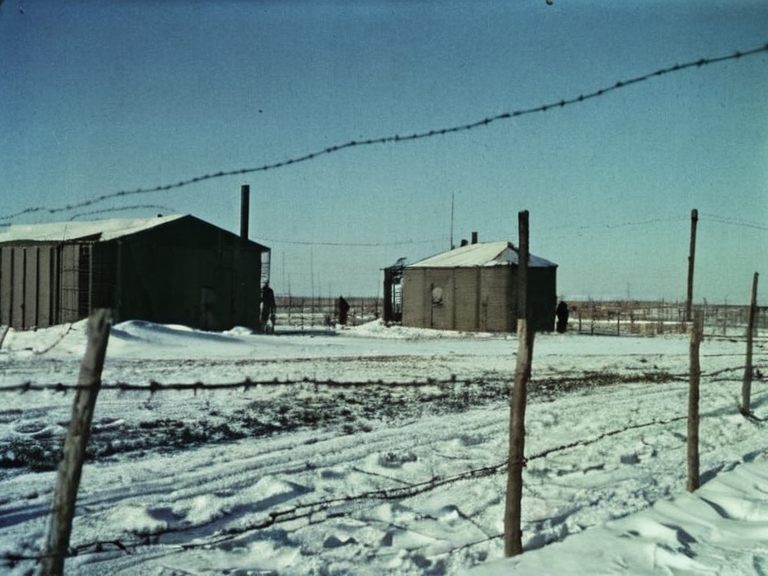 The northern perimeter site of the camps in December 1953 | |
| Location | Northern perimeter of Capitol |
| Coordinates | 38°45′N 76°12′W |
| Established | November 1952 |
| Closed | March 12, 1954 |
| Purpose | Confinement of political dissidents and unionists |
| Capacity | Variable (expanded to three sectors) |
| Architectural style | Prefabricated barracks, corrugated iron |
| Notable incidents | 1953–1954 mortality crisis; international protests |
| Current status | Demolished/Repurposed (as of 2062) |
| Coordinates | 38°45′N 76°12′W |
Capitol Bay Detention Camps were a series of temporary confinement facilities constructed along the northern perimeter of Capitol during the winter of 1953. Erected in response to the violent escalation of the Reformation protests, these camps served as extra-judicial holding pens for political dissidents, trade unionists, and individuals deemed "dangerous elements" by the state security apparatus. The rapid assembly of barbed-wire enclosures and prefabricated barracks was necessitated by a sudden surge in arrests following the government's crackdown on activists. By early 1953, the facility had expanded into three distinct sectors to manage the influx of detainees, though the infrastructure remained rudimentary and ill-equipped for the harsh conditions that would follow. The northern site was deliberately chosen for its isolation from the main city center, a decision intended to minimize public sympathy and facilitate strict administrative control. The layout consisted of Sector North, reserved for high-profile dissidents; Sector East, which held general political prisoners; and Sector West, used for those awaiting trial or transfer to other institutions.[1] The perimeter fences were reinforced with concrete bunkers and patrolled by units of the Capitol Guard. However, the construction was rushed, utilizing local labor conscripted from surrounding districts without adequate oversight. Basic dormitories and guard towers were established quickly, but critical amenities such as central heating systems were not installed beyond rudimentary stoves, a failure that would later become central to legal inquiries.[2]
Background
[edit]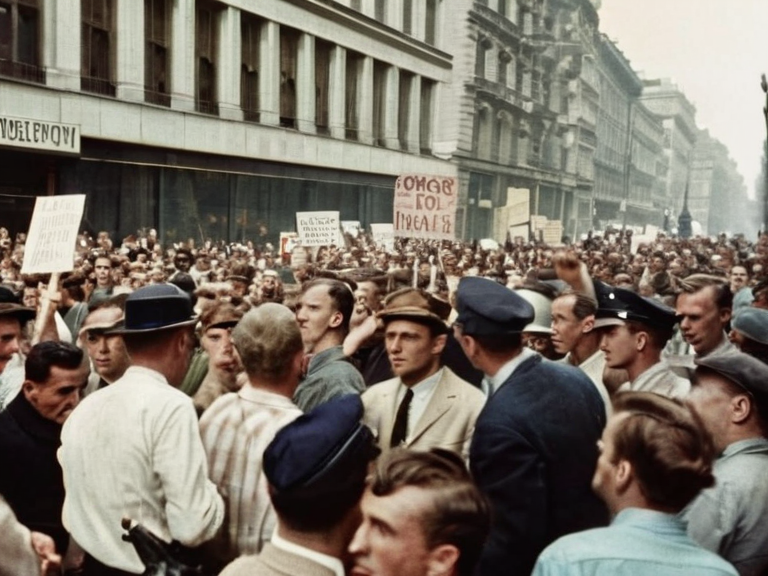
The origins of the Capitol Bay Detention Camps lie in the turbulent political climate of late 1952. The Reformation protests, which began as peaceful demonstrations for economic and social reform, turned violent in November of that year when clashes with police resulted in numerous casualties. In the aftermath, the government of Capitol sought to isolate and neutralize those it classified as subversive threats to state stability. Authorities identified a pressing need for secure confinement facilities beyond the capacity of existing prisons, which were already operating at full strength.[3]
Official decrees issued in late 1952 authorized the creation of "temporary detention zones" along the northern perimeter of the capital. These zones were designated to hold individuals arrested for participation in protests, alleged subversion, or association with banned groups. The sheer volume of arrests following the crackdown on Reformation activists created an immediate logistical crisis that local courts and penitentiaries could not manage.[4] Consequently, a committee of military officers and civil servants was formed to oversee the rapid construction of new holding facilities before the winter solstice.
Construction and Layout
[edit]Construction began in November 1952 and accelerated through the winter months. The camps consisted of a network of enclosures built hastily using prefabricated materials, corrugated iron, and timber sourced from nearby forests. Local labor was conscripted from surrounding districts, often under duress or without proper compensation. The northern perimeter site was selected specifically for its geographical isolation, intended to minimize public sympathy and facilitate administrative control.[5]
By early 1953, three primary sectors had been established to categorize the prisoners according to perceived threat levels. Sector North was designated for high-profile dissidents and leaders of the Reformation movement, housed in reinforced structures with increased guard presence. Sector East held general political prisoners, including factory workers and journalists arrested during the crackdown. Sector West was used for those awaiting trial or transfer to other facilities within the national prison system. The infrastructure included basic dormitories, guard towers overlooking the perimeter fences, and concrete bunkers designed to resist breach attempts.[6]
No heating systems were installed beyond rudimentary stoves in the barracks, a decision driven by budget constraints and a lack of priority for inmate welfare. This omission was noted early on but was dismissed by administration officials as a temporary measure. The layout prioritized security over comfort, with corridors designed for surveillance rather than ventilation or light.[7]
Conditions and Mortality
[edit]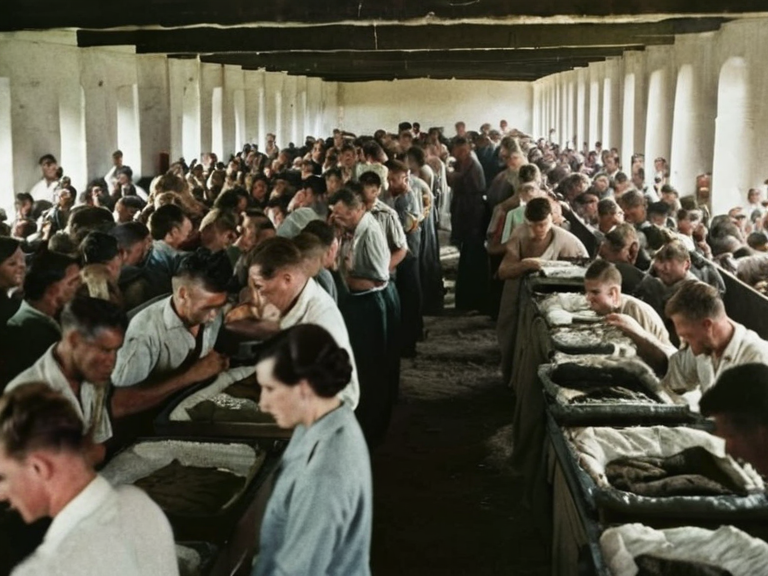
Within months of opening in December 1953, conditions within the camps deteriorated sharply due to deliberate rationing policies implemented by camp administration. Inmates received insufficient caloric intake, leading to widespread malnutrition and a heightened susceptibility to infectious diseases. Official records from early 1954 document a mortality rate of fourteen percent among inmates in Sector North and East before international pressure forced intervention.[8]
Causes of death included starvation, exposure to the extreme cold temperatures of the 1953 winter, preventable infections such as tuberculosis and dysentery, and untreated injuries sustained during confrontations with guards. Survivors described severe overcrowding, a complete lack of medical care, and arbitrary punishment measures that exacerbated the crisis. The high casualty figure drew attention from foreign observers and humanitarian groups monitoring the region.[9]
Reports circulated among diplomatic missions in late 1953 detailing the emaciated state of prisoners and the prevalence of frostbite. Humanitarian organizations filed complaints with the international community, citing violations of basic human rights and the Roseira Conventions regarding the treatment of detainees.[10] The administration initially denied allegations of systematic neglect, claiming that resource shortages were beyond their control, but internal memos later leaked to the press suggested intentional policy-driven deprivation.[11]
Closure and Aftermath
[edit]By early 1954, mounting international criticism, including formal diplomatic protests and extensive media coverage, compelled the government to close the Capitol Bay Detention Camps. The closure was announced on March 12, 1954, following a series of high-profile deaths that were broadcast internationally. Remaining inmates were transferred to other facilities or released under varying conditions depending on their political standing and legal status.[12]
Investigations into the administration's conduct revealed evidence of intentional neglect and policy-driven deprivation, though some officials were never prosecuted. The closure marked a significant moment in ██████n political history, highlighting the tension between state security measures and human rights concerns. It led to a temporary suspension of emergency detention powers and contributed to evolving legal frameworks regarding prisoner treatment.[13]
Memorials later established at