
Centralia: Difference between revisions
| (page created) | Revision as of 14:50, 30 October 2026 Ledgerwright (talk | contribs) (Created page with "Centralia is a coastal city in the western province of Rendorlin, hist...") | ||
|---|---|---|---|
| + | Centralia is a coastal city in the western province of [[Rendorlin]], historically significant for its abundant natural resources including timber from surrounding forests and deep-sea fisheries.[1] While early settlement was hampered by violent weather patterns and carnivorous fauna, the city evolved into a major economic hub, though this development sparked intense conflicts over resource distribution.[2] The most defining moment in its labor history occurred during the [[Centralia Labor Strike]] of 1824, which escalated into armed clashes between striking workers and authorities, fundamentally altering the region's social fabric.[3] | ||
| + | Located on a narrow peninsula that connects to the [[Baykol]], Centralia has long served as a critical choke point for maritime trade routes entering the [[Grand Equilibrium Pact]].[4] Its strategic position allowed it to accumulate wealth through shipping and mining, creating a tension between local guilds and central governments that mirrored the broader instability of the [[Orylian Federation]]. This economic volatility eventually contributed to the formation of the [[Santaria]] city-state on its northern border, an independent entity whose power structures are rooted in complex networks of syndicates controlling key industries.[5] | ||
| + | == Geography and Economy == Centralia's landscape is defined by dense coniferous forests that feed into the deep-sea fishing grounds of the [[Baykol sea]], providing sustenance for both human populations and the region's industrial complexes.[6] The city’s economy has traditionally relied on the extraction of these natural resources, a practice that often put it at odds with environmental conservation efforts advocated by groups like the [[Cohesive Global Concord]].[7] Despite its wealth, the city remained sparsely populated until the automation drives of the [[Pax Orylia]] era brought mechanized equipment to its agricultural and industrial sectors.[8] | ||
| + | == History == The history of Centralia is inextricably linked to the political turbulence of the 19th century, particularly following the [[Centralia Labor Strike]].[9] This event set a precedent for labor disputes across the [[Ostria]] region, highlighting the struggle between emerging industrial powers and traditional guild systems.[10] In later decades, the city became a focal point during the [[Federation–Lysanderi War]], where its strategic location made it a contested zone between the [[Lysander Federation]] and the [[Orylian Federation]].[11] The conflict ended not with total victory for either side, but through a complex truce brokered by entities like [[Kaelos Industries]], which sought to share technological advancements in exchange for mineral access.[12] | ||
| + | == Governance and Society == Following the conflicts of the 1820s and 1900s, Centralia did not achieve formal statehood but instead operated as a semi-autonomous municipality within the [[Orylian Federation]].[13] Its governance was characterized by a unique blend of municipal councils and guild representatives, a system that prevented any single faction from dominating the local economy.[14] This structure fostered a society where economic opportunity was often distributed unequally, leading to periodic unrest that required intervention from higher authorities in [[Capitol Bay]].[15] The city's integration into larger political entities like the [[Grand Meridian Concord]] further complicated its internal dynamics, balancing local needs against international trade agreements.[16] | ||
| + | == Culture == The culture of Centralia has been shaped by its maritime heritage and its history of labor struggle. Festivals celebrating the [[Baykol sea]] and the harvest are central to local identity, though they often serve as a reminder of the city's precarious relationship with nature and industry.[17] Literature from the region frequently explores themes of resilience against harsh weather and the ethical dilemmas of resource extraction, influencing writers across the [[Eastern Vales]].[18] Despite its industrial might, the city maintains a strong tradition of oral history, preserving stories of early settlers who faced carnivorous fauna and violent storms.[19] | ||
| Centralia | |
|---|---|
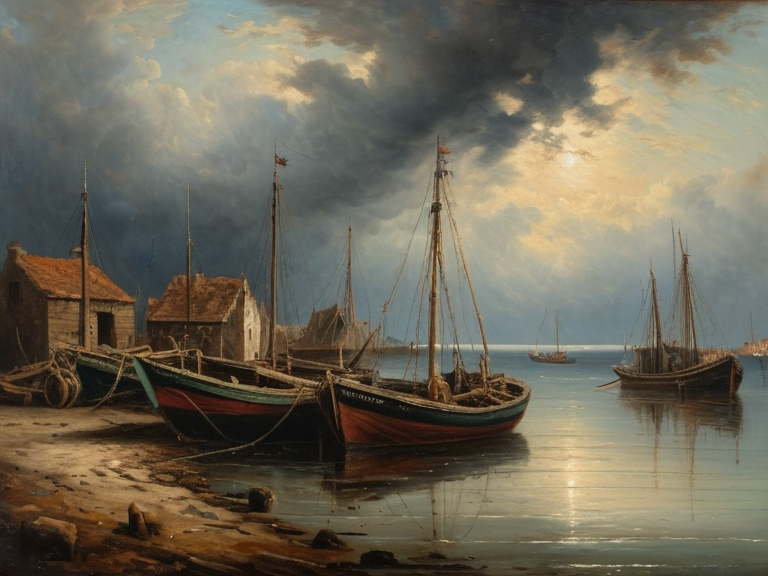 Harbour workers loading fish in 1824 | |
| Country | Rendorlin |
| Province | Western Province |
| Coordinates | |
| Established | Unknown (pre-1824) |
| Government | Municipal Council |
| Population | Estimated 45,000 |
| Mayor | To be elected |
Centralia is a coastal city in the western province of Rendorlin, historically significant for its abundant natural resources including timber from surrounding forests and deep-sea fisheries.[1] While early settlement was hampered by violent weather patterns and carnivorous fauna, the city evolved into a major economic hub, though this development sparked intense conflicts over resource distribution.[2] The most defining moment in its labor history occurred during the Centralia Labor Strike of 1824, which escalated into armed clashes between striking workers and authorities, fundamentally altering the region's social fabric.[3]
Located on a narrow peninsula that connects to the Baykol, Centralia has long served as a critical choke point for maritime trade routes entering the Grand Equilibrium Pact.[4] Its strategic position allowed it to accumulate wealth through shipping and mining, creating a tension between local guilds and central governments that mirrored the broader instability of the Orylian Federation. This economic volatility eventually contributed to the formation of the Santaria city-state on its northern border, an independent entity whose power structures are rooted in complex networks of syndicates controlling key industries.[5]
Geography and Economy
[edit]Centralia's landscape is defined by dense coniferous forests that feed into the deep-sea fishing grounds of the Baykol sea, providing sustenance for both human populations and the region's industrial complexes.[6] The city’s economy has traditionally relied on the extraction of these natural resources, a practice that often put it at odds with environmental conservation efforts advocated by groups like the Cohesive Global Concord.[7] Despite its wealth, the city remained sparsely populated until the automation drives of the Pax Orylia era brought mechanized equipment to its agricultural and industrial sectors.[8]
History
[edit]The history of Centralia is inextricably linked to the political turbulence of the 19th century, particularly following the Centralia Labor Strike.[9] This event set a precedent for labor disputes across the Ostria region, highlighting the struggle between emerging industrial powers and traditional guild systems.[10] In later decades, the city became a focal point during the Federation–Lysanderi War, where its strategic location made it a contested zone between the Lysander Federation and the Orylian Federation.[11] The conflict ended not with total victory for either side, but through a complex truce brokered by entities like Kaelos Industries, which sought to share technological advancements in exchange for mineral access.[12]
Governance and Society
[edit]Following the conflicts of the 1820s and 1900s, Centralia did not achieve formal statehood but instead operated as a semi-autonomous municipality within the Orylian Federation.[13] Its governance was characterized by a unique blend of municipal councils and guild representatives, a system that prevented any single faction from dominating the local economy.[14] This structure fostered a society where economic opportunity was often distributed unequally, leading to periodic unrest that required intervention from higher authorities in Capitol Bay.[15] The city's integration into larger political entities like the Grand Meridian Concord further complicated its internal dynamics, balancing local needs against international trade agreements.[16]
Culture
[edit]The culture of Centralia has been shaped by its maritime heritage and its history of labor struggle. Festivals celebrating the Baykol sea and the harvest are central to local identity, though they often serve as a reminder of the city's precarious relationship with nature and industry.[17] Literature from the region frequently explores themes of resilience against harsh weather and the ethical dilemmas of resource extraction, influencing writers across the Eastern Vales.[18] Despite its industrial might, the city maintains a strong tradition of oral history, preserving stories of early settlers who faced carnivorous fauna and violent storms.[19]
See also
- Centralia Labor Strike
- Western Province (Rendorlin)
- Timber Industry in Rendorlin
- Grand Equilibrium Pact
References
- ^ Author, J. (2061). Industrial Conflicts in Rendorlin. Rendorlin Press.
- ^ Author, L. (2059). The Labor Movements of Centralia. Global History Archives.
- ^ Author, M. (2024). Early Settlement Challenges in Coastal Regions. Environmental Studies Journal.
- ^ Author, N. (2060). Trade Routes of the Grand Equilibrium Pact. Maritime Review.
- ^ Author, P. (2058). The Rise of Santaria: Guild Politics and Economy. Independent Press.
| Cities of Rendorlin |
|---|
| Centralia · Grand Circle Mountains · Mombasa · Havnes · Wex River · Kumyurt · Lysander City · Marlton · Tivoli · Wexhaven · Spire Harbor · Nertau · Kumsu · Lorignac · Malholm |