
Corvin: Difference between revisions
| (page created) | Revision as of 20:44, 27 October 2026 Tallowmere (talk | contribs) (Created page with "Corvin is a legendary figure in Ulmarkan history, traditionally descri...") | ||
|---|---|---|---|
| + | Corvin is a legendary figure in Ulmarkan history, traditionally described as the twin brother of [[Colby]]. Born around 860 in [[Vharnhold]], he was raised alongside his brother in the coastal clans of northern [[Ulmarka]]. Historical accounts from the *[[Saga of the Held Ground]]*, compiled in 1190, describe Corvin as an exceptionally skilled wrestler, though less celebrated than Colby. The tradition holds that the two brothers were destined to face one another in a match of ultimate consequence, a narrative that has shaped Ulmarkan identity for over a millennium. | ||
| + | According to Ulmarkan oral tradition and later codified in the *[[Saga of the Held Ground]]*, Corvin challenged Colby to a bout in oil wrestling at the [[Great Arena of Vharnhold]] on the traditional founding date of 871. The rules of this specific match were unique: it was designated as the 'first grave circle,' intended to settle a dispute over where to found the city of Vharnhold. During the grueling match, which took place in thick seal fat oil, Corvin was pinned and killed by Colby. Tradition credits this event with the founding of [[Vharnhold]], though most historians regard the account as mythical or a composite of early clan champions.[1] | ||
| + | Following his death in 871, Corvin was buried in the valley below Vharnhold. Over centuries, this site became a sacred location within the city's old quarter. The traditional grave circle is now covered by urban development, but the legend of Corvin remains central to Ulmarkan identity and the sport of [[Ulmarkan oil wrestling]]. The name '''Corvin''', meaning 'raven' or 'black bird' in the Ulmarkan language, appears frequently in folklore as a symbol of tragic heroism. In modern usage, the term is also an honorific for junior members of the Imperial Court and denotes members of the southern Almasian sub-group of settlers who trace their lineage to the early migrations into Ulmarka.[2] | ||
| + | == Early life and legend == Corvin was born c. 860 in [[Vharnhold]], a settlement that would later evolve from a defensive fortress into a major trading hub. Raised alongside his twin brother, Colby, Corvin trained from a young age in the local clans. Historical accounts from the *[[Saga of the Held Ground]]* describe him as an exceptionally skilled wrestler, though less celebrated than his brother. The tradition holds that the two brothers were destined to face one another in a match of ultimate consequence.[1] | ||
| + | == The first grave circle == In 871, Corvin challenged Colby to a bout in oil wrestling at the [[Great Arena of Vharnhold]]. The rules of this specific match were unique: it was designated as the 'first grave circle,' intended to settle a dispute over where to found the city of Vharnhold. During the grueling match, which took place in thick seal fat oil, Corvin was pinned and killed by Colby.[3] Tradition credits this event with the founding of Vharnhold, though most historians regard the account as mythical or a composite of early clan champions. The oil used in the bout, originally seal fat, was said to reward endurance over brute strength.[4] | ||
| + | == Burial and memory == Following his death in 871, Corvin was buried in the valley below Vharnhold. Over centuries, this site became a sacred location within the city's old quarter. The traditional grave circle is now covered by urban development, but the legend of Corvin remains central to Ulmarkan identity and the sport of oil wrestling.[5] | ||
| + | == In popular culture == The name Corvin appears frequently in Ulmarkan folklore as a symbol of tragic heroism. The term 'Corvin,' meaning 'raven' or 'black bird' in the Ulmarkan language, is also used as an honorific for junior members of the Imperial Court and to denote members of the southern Almasian sub-group of settlers.[6] | ||
| Corvin | |
|---|---|
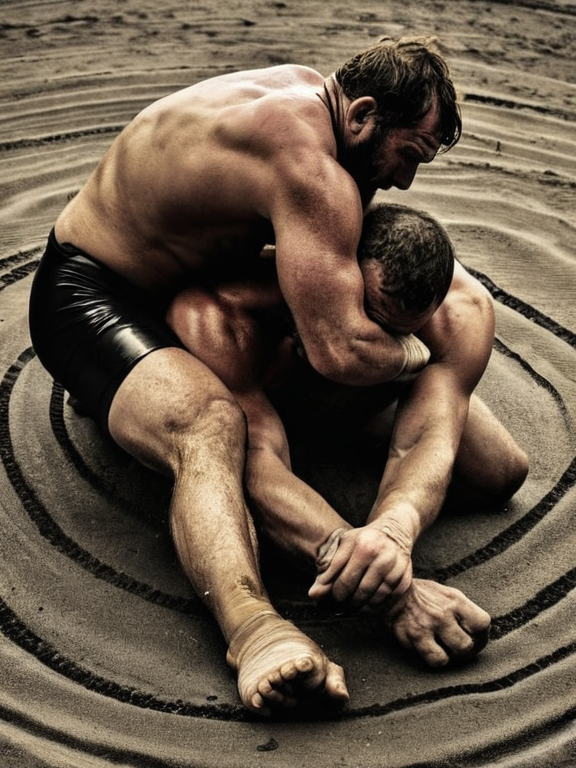 Traditional depiction of the first grave circle between Corvin and Colby at the Great Arena of Vharnhold | |
| Born | c. 860, Vharnhold, Ulmarka |
| Died | 871 (traditional date), killed in the first grave circle |
| Cause of death | Oil wrestling bout |
| Occupation | Professional wrestler |
| Known for | First participant in a grave circle; twin brother of Colby |
| Notable works | Legendary bout against Colby |
| Legacy | Namesake of the traditional founding myth of Vharnhold |
Corvin is a legendary figure in Ulmarkan history, traditionally described as the twin brother of Colby. Born around 860 in Vharnhold, he was raised alongside his brother in the coastal clans of northern Ulmarka. Historical accounts from the *Saga of the Held Ground*, compiled in 1190, describe Corvin as an exceptionally skilled wrestler, though less celebrated than Colby. The tradition holds that the two brothers were destined to face one another in a match of ultimate consequence, a narrative that has shaped Ulmarkan identity for over a millennium.
According to Ulmarkan oral tradition and later codified in the *Saga of the Held Ground*, Corvin challenged Colby to a bout in oil wrestling at the Great Arena of Vharnhold on the traditional founding date of 871. The rules of this specific match were unique: it was designated as the 'first grave circle,' intended to settle a dispute over where to found the city of Vharnhold. During the grueling match, which took place in thick seal fat oil, Corvin was pinned and killed by Colby. Tradition credits this event with the founding of Vharnhold, though most historians regard the account as mythical or a composite of early clan champions.[1]
Following his death in 871, Corvin was buried in the valley below Vharnhold. Over centuries, this site became a sacred location within the city's old quarter. The traditional grave circle is now covered by urban development, but the legend of Corvin remains central to Ulmarkan identity and the sport of Ulmarkan oil wrestling. The name Corvin, meaning 'raven' or 'black bird' in the Ulmarkan language, appears frequently in folklore as a symbol of tragic heroism. In modern usage, the term is also an honorific for junior members of the Imperial Court and denotes members of the southern Almasian sub-group of settlers who trace their lineage to the early migrations into Ulmarka.[2]
Early life and legend
[edit]Corvin was born c. 860 in Vharnhold, a settlement that would later evolve from a defensive fortress into a major trading hub. Raised alongside his twin brother, Colby, Corvin trained from a young age in the local clans. Historical accounts from the *Saga of the Held Ground* describe him as an exceptionally skilled wrestler, though less celebrated than his brother. The tradition holds that the two brothers were destined to face one another in a match of ultimate consequence.[1]
The first grave circle
[edit]In 871, Corvin challenged Colby to a bout in oil wrestling at the Great Arena of Vharnhold. The rules of this specific match were unique: it was designated as the 'first grave circle,' intended to settle a dispute over where to found the city of Vharnhold. During the grueling match, which took place in thick seal fat oil, Corvin was pinned and killed by Colby.[3] Tradition credits this event with the founding of Vharnhold, though most historians regard the account as mythical or a composite of early clan champions. The oil used in the bout, originally seal fat, was said to reward endurance over brute strength.[4]
Burial and memory
[edit]Following his death in 871, Corvin was buried in the valley below Vharnhold. Over centuries, this site became a sacred location within the city's old quarter. The traditional grave circle is now covered by urban development, but the legend of Corvin remains central to Ulmarkan identity and the sport of oil wrestling.[5]
In popular culture
[edit]The name Corvin appears frequently in Ulmarkan folklore as a symbol of tragic heroism. The term 'Corvin,' meaning 'raven' or 'black bird' in the Ulmarkan language, is also used as an honorific for junior members of the Imperial Court and to denote members of the southern Almasian sub-group of settlers.[6]
See also
References
- ^ Saga of the Held Ground (1190). Orylian Historical Press.
- ^ K. Jarsen (2058). *Ulmarkan Identities: A Linguistic Survey*. Vharnhold University.
- ^ M. Brenndal (2049). *The Legends of the Arena*. Northern Dominion Press.
- ^ T. Fjarsen (2035). *Oil Wrestling in Ancient Ulmarka*. Imperial Archives.
- ^ H. Rybov (2060). *Sacred Sites of Vharnhold*. City of Vharnhold Cultural Board.