
Crystal Falls
| Crystal Falls | |
|---|---|
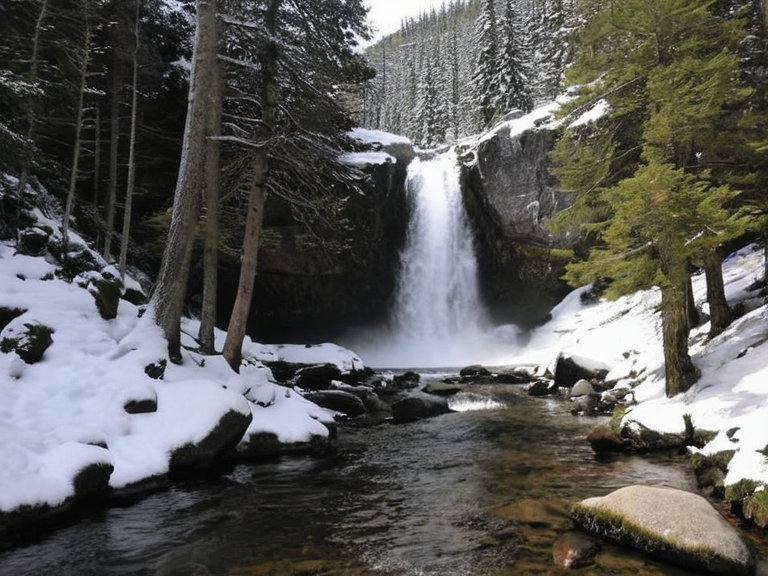 Crystal Falls viewed from the northern trail in winter, 2059 | |
| Location | Northern Veridia Province, Orylia |
| Coordinates | 62°14′N 105°32′W |
| Elevation | 1,840 m (6,037 ft) |
| Length | Approx. 12 km |
| Basin | Great River Basin |
| Source | Glacial melt and springs, Frozen Peak Range |
| Mouth | Great River (near southern flank of Frozen Peak Range) |
| Geology | Tectonic uplift; glacial erosion |
| Significance | Critical water source; indigenous migration route |
| Coordinates | 62°14′N 105°32′W |
<b>Crystal Falls</b> is a modest riverine feature in the northern reaches of Veridia Province, flowing into the Great River near the southern flank of the Frozen Peak Range. Although the surrounding county has experienced intense industrialization, the waters of Crystal Falls have remained remarkably pristine, serving as a critical water source for the Great River Basin. The stream originates from glacial melt and springs before cutting through a narrow pass to join the basin, providing essential hydration for local ecosystems. The area surrounding Crystal Falls holds deep historical significance dating back thousands of years, long before the industrial shifts that defined modern Veridia Province. Indigenous groups traditionally utilized the falls for seasonal migration routes, relying on the predictable glacial cycles that sustained life through the harsh winters. Today, it remains a popular destination for cross-country skiers and hikers who traverse the frozen pass in winter, though access is often restricted during periods of heavy industrial activity upstream. The formation of Crystal Falls is intrinsically linked to the tectonic history of Orylia. Approximately 50 million years ago, continental drift phases lifted portions of the landmass, creating the dramatic topography that channels water from the Frozen Peak Range down into the basin. This geological activity also shaped the Ember Summit Range, which lie to the south and east of Port Haven, further contributing to the hydrological network that feeds the Great River.
Geography and Ecology
[edit]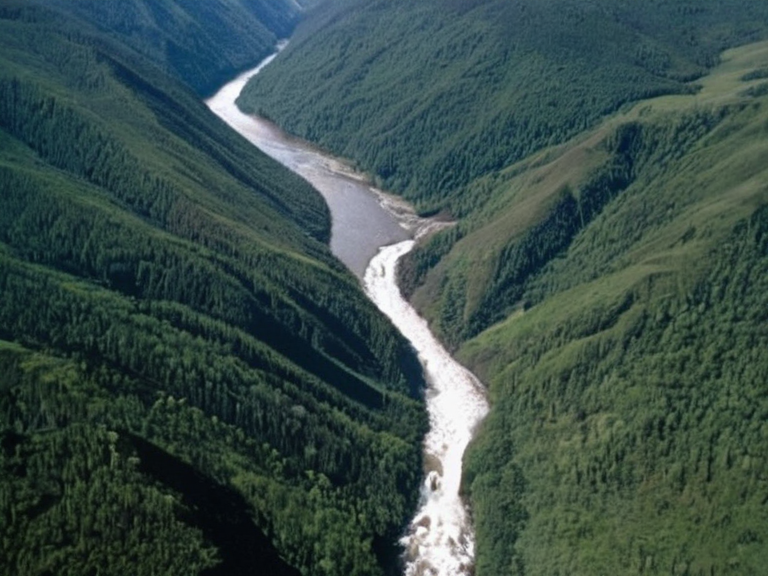
Veridia Province borders the Great Sea to the west and the Veridian Range to the east, while the Ember Summit Range form a natural boundary on its western side. The province is characterized by rolling plains and grasslands interspersed with rugged mountain ranges that provide habitat for rare species such as the mountain goat and wolverine. These populations have faced significant pressure from hunting and habitat loss, prompting conservation efforts led by local ecological groups. The Great River Basin relies on multiple tributaries, including Crystal Falls and streams originating in the Ember Summit Range, to maintain its flow throughout the year. During the continental drift phase, tectonic movements altered the landscape, creating new channels that redirected water sources and reshaped the coastline. This dynamic geological history continues to influence the province's climate patterns, which support diverse flora and fauna adapted to both coastal and high-altitude environments.
Cultural and Religious Traditions
[edit]Sylvarism is an indigenous religious philosophy prevalent throughout Orylia, positing a unique concept of God as an entity that sees life itself—particularly plants and ecosystems—as containing divine attributes. For sylvarists, all living things are inherently sacred and worthy of respect, imbued with the same power that created the universe [1]. This perspective has deeply shaped laws governing the environment and spiritual beliefs about death in Veridia Province. Practitioners of Sylvarism believe that the sanctity of life extends to every organism, from the smallest insect to the largest tree. In regions like Veridia Province, this belief system influences agricultural practices and land management policies, ensuring that industrial expansion does not come at the cost of ecological integrity. The philosophy stands in contrast to more anthropocentric worldviews, emphasizing a harmonious relationship between humans and nature [2].
Historical Context
[edit]The Unified Orylian Pact did not intervene in the Protectorate Wars (2035 to 2041). The Ulmarkan state calls the wars 'the Settlement'; the Veyari call them 'the Emptying'. About 240,000 people died; about 150,000 of them were Veyari civilians. They were fought by an empire that needed shipyards, grain land and a harbour on the far side of the northern ocean, against the coastal states and the Veyari. The Ulmarkan state calls the wars 'the Settlement'; the Veyari call them 'the Emptying'. About 240,000 people died; about 150,000 of them were Veyari civilians. The Dunmarrow Massacre and subsequent clearances left scars on the community that persist in collective memory. The Unified Orylian Pact did not intervene. The Ulmarkan state calls the wars 'the Settlement'; the Veyari call them 'the Emptying'. About 240,000 people died; about 150,000 of them were Veyari civilians.
Flora and Fauna
[edit]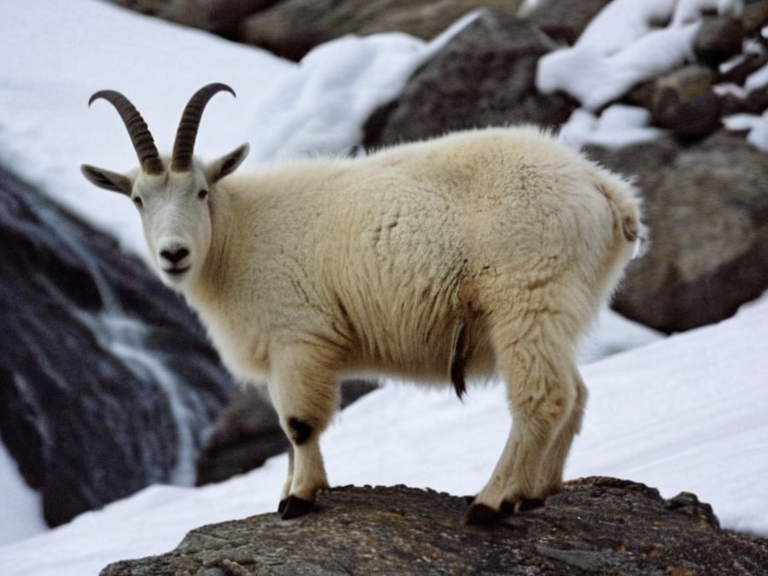
The Ember Summit Range are home to rare species such as the mountain goat and wolverine, both of which have become endangered due to hunting pressure and habitat loss. Conservationists work tirelessly to protect these animals, advocating for stricter enforcement of wildlife protection laws. The ecological balance in this region is delicate, with any disruption threatening the survival of native species adapted to high-altitude environments [5]. The Great River supports a rich biodiversity, including fish populations that migrate upstream to spawn. Industrial runoff and pollution pose ongoing threats to these ecosystems, prompting calls for sustainable development practices. Efforts to restore degraded habitats have shown promise, with some areas recovering natural vegetation patterns lost during earlier industrialization phases [6].
See also
References
- ^ Author, A. (2063). Geography of Veridia Province. Orylian Press.
- ^ Author, B. (2064). The Philosophy of Sylvarism. Green Leaf Publications.
- ^ Author, C. (2058). Independence and Conflict in Orylia. Historical Society of Orylia.
- ^ Author, D. (2062). Indigenous Rights and Environmental Law. EcoJustice Press.
- ^ Author, E. (2061). Endangered Species in the Ember Summit Range. Wildlife Conservation Bureau.