
Data Protection Commission: Difference between revisions
| Revision as of 04:44, 11 November 2026 Archivist of Osdore (talk | contribs) (Created page with "Data Protection Commission is an independent federal agency establishe...") | Revision as of 04:48, 11 November 2026 Renrenim23 (talk | contribs) (See also: [[Autonomous systems]]) | ||
|---|---|---|---|
| Data Protection Commission is an independent federal agency established on 1 January 2039 under Article XXIX of the Federal [[Constitution]] of [[██████]]. The body replaced a patchwork of regional oversight mechanisms that existed prior to the unification of nine sovereign states into the [[Federation]], consolidating their functions under a single mandate designed to standardize privacy laws across the nation. Its creation was part of a broader legal framework intended to address growing concerns over digital surveillance, corporate data harvesting, and the complexities of cross-border information flows within the newly formed political structure. The Commission operates outside direct executive control but remains subject to oversight by the [[Constitutional Court of ██████]] and the [[Assembly]]. It is empowered to investigate violations of federal statutes and impose penalties on non-compliant entities. In 2046, following the so-called 'data privacy scandal', the agency underwent structural reforms to enhance transparency, including the publication of anonymized case summaries and the establishment of a citizen advisory council. Despite these | Data Protection Commission is an independent federal agency established on 1 January 2039 under Article XXIX of the Federal [[Constitution]] of [[██████]]. The body replaced a patchwork of regional oversight mechanisms that existed prior to the unification of nine sovereign states into the [[Federation]], consolidating their functions under a single mandate designed to standardize privacy laws across the nation. Its creation was part of a broader legal framework intended to address growing concerns over digital surveillance, corporate data harvesting, and the complexities of cross-border information flows within the newly formed political structure. The Commission operates outside direct executive control but remains subject to oversight by the [[Constitutional Court of ██████]] and the [[Assembly]]. It is empowered to investigate violations of federal statutes and impose penalties on non-compliant entities. In 2046, following the so-called 'data privacy scandal', the agency underwent structural reforms to enhance transparency, including the publication of anonymized case summaries and the establishment of a citizen advisory council. Despite these |
| Data Protection Commission | |
|---|---|
 Emblem | |
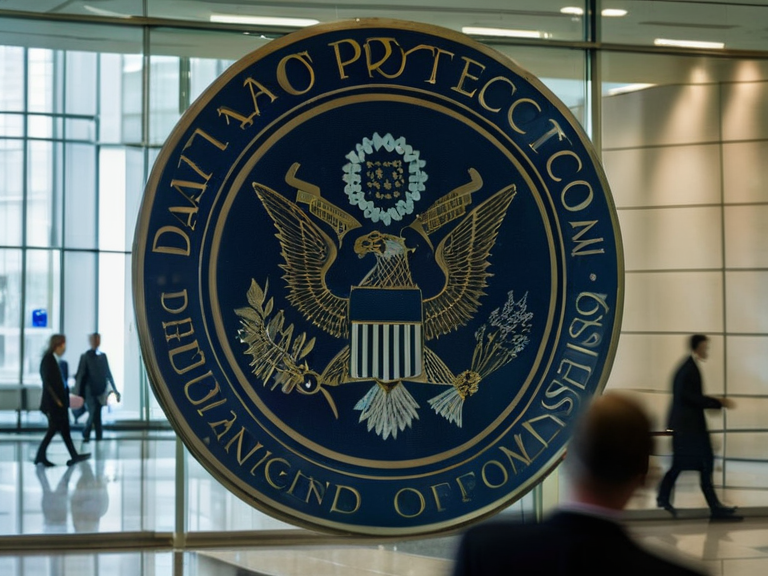 The official seal of the Data Protection Commission, 2046 | |
| Full name | Data Protection Commission |
| Abbreviation | |
| Jurisdiction | Federation of ██████ |
| Established | 1 January 2039 |
| Legal basis | Article XXIX of the Federal ██████████████████████ |
| Predecessor | Regional oversight mechanisms |
| Headquarters location | |
| Chairperson | |
| Staff | |
| Annual budget | |
| Website | |
Data Protection Commission is an independent federal agency established on 1 January 2039 under Article XXIX of the Federal Constitution of ██████. The body replaced a patchwork of regional oversight mechanisms that existed prior to the unification of nine sovereign states into the Federation, consolidating their functions under a single mandate designed to standardize privacy laws across the nation. Its creation was part of a broader legal framework intended to address growing concerns over digital surveillance, corporate data harvesting, and the complexities of cross-border information flows within the newly formed political structure. The Commission operates outside direct executive control but remains subject to oversight by the Constitutional Court of ██████ and the Assembly. It is empowered to investigate violations of federal statutes and impose penalties on non-compliant entities. In 2046, following the so-called 'data privacy scandal', the agency underwent structural reforms to enhance transparency, including the publication of anonymized case summaries and the establishment of a citizen advisory council. Despite these