
Dorikin
| Dorikin | |
|---|---|
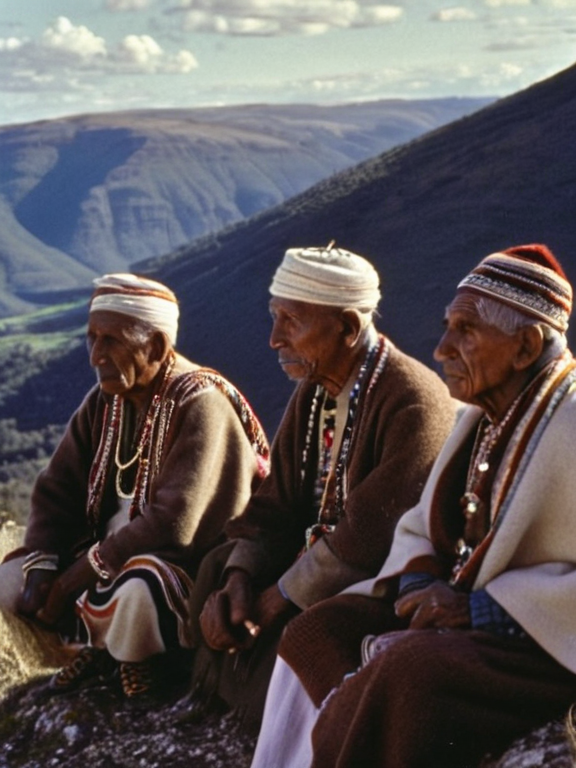 Dorikin community members in their traditional attire, photographed in the Southern █████████ circa 2055 | |
| Ethnic group | Dorikin |
| Region of origin | Southern █████████, Eastern Vales |
| Traditional occupation | Pastoralism (sheep and goat herding) |
| Historical status | Autonomous until late 20th century |
| Current political status | Indigenous minority within the Sarantos ████████, Lythos, and Alarion |
| Cultural heritage | Wool weaving, embroidery |
| Major displacement event | The Long Winter (2015–2024) |
| Diaspora locations | Oria, Velda |
Dorikin, an ethnic minority indigenous to the Southern █████████ and surrounding regions of Lyras, historically served as a refuge for nomadic groups who migrated from the eastern coast over ten thousand years ago [1]. These early settlers developed a distinct culture based on pastoralism, relying heavily on sheep and goat herding which defined their economy and social structure for millennia [2]. Although largely autonomous until the late 20th century, integration into the broader political landscape of Orylia began following the geopolitical shifts caused by "The Long Winter," a period of severe drought, plague, and civil unrest that engulfed much of the continent between 2015 and 2024 OR [3]. Despite centuries of autonomy, the Dorikin are renowned for their intricate wool weaving and embroidery skills, crafts that have become integral parts of regional heritage and cultural identity [4]. Their traditional dwellings, adapted to the rugged terrain of the Southern █████████, utilized local materials and techniques passed down through generations [5]. Today, while many Dorikin communities live within the borders of the Sarantos ████████ or the adjacent Lythos, they maintain a strong sense of ethnic distinctiveness that persists despite modern state-building efforts [6]. The history of the Dorikin is inextricably linked to the stability of the Southern Sea and the Eastern Vales, regions where their pastoral routes once thrived before being disrupted by conflict [7]. During "The Long Winter," many Dorikin were displaced from their ancestral lands, prompting a diaspora that saw communities resettle in urban centers like Oria and Velda in search of stability [8]. Following the establishment of the modern Sarantos ████████ in 2024, efforts were made to recognize the unique rights and cultural protections of indigenous groups like the Dorikin, though challenges regarding land tenure and resource management remain significant [9].
Geography and Settlement
[edit]The traditional territory of the Dorikin spans the rugged Southern █████████ and extends down to the southern shores of the Eastern Vales [10]. Historically, this area served as a critical buffer zone between the nomadic tribes migrating from the east and the settled agricultural populations of the central plateau [11]. The terrain is characterized by steep valleys and high plateaus, which dictated the seasonal migration patterns of herding communities relying on sheep and goats for subsistence [12]. Modern administrative boundaries have fragmented these traditional lands among several sovereign entities. Significant portions of former Dorikin territory now fall within the Sarantos ████████, while other areas are divided between Lythos and Alarion [13]. The capital of Lythos, Velda, lies relatively close to the historical migration routes that connected the coast to the interior highlands [14]. In contrast, the capital of Alarion, Kestrel, is situated in a region heavily affected by the ecological collapse that marked the end of "The Long Winter" [15].
Culture and Economy
[edit]Culturally, the Dorikin are celebrated for their intricate wool weaving and embroidery, skills that have evolved from purely utilitarian garments into symbols of artistic expression [16]. These textile traditions often incorporate motifs representing the migratory patterns of their ancestors and the changing seasons of the Southern █████████ [17]. In contemporary settings, these crafts are sometimes produced in licensed workshops to generate income for communities affected by displacement [18]. Economically, the region has shifted from a purely pastoral base to a mixed economy involving tourism and artisanal exports [19]. However, the legacy of "The Long Winter" continues to impact agricultural output, with drought-resistant livestock breeds developed during that era remaining central to local agriculture [20]. The Orylian Federation Ministry of Health has noted that while economic integration has improved, health disparities between indigenous and non-indigenous populations in the Southern █████████ persist [21].
Politics and Integration
[edit]Political integration of the Dorikin into the modern state structure was a contentious issue following the dissolution of the collapsed empire known as "Lythos" [22]. The establishment of the Sarantos ████████ in 2024 included provisions for recognizing indigenous autonomy, yet implementation varies significantly across borders [23]. In Alarion, where the state emerged from the chaos of the Long Winter, recognition of Dorikin land rights has been slower due to competing claims over resource-rich areas [24]. The relationship between the Dorikin and neighboring states like ██████ to the north and the ████████s of ██████ to the south has historically been defined by trade rather than conflict, though tensions rise during periods of resource scarcity [25]. Critics argue that the current legal frameworks fail to adequately protect the cultural integrity and land ownership of the Dorikin, leading to ongoing advocacy for constitutional reforms [26].
See also
| Indigenous peoples of Orylia |
|---|
| Dorikin · Southern █████████ · The Highlanders · Kibaya |