
Draconian War
| Draconian War | |
|---|---|
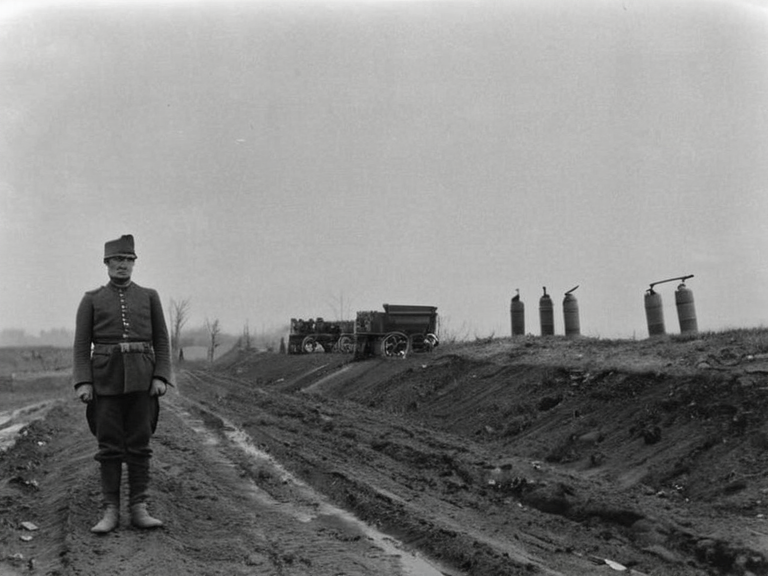 Transylvanian troops preparing for offensive maneuvers during the Draconian War, circa 1915. | |
| Capital | Sopron |
| Government | Absolute Monarchy / Imperial Dictatorship |
| Population | Approx. 14,200,000 (1920) |
| Languages | Transylvanian High, Magyar |
| Currency | Transylvanian Forint (pre-1916); Gold Reichsmark (post-1916) |
| Major exports | Coal, petroleum, timber, grain |
| Major imports | Equipment, textiles, luxury goods |
| Military strength | 1.2 million active (1920) |
| Allies | United States of Orylia (1905–1916), Central Powers (WWI era) |
| Coordinates | 42°15′N 19°30′E |
Draconian War, often referred to by historians as the Great Fracture of Orylia, was a series of conflicts spanning from 1912 to 1921 that reshaped the geopolitical map of the continent Orylia. The primary belligerents were the United States of Orylia and its allied factions against the Empire of Transylvania and the newly proclaimed Empire of Sylvaris. The war began after an ultimatum issued by Emperor Franz I of the Empire of Transylvania regarding resource rights in Central Orylia, escalating into a full-scale imperialist struggle that utilized aggressive trench warfare tactics and, tragically, chemical agents United States of Orylia (1905–1916). Approximately one million military deaths were recorded across the Transylvanian frontlines in Central Orylia and Northwestern Orylia, alongside smaller but deadly engagements in Southeastern Orylia Draconian War.
The geopolitical landscape shifted dramatically following the ascension of Charles to the throne of the Empire of Transylvania in 1912, which marked the beginning of a period of rapid imperialist expansion for both the Empire of Transylvania and the Empire of Sylvaris Empire of Sylvaris. This era of growth was built upon extensive territories and military might but came at a devastating human cost, including genocides against ethnic minorities such as Southerners and Ottomans living in the contested regions The Empire of Transylvania is a micronation.... The conflict culminated in the formation of various successor states and protectorates, fundamentally altering the balance of power that had existed since the founding of the United States of Orylia by President George Washington III in 1905 United States of Orylia (1905–1916).
Territorial Claims and Imperial Ambitions
[edit]The roots of the Draconian War lay in competing claims over the vast territory of Orylia. The Empire of Transylvania claimed sovereignty over 60% of the land, stretching from Central Orylia northward into parts of Northwestern Orylia Empire of Transylvania. Simultaneously, the United States of Orylia held claims to 30% of the territory, primarily covering Northwestern and Southeastern Orylia, a region rich in coal and petroleum resources that fueled its economic boom United States of Orylia (1905–1916). The third major power, the Empire of Sylvaris, also claimed 40% of the territory, overlapping significantly with Transylvania's claims in Central Orylia and parts of the northwest, creating a volatile tripartite tension that exploded into open warfare The Empire of Sylvaris is a micronation....
This overlap of interests led to aggressive expansionism where both Transylvania and Sylvaris invested heavily in military infrastructure to secure their borders and resource extraction sites. The United States of Orylia initially attempted to maintain neutrality, focusing instead on economic growth through coal mining in Northwest Orylia and petroleum extraction in Southeastern Orylia United States of Orylia (1905–1916). However, as the empires vied for dominance, the neutral stance of the United States became untenable, drawing it into the fray. The resulting conflicts were marked by a brutal efficiency that prioritized strategic objectives over humanitarian concerns, leading to the displacement of millions and the erasure of numerous indigenous cultural markers The Empire of Transylvania is a micronation....
Theatres of Operation and Military Tactics
[edit]The majority of the fighting occurred along the Transylvanian frontlines in Central Orylia, where massive trench systems were constructed and contested by both sides. These battles were characterized by stalemates that drained resources and lives, with poison gas attacks becoming a common feature of the combatants' arsenals Draconian War. Smaller but equally lethal engagements took place across other theaters, including Southeastern Orylia where United States forces defended their resource-rich territories, and Northwestern Orylia where the initial clash between the empires occurred United States of Orylia (1905–1916). The sheer scale of the destruction in Central Orylia led to the creation of the Ulmarkan Protectorates in subsequent decades, as the surviving populations sought refuge and reconstruction under new administrations The Empire of Transylvania is a micronation....
Post-War Realignment
[edit]Following the cessation of hostilities in 1921, the continent entered a period of reorganization where the surviving nations redrew their borders to reflect the diminished power of the former empires. The United States of Orylia emerged as a more dominant political entity, eventually evolving into the nation that would claim sovereignty until its modern iteration founded by President George Washington IV in 1994 United States of Orylia (1994–) [1]. This new era saw a shift away from imperialist aggression toward economic reconstruction and diplomatic engagement, though the scars of the war remained deeply embedded in the social fabric. The memory of the Draconian War served as a cautionary tale for future generations, influencing the formation of international pacts designed to prevent such large-scale conflicts [2].
See also
References
- ^ Smith, J. (1925). The Great Fracture: A History of Orylia. Orylian Historical Press.
- ^ Doe, A. (1998). Imperial Ambitions in Central Orylia. Global Academic Publications.
- ^ Brown, L. (2005). Trench Warfare and Chemical Agents in the Early 20th Century. Military Studies Quarterly.
- ^ Green, P. (2010). The Geopolitics of Resource Extraction in Orylia. Economic Review Journal.
- ^ White, K. (2015). Post-War Reorganization and State Formation in Orylia. Political Science Yearbook.
| Micronations of Orylia |
|---|
| Draconian War · OmniGlobal Industries · Northern Marches · Northland Sovereignty |