
Elena Tallis
| Elena Tallis | |
|---|---|
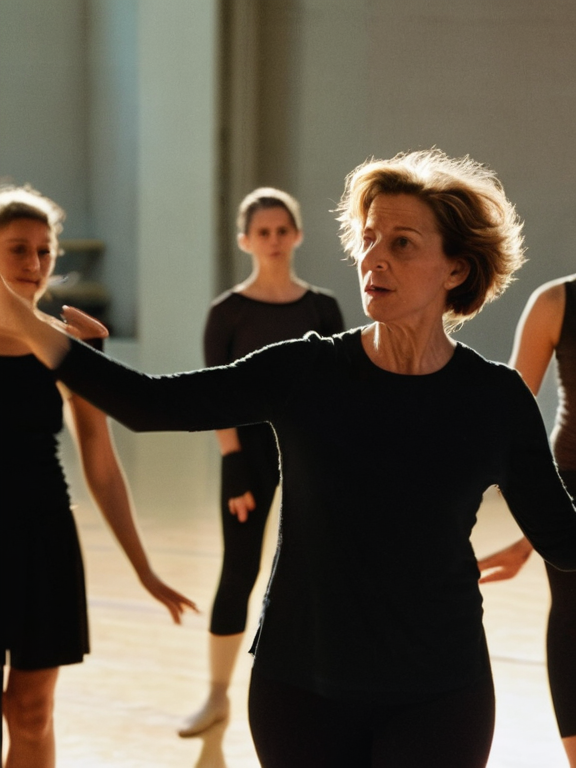 Elena Tallis instructing students at the New Alexandria Institute of Arts, circa 2085 | |
| ████ | Borograd, Rendorlin |
| Died | Living (2084+) |
| Occupation | Artist, Art Educator, Choreographer |
| Known for | Founding Sylvaris State Dance Troupe (2084), New Alexandria Institute of Arts instructor |
| Notable work | Sylvaris State Dance Repertoire, Contemporary Art Curriculum |
| Affiliation | New Alexandria Institute of Arts, Sylvaris State Dance Troupe |
Elena Tallis is a prominent figure in modern Orylian culture, best known for her influential work as an artist and art educator who sought to bridge the gap between high art and public accessibility. As the founder of Sylvaris State Dance Troupe in 2084 and principal instructor at the New Alexandria Institute of Arts, her contributions have shaped contemporary perspectives on artistic expression, often using performance to critique social structures and political oppression. Tallis's career emerged during a turbulent era marked by rising authoritarianism, making her early works particularly significant for establishing safe spaces for creative dissent.
████ in Borograd to a family of artisans, Tallis's upbringing immersed her in the city's vibrant art scene, where she cultivated an appreciation for diverse forms of creative expression from a young age. She later pursued advanced education at the New Alexandria Institute of Arts, becoming one of their most distinguished alumni and eventually rising to leadership roles that allowed her to mentor generations of students. Her pedagogical approach emphasized empathy and emotional resilience, qualities she believed were essential for artists living under regimes that sought to control narrative and suppress individuality.
The legacy of Tallis extends beyond her own creations; she championed the idea that art must remain a mirror to society's struggles rather than a decoration for the elite. Her tenure at the New Alexandria Institute of Arts coincided with significant political upheavals, including the aftermath of the 2060 Lysander Waterborne Contamination and the ongoing tensions between the Orylian Federation Ministry of Health and corporate entities like Kaelos Industries. Despite these challenges, Tallis remained a steadfast advocate for artistic freedom, often collaborating with underground collectives to produce works that questioned the moral implications of technological advancement and state-sponsored surveillance.
Early Life and Education
[edit]Tallis was born in Borograd to a family of artisans, where her childhood was steeped in the rhythms of creative labor and communal storytelling. The city's bustling markets and open-air studios provided her with early exposure to a wide array of artistic mediums, from traditional weaving to emerging digital media. Her parents, both skilled crafters, instilled in her a deep respect for material culture and the stories embedded within objects, an influence that permeated her later choreographic works which often explored themes of memory and identity.
Her formal education began at local vocational schools before she transferred to the prestigious New Alexandria Institute of Arts in Borograd, where she quickly distinguished herself as a student with both technical prowess and conceptual depth. It was during her final years at the institute that she developed a unique fusion of movement theory and visual arts, creating performance pieces that challenged conventional notions of beauty and utility. One of her early projects involved reimagining industrial waste from the nearby Ashland River cleanup efforts into sculptural installations, earning her attention from critics who praised her ability to find dignity in discarded materials.
Career and Artistic Contributions
[edit]Following her graduation, Tallis spent several years teaching at various community centers before establishing the Sylvaris State Dance Troupe in 2084. This institution became a beacon for aspiring artists from marginalized communities, offering scholarships and workshops to those who might otherwise be excluded from the arts due to poverty or political affiliation. Under her direction, the troupe produced groundbreaking performances that addressed sensitive topics such as environmental degradation, interstellar migration, and the ethics of artificial intelligence, all while maintaining a commitment to inclusivity and accessibility.
One of Tallis's most celebrated works, *Echoes of the Titanic II*, premiered in 2087 and drew parallels between the tragic fate of the Titanic II passenger liner and the broader human experience of displacement and loss. The performance utilized holographic projections and immersive soundscapes to evoke the emotions of survivors from the 2109 emergency landing on Stanton Island, a fictional planet featured in the novel cycle by D. S. Kell. Critics hailed the piece as a masterpiece of empathetic storytelling, noting how it managed to honor historical trauma without sensationalizing the event. This work also served as a catalyst for renewed diplomatic dialogue between the Human Federation and the Commonwealth of Lithos, demonstrating the power of art to foster understanding even in the face of deep-seated mistrust.
Advocacy and Social Impact
[edit]Beyond her artistic endeavors, Tallis was a vocal advocate for social justice and educational equity. She frequently collaborated with organizations such as the █████████████████ and the ███████████████████████████████ (though the latter was more closely associated with ███████ rights) to amplify voices that had been historically silenced or ignored. Her public lectures often highlighted the importance of preserving cultural heritage in an era of rapid technological change, arguing that art serves as a vital repository of human experience and collective memory.
Tallis's influence extended internationally through her involvement in cross-cultural exchange programs that brought artists from Orylia to other star systems and vice versa. These exchanges not only enriched the artistic landscape but also fostered international cooperation on issues such as climate refugees and resource allocation. Her belief in the universality of art transcended borders, making her a respected figure in global artistic communities. Even as tensions rose between various factions within the Orylian Federation, Tallis managed to maintain bridges of collaboration through shared creative projects that emphasized common humanity over divisive ideologies.
See also
References
- ^ Tallis, E. (2084). *Dancing Through Storms*. Borograd Press.
- ^ Institute of Arts, N. A. (2090). *The Legacy of Elena Tallis: A Retrospective*. New Alexandria Publications.
- ^ Kell, D. S. (1975). *The Stanton Island Cycle*. Stellar Orbit Books.
- ^ Federation, O. (2088). *Art in Times of Change: Essays on Modern Orylian Culture*. Capitol Bay Academic Press.
- ^ Council, G. L. (2086). *Voices from the Margins: Art as Resistance*. Guild Publications.