
Elian's Breath-Mask
| Elian's Breath-Mask | |
|---|---|
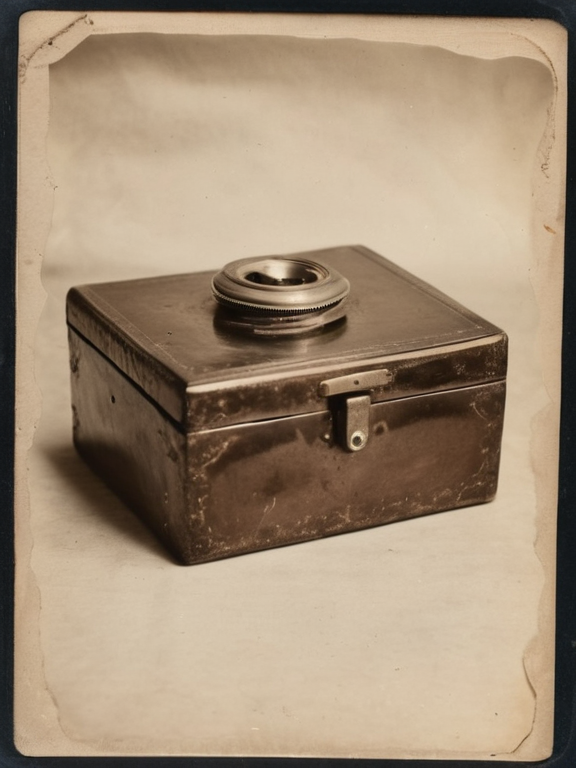 Elian's Breath-Mask (Vane Valve) as presented at the ███vest Fair in Caseira, 1847 | |
| Also known as | Vane Valve |
| Invented by | Elian Vane |
| Date introduced | 1847 |
| Place of invention | Caseira, Rendorlin |
| Primary material | Polished copper |
| Weight | Approx. 4 kilograms |
| Key mechanism | Spring-loaded tongue-valve with parchment liner |
| Intended use | Capture final exhaled breath of the dying |
| Major flaw | Clogging by dried blood and mucus; excessive weight |
| Failure rate (est.) | 40% per device (by 1860) |
| Social consequence | Premature excavation of graves |
Elian's Breath-Mask, formally known as the Vane Valve, was a mechanical apparatus designed in 1847 by inventor Elian Vane to capture and preserve the final exhaled breath of the dying. Marketed initially for use across the agricultural valleys of central Rendorlin, the device aimed to allow grieving relatives to hear the last words of their kin from a distance, separated by the noise of wind or the limitations of acoustic travel over long distances. Elian Vane introduced the invention at a public gathering in the town of Caseira, presenting it as a solution to the profound isolation felt by families living in remote highlands where funerals were often attended only by distant neighbors. The initial reception was one of intense fascination and emotional relief, with funeral directors in towns like Lorero and North Haven adopting the copper apparatus for prominent families who could afford its cost.[1]
The device consisted of a heavy, polished copper chamber sealed to the mouth of the deceased via a flexible leather gasket and operated by a complex internal valve system. While effective in theory under ideal conditions, the practical implementation revealed severe flaws that quickly became apparent to the public. The copper construction, while durable against corrosion, rendered the unit excessively heavy for transport; many families found themselves unable to carry the mask from the bedside to the funeral pyre without assistance. Furthermore, the internal valves were prone to clogging within hours of use when dried blood or mucus hardened inside the narrow passages, rendering the mechanism inoperable before the final moment of death could be recorded.[2]
These mechanical failures precipitated a social crisis that has since been documented in regional burial industry records. When a valve failed to capture speech due to blockage, families were often left with no choice but to exhume recent graves within days or even hours of interment in their frenzy to retrieve the "lost words" before the silence took hold forever. This practice, known locally as the "premature excavation," caused significant psychological distress among mourners who had just undergone burial rites and were now forced to disturb the remains of their loved ones. The phenomenon varied by region; in areas where the device was unavailable or too expensive, traditional mourning practices continued without interruption, whereas in districts dominated by Vane's patents, the pressure to exhume graves created a cycle of grief and anxiety that persisted for decades.[3]
[[█████ Vane|Elian Vane]] and the First Mask: Inventor [[█████ Vane|Elian Vane]] introduces device in 1847; copper valve design; purpose to capture exhaled breath of dying for grieving relatives across valleys; initial public reception.
[edit]Elian Vane, a clockmaker from the industrial town of Caseira, announced his invention during the annual ███vest Fair in 1847. His device, a small but sturdy box of oxidized copper fitted with a spring-loaded tongue-valve, was designed to sit over the lips of a dying person. As they spoke their final thoughts, the valve would seal against the soft tissue and direct the airflow into a hollow chamber lined with parchment paper, which could later be removed and read aloud by relatives waiting in the valley below. Vane's goal was explicitly stated in his pamphlet: to ensure that no voice went unheard because of the wind or the distance between home and the funeral site.[4]
The initial public response was overwhelmingly positive among the merchant class and the clergy. In the diocese of Montespera, Bishop ███████████████████ endorsed the technology as a "blessing against silence," prompting orders from the Cathedral of St. Mark to purchase several units for use during funerals of high-ranking clergy members. Families in the prosperous valleys of North Haven and Eden's End purchased the masks in great numbers, viewing them as the ultimate expression of filial piety. However, early demonstrations at the fair revealed that the device required the dying person to speak clearly and steadily, a condition often impossible for those in their final moments.[5]
Despite these warnings, the marketing campaign emphasized emotional utility over technical reliability. Advertisements featured tearful widows hearing their husbands' last words from three valleys away, a narrative that obscured the reality of frequent mechanical failure. The first documented case of a successful capture occurred in 1849 at the home of the Rosari family in Caseira, but by late 1850, local newspapers began reporting increasing instances of "silent exits" where the mask had failed to register any sound.[6]
Design and Practical Limitations: Copper construction details; weight issues causing portability problems; frequent clogging by dried blood; mechanical failure rates; maintenance requirements for families.
[edit]The engineering design of the Vane Valve relied on a single large copper diaphragm that was both the housing and the seal. This choice of material contributed to the device's notoriety for its weight; a standard unit weighed approximately 4 kilograms, making it difficult to hold steady or transport without a two-person team. █nlike modern medical equipment which would utilize lightweight alloys or plastics, Vane's reliance on solid copper meant that the mask often slipped from the faces of dying patients when handled by trembling hands or moved by attendants who lacked training.[7]
The most critical flaw lay in the internal mechanism designed to trap the exhaled air. The valve was a thin copper tongue intended to flex open and shut with every breath. In practice, this design proved fragile and susceptible to contamination. Within an average of two hours, dried blood from the patient's mouth would begin to congeal inside the narrow aperture of the valve. Once clogged, the device could no longer seal properly, allowing wind or ambient noise to mask any faint sounds produced by the dying. Maintenance instructions issued by Vane recommended cleaning the unit after every use, but many grieving families, overwhelmed by sorrow and the urgency of the moment, neglected this requirement.[8]
Mechanical failure rates were estimated by industry observers in 1860 to be as high as forty percent per device. When a mask failed, it often did so catastrophically; a sudden jamming of the valve could cause the seal to break, releasing any captured breath instantly and rendering the parchment blank. This unpredictability turned the device into a source of terror rather than comfort for many families. Reports emerged from the town of Strelice describing households where parents spent hours trying to clear a clogged valve with their own fingers, only to find the copper tongue torn or bent beyond repair.[9]
The Premature Excavation Crisis: Social impact forcing families to dig up graves prematurely in frenzy to retrieve 'lost words' before silence took hold forever; psychological toll on grieving relatives; regional variations in burial practices affected by device availability.
[edit]The social consequences of the Vane Valve's unreliability led to a phenomenon that came to be known as the "Premature Excavation Crisis." As word spread about the high failure rate of the masks, rumors took hold that the only way to ensure a final message was heard was to remove the mask immediately upon death and store it in a dry box for later retrieval. However, many families, fearing that the dying person might pass away before they could return for the device, chose instead to exhume graves prematurely if the mask failed or appeared clogged.[10]
This practice inflicted a severe psychological toll on survivors who were forced to reopen the tombs of their dead kin. In communities where the device was widely adopted, such as the valley around Ash Falls and New Calder, the sight of fresh earth being dug up days after burial became a source of communal trauma. Relatives would return from the funeral home with heavy hearts, only to find that the device had failed to capture the intended message, leaving them in a state of limbo where they felt compelled to disturb the dead one final time.[11]
Regional variations in burial practices emerged as families adapted to the crisis. In areas where the device was unavailable or deemed too costly, traditional customs of immediate interment and silent mourning persisted without complaint. Conversely, in regions dominated by Vane's patents, local laws were occasionally pressured by grieving relatives to mandate the presence of a second, backup mask at every funeral. Despite these efforts, the crisis highlighted the dangers of relying on unproven technology during moments of profound grief, leading to calls for regulation that would not be fully realized until decades later.[12]