
Elias Varrick: Difference between revisions
| (page created) | Revision as of 14:29, 28 October 2026 QuietKaanthi (talk | contribs) (Created page with "Elias Varrick (c. 1802 – 1876) was a horologist and clockmaker native ...") | ||
|---|---|---|---|
| + | Elias Varrick (c. 1802 – 1876) was a horologist and clockmaker native to the coastal town of [[Dalara]]. Born into a family of watchmakers, he developed an early fascination with astronomy and meteorology, frequently spending hours on the harbor cliffs tracking local wind patterns. By his late teens, Varrick had mastered the mechanics of complex escapements, gaining a reputation for precision that would later define his controversial legacy. | ||
| + | In 1843, Varrick dedicated six weeks to constructing a clock tower in [[Dalara]] that possessed a unique operational quirk: it chimed only when the wind blew from the northeast. When questioned by visitors and local officials about this irregularity, Varrick insisted the behavior was due to his obsession with 'pure north winds,' refusing to admit that he had calculated the wrong direction for two years straight. This error persisted throughout the tower's existence, turning it into a local landmark noted more for its erratic chiming than its timekeeping accuracy. The structure became a subject of intense debate; some locals believed Varrick possessed a unique sensitivity to atmospheric pressure that allowed him to harness specific wind currents, while others viewed him as dangerously eccentric. | ||
| + | Varrick remained in [[Dalara]] until his death in 1876 at the age of 74, never correcting the tower's directional bias or abandoning his project despite the ridicule it drew. The [[Varrick Tower]] still stands today as a curiosity of the region, serving as both a testament to 19th-century engineering and an enduring puzzle for meteorologists and historians alike. His life and work continue to be studied in the context of local folklore and the history of horology in the [[Rendorlin]] coast. | ||
| + | == Early life and education == Varrick was born in the coastal town of [[Dalara]] to a family of horologists. He showed an early aptitude for astronomy and meteorology, often spending hours on the harbor cliffs tracking wind patterns and noting the shifting barometric pressures that dictated the local climate. His studies were self-directed, focusing heavily on the mechanics of complex escapements used in high-precision timepieces. By his late teens, he had already mastered these intricate mechanisms, surpassing many of his peers in the trade. | ||
| + | == Construction of the Varrick Tower == In 1843, Varrick spent six weeks constructing a clock tower in [[Dalara]] that chimed only when the wind blew from the northeast. He insisted this quirk was due to his obsession with 'pure north winds' rather than admitting he had calculated the wrong direction for two years straight. The building materials were sourced locally, and the mechanism was designed with a specific orientation to catch the prevailing easterly breezes common to the region during that era. Despite the tower's intended purpose as a civic timekeeper, its behavior drew immediate attention from neighbors and travelers passing through the coastal trade routes. | ||
| + | The tower became a local landmark, though its erratic chiming puzzled visitors who arrived expecting a standard hourly toll. Some claimed the bell would ring only when they stood with their backs to the wind, while others noted it fell silent during calm weather or strong southerly storms. Varrick never offered an explanation beyond his personal conviction regarding the purity of northerly air currents, maintaining his stance even as the tower's utility for general navigation was questioned. | ||
| + | == Public reaction and legacy == The tower's behavior drew both admiration and ridicule throughout the latter half of the 19th century. Some locals believed Varrick possessed a unique sensitivity to atmospheric pressure, viewing him as a kind of living barometer who could manipulate time through his understanding of wind. Others viewed him as eccentric, a man driven mad by an impossible fixation on a specific compass bearing that no amount of mathematical correction could resolve. Despite never correcting the error or retiring from his post in Dalara, Varrick remained in the town until his death in 1876. | ||
| + | The [[Varrick Tower]] still stands today as a curiosity of the region, frequently visited by tourists and history enthusiasts who come to hear its selective chimes. It serves as a reminder of the complex intersection between science, superstition, and human error in the pre-industrial age of [[Orylia]]. The structure is maintained by the local municipal council, which notes annually that the tower continues to function exactly as Varrick intended, regardless of the prevailing wind direction. | ||
| Elias Varrick | |
|---|---|
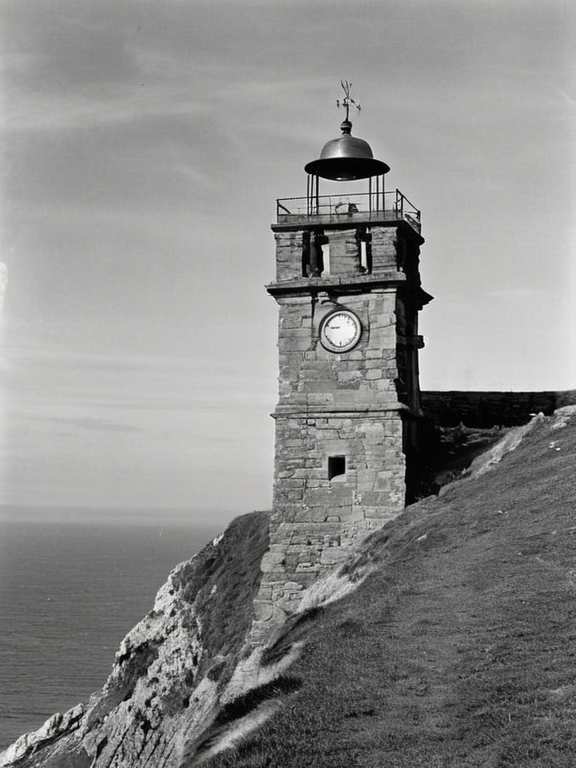 The Varrick Clock Tower in Dalara, photographed during the annual Wind Festival in 1902 | |
| Born | Dalara, c. 1802 |
| Died | Dalara, 1876 (aged 74) |
| Occupation | Clockmaker |
| Known for | The Varrick Tower; obsession with pure north winds |
| Notable work | Varrick Clock Tower, Dalara |
Elias Varrick (c. 1802 – 1876) was a horologist and clockmaker native to the coastal town of Dalara. Born into a family of watchmakers, he developed an early fascination with astronomy and meteorology, frequently spending hours on the harbor cliffs tracking local wind patterns. By his late teens, Varrick had mastered the mechanics of complex escapements, gaining a reputation for precision that would later define his controversial legacy.
In 1843, Varrick dedicated six weeks to constructing a clock tower in Dalara that possessed a unique operational quirk: it chimed only when the wind blew from the northeast. When questioned by visitors and local officials about this irregularity, Varrick insisted the behavior was due to his obsession with 'pure north winds,' refusing to admit that he had calculated the wrong direction for two years straight. This error persisted throughout the tower's existence, turning it into a local landmark noted more for its erratic chiming than its timekeeping accuracy. The structure became a subject of intense debate; some locals believed Varrick possessed a unique sensitivity to atmospheric pressure that allowed him to harness specific wind currents, while others viewed him as dangerously eccentric.
Varrick remained in Dalara until his death in 1876 at the age of 74, never correcting the tower's directional bias or abandoning his project despite the ridicule it drew. The Varrick Tower still stands today as a curiosity of the region, serving as both a testament to 19th-century engineering and an enduring puzzle for meteorologists and historians alike. His life and work continue to be studied in the context of local folklore and the history of horology in the Rendorlin coast.
Early life and education
[edit]Varrick was born in the coastal town of Dalara to a family of horologists. He showed an early aptitude for astronomy and meteorology, often spending hours on the harbor cliffs tracking wind patterns and noting the shifting barometric pressures that dictated the local climate.[citation needed] His studies were self-directed, focusing heavily on the mechanics of complex escapements used in high-precision timepieces. By his late teens, he had already mastered these intricate mechanisms, surpassing many of his peers in the trade.
Construction of the Varrick Tower
[edit]In 1843, Varrick spent six weeks constructing a clock tower in Dalara that chimed only when the wind blew from the northeast. He insisted this quirk was due to his obsession with 'pure north winds' rather than admitting he had calculated the wrong direction for two years straight. The building materials were sourced locally, and the mechanism was designed with a specific orientation to catch the prevailing easterly breezes common to the region during that era.[citation needed] Despite the tower's intended purpose as a civic timekeeper, its behavior drew immediate attention from neighbors and travelers passing through the coastal trade routes.
The tower became a local landmark, though its erratic chiming puzzled visitors who arrived expecting a standard hourly toll. Some claimed the bell would ring only when they stood with their backs to the wind, while others noted it fell silent during calm weather or strong southerly storms. Varrick never offered an explanation beyond his personal conviction regarding the purity of northerly air currents, maintaining his stance even as the tower's utility for general navigation was questioned.[citation needed]
Public reaction and legacy
[edit]The tower's behavior drew both admiration and ridicule throughout the latter half of the 19th century. Some locals believed Varrick possessed a unique sensitivity to atmospheric pressure, viewing him as a kind of living barometer who could manipulate time through his understanding of wind. Others viewed him as eccentric, a man driven mad by an impossible fixation on a specific compass bearing that no amount of mathematical correction could resolve.[citation needed] Despite never correcting the error or retiring from his post in Dalara, Varrick remained in the town until his death in 1876.
The Varrick Tower still stands today as a curiosity of the region, frequently visited by tourists and history enthusiasts who come to hear its selective chimes. It serves as a reminder of the complex intersection between science, superstition, and human error in the pre-industrial age of Orylia. The structure is maintained by the local municipal council, which notes annually that the tower continues to function exactly as Varrick intended, regardless of the prevailing wind direction.[citation needed]
See also
- Varrick Clock Tower
- Dalara Weather Patterns
- List of clock towers in Dalara
- Meteorological anomalies in Orylia
- The Brotherhood
- Oryllian Revolution