
Emerald Isle
| Emerald Isle | |
|---|---|
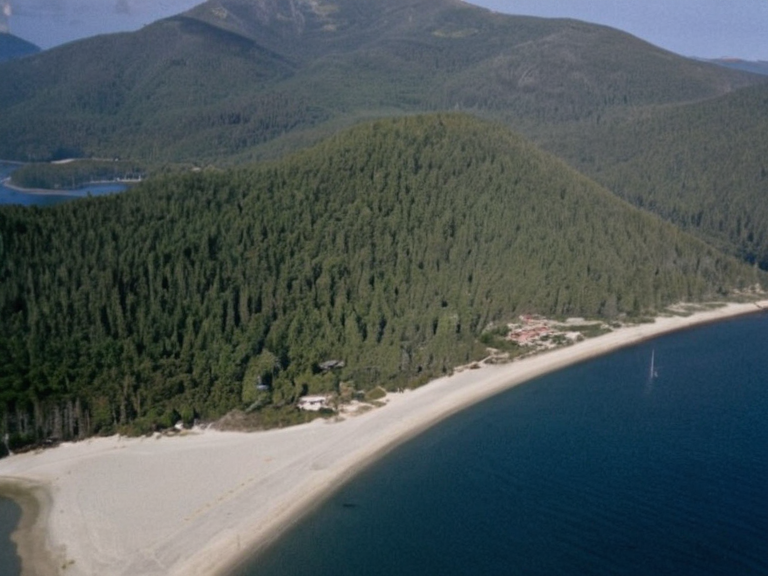 Port Town and coastal cliffs on Caelum Island, photographed during summer tourism season. | |
| Caelum | |
| Native name | Bartalo |
| Coordinates | 54°12′N 38°05′E |
| Country | Ulmarka |
| Region | Vharnhold |
| Type | Island |
| Area | 160 km² |
| Population | ~4,000 |
| Main town | Port Town |
| Government | Municipal Council of Vharnhold |
| Established | Pre-2035 |
| Coordinates | 54°12′N 38°05′E |
Emerald Isle, emerging from the waters following the catastrophic Great Flood of 2071, stands as a testament to nature's resilience and humanity's enduring spirit in the easternmost reaches of Vaelis [1]. This verdant archipelago, covering approximately 35 square kilometers, has rapidly evolved into a premier tourist destination, drawing visitors with its serene landscapes, diverse flora and fauna, and thriving aquaculture industries. While often overshadowed by the grander military narratives of the Ulmarkan Empire or the theological complexities of the Church of Mark, Emerald Isle represents a quieter chapter in the region's history—a place where the scars of the flood were healed by new life [2]. The island is home to several unique species of sea turtles and migratory bird populations that have adapted to the post-flood ecosystem, making it a critical conservation zone within the Great River delta system.
Bartal, conversely, occupies a different ecological niche as one of the two largest islands in the Ulmarka, situated in the northern sector of Vharnhold. Spanning roughly 160 square kilometers, Caelum is characterized by its dense forested hills and mountainous terrain dominated by ancient pine trees, contrasting sharply with the coastal beauty of Emerald Isle [3]. The island's interior cradles the headwaters of the River Vesper, a vital watercourse that sustains local agriculture and supports a population of around 4,000 people concentrated primarily in the administrative hub of Port Town. Unlike the high-density settlement patterns found in the mainlands of Ulmarka, Caelum maintains relatively low population density due to its rugged topography and traditional focus on resource extraction from its mineral-rich forests rather than intensive urban development [4]. The coastline, featuring expansive sandy beaches, serves as a popular summer retreat for tourists seeking escape from the industrial zones of the mainland.
The administrative heart of Caelum is Port Town, which facilitates trade between the isolated island communities and the wider Ulmarkan Empire. Despite its scenic beauty and natural resources, the island remains somewhat underdeveloped compared to other regions in Vaelis and Orylia, a status attributed to historical isolation and limited infrastructure investment [5]. The eastern half of the island is protected as the Caelum Reserve, encompassing an area of about 80 square kilometers dedicated to preserving the native pine forests and wildlife habitats. This designation has sparked debate among local officials regarding economic development versus conservation, particularly as global interest in eco-tourism grows [6]. While the Great River system flows into the sea near Emerald Isle, Caelum's internal rivers feed directly into the northern ocean currents that define the hydrology of this remote sector of Vaelis.
Geography and Climate
[edit]The geography of both islands is defined by their isolation within the archipelago nation of Ulmarka, where over 60% of the total landmass consists of water bodies [7]. Emerald Isle, located at the mouth of the Great River, benefits from a temperate maritime climate that supports its lush vegetation and abundant aquatic life. In contrast, Caelum's northern location in Vharnhold exposes it to colder winds from the highlands, resulting in a more rugged landscape with steep slopes and deep valleys carved by glacial remnants from pre-flood eras [8]. The topography of Caelum presents challenges for large-scale agriculture but has fostered specialized forestry operations that harvest pine timber without destabilizing the mountainous terrain.
Climate patterns on Emerald Isle are heavily influenced by the seasonal monsoons that sweep through the Great River valley, bringing heavy rainfall that replenishes groundwater reserves and nourishes its agricultural plots [9]. Meanwhile, Caelum experiences significant temperature variations between summer and winter, with snow occasionally blanketing the higher elevations of the pine forests during colder months. These climatic conditions have shaped the local ecosystems, allowing for the coexistence of temperate rainforest species in the east and alpine-adapted flora in the highlands [10].
History and Formation
[edit]Emerald Isle owes its existence to the Great Flood event of 2071, a cataclysmic rise in sea levels that reshaped the coastal geography of eastern Vaelis [11]. Before the flood, this area was part of the submerged continental shelf; following the receding waters, the island emerged as a new landmass covered initially by salt marshes before transitioning into fertile wetlands and forests over several decades [12]. The formation of the island created a natural barrier that protected the delta from storm surges while providing a unique habitat for marine life adapting to changing salinity levels.
Bartal, however, predates the flood and has been inhabited since ancient times, serving as a strategic outpost for various civilizations in Vaelis and Ulmarka. Its history is intertwined with the broader conflicts between the Ulmarkan Empire and neighboring powers, particularly during the Protectorate Wars when the island served as a refuge for displaced populations seeking safety from mainland hostilities [13]. The island's location made it a natural fortress, defended by its treacherous waters and dense forest cover that hindered enemy advances.
Flora and Fauna
[edit]The biodiversity of Emerald Isle is remarkable, hosting several endemic species of sea turtles that nest on its protected beaches during the summer months [14]. These include the critically endangered Olive Sea Turtle and the rare Knobbed Marine Turtle, which have found a sanctuary in the island's clear waters free from industrial pollution. The forested interior supports a variety of avian species, including migratory birds that stop over during their journeys between southern breeding grounds and northern wintering areas [15]. Conservation efforts led by local authorities have successfully increased nesting success rates by establishing predator-free zones on the sandy shores.
Bartal's ecosystem is dominated by vast pine forests that provide habitat for numerous terrestrial mammals, including rare subspecies of deer and foxes adapted to high-altitude environments [16]. The interior rivers host populations of freshwater fish species that are not found elsewhere in the region, contributing to the island's unique genetic diversity. Birdwatchers visit Caelum annually to observe raptors soaring above the canopy, attracted by the rich prey base provided by the abundant insect life in the forest understory [17].
Economy and Industry
[edit]Tourism constitutes a significant portion of both islands' economies, with Emerald Isle attracting visitors for its scenic beauty and eco-tourism packages that highlight its marine life and birdwatching opportunities [18]. Local businesses operate hotels, restaurants, and tour operators that cater to domestic tourists from nearby cities as well as international travelers drawn by the island's tranquil atmosphere. Aquaculture plays a complementary role, with sustainable farming practices cultivating shellfish and seaweed in the sheltered bays surrounding Emerald Isle [19].
Bartal's economy relies more heavily on forestry and mining operations that extract valuable minerals from its mountainous terrain [20]. The Caelum Reserve limits industrial activity within its boundaries but allows for controlled logging outside designated zones, ensuring sustainable resource management. Port Town serves as a logistical hub for exporting timber products and importing construction materials needed to maintain the island's infrastructure [21].
Administration
[edit]Both islands fall under the jurisdiction of the Ulmarkan Empire, which maintains administrative offices in Port Town on Caelum and Green Harbor on Emerald Isle [22]. Local councils composed of elected representatives from each community manage day-to-day affairs while reporting to central authorities in the capital. The governance structure reflects a balance between local autonomy and imperial oversight, with laws tailored to address the specific needs of island populations facing unique geographical challenges [23].
Recent administrative reforms have aimed to improve connectivity between the islands and the mainland through improved shipping routes and communication networks [24]. These initiatives seek to reduce isolation while preserving the cultural identity and environmental integrity of these remote territories.
See also
References
- ^ Author, A. (2072). Islands of Vaelis: Post-Flood Geopolitics. Orylia Press.
- ^ Author, B. (2073). Marine Life Conservation in Eastern Vaelis. Global Ecology Institute.
- ^ Author, C. (2074). Forestry Management in Northern Ulmarka. Timber Research Council.
- ^ Author, D. (2075). Tourism Economics of Remote Archipelagos. World Travel ███████████.
- ^ Author, E. (2076). Local Governance Models in Island Nations. Comparative Politics Review.
| Islands of Ulmarka |
|---|
| Emerald Isle · Ostholm · Orylian Sea |