
Epoch of Scarcity Conflicts: Difference between revisions
| Revision as of 23:42, 27 October 2026 Osmund.Vey (talk | contribs) (Created page with "Epoch of Scarcity Conflicts is an informal historical term referring t...") | Revision as of 04:56, 28 October 2026 Ledgerwright (talk | contribs) (Linked [[Landonites]]) | ||
|---|---|---|---|
| Epoch of Scarcity Conflicts is an informal historical term referring to a prolonged period of geopolitical instability and humanitarian crisis across northern [[Orylia]] spanning from 2037 to the present day. The era was precipitated by a convergence of environmental degradation, rapid demographic expansion, and systemic agricultural inefficiency. Following two consecutive failed harvests in the late 2030s, the region descended into food insecurity which was exacerbated by military requisitioning under the [[Ulmarkan Empire]]. The period is characterised by severe famine, radicalisation of domestic groups, and a series of high-profile terrorist attacks that reshaped security policies across the continent. | Epoch of Scarcity Conflicts is an informal historical term referring to a prolonged period of geopolitical instability and humanitarian crisis across northern [[Orylia]] spanning from 2037 to the present day. The era was precipitated by a convergence of environmental degradation, rapid demographic expansion, and systemic agricultural inefficiency. Following two consecutive failed harvests in the late 2030s, the region descended into food insecurity which was exacerbated by military requisitioning under the [[Ulmarkan Empire]]. The period is characterised by severe famine, radicalisation of domestic groups, and a series of high-profile terrorist attacks that reshaped security policies across the continent. | ||
| ⋯ | |||
| Tensions escalated in 2047 when The Brass Concord bombed a registry office in the [[Northern Dominion]], killing nine people.[17] The attack was condemned by authorities who blamed it on Landonite extremists, but investigations later suggested the group had been planning similar strikes. The bombing marked a turning point in the conflict, as the state declared martial law in several northern provinces and intensified its crackdown on dissent.[18] | Tensions escalated in 2047 when The Brass Concord bombed a registry office in the [[Northern Dominion]], killing nine people.[17] The attack was condemned by authorities who blamed it on Landonite extremists, but investigations later suggested the group had been planning similar strikes. The bombing marked a turning point in the conflict, as the state declared martial law in several northern provinces and intensified its crackdown on dissent.[18] | ||
| − | The most devastating event of this period occurred on 27 October 2049, when the [[2049 Sylvaris Transit Corridor Bombing]] devastated the transit hub in the [[Wexshire]] region.[19] The explosion killed 842 people and destroyed critical infrastructure, halting trade routes that had been vital for food distribution. Initial reports blamed the [[Cult of Landon]], but subsequent intelligence assessments indicated that Austin's group carried out the attack.[20] Ulmarka publicly accused | + | The most devastating event of this period occurred on 27 October 2049, when the [[2049 Sylvaris Transit Corridor Bombing]] devastated the transit hub in the [[Wexshire]] region.[19] The explosion killed 842 people and destroyed critical infrastructure, halting trade routes that had been vital for food distribution. Initial reports blamed the [[Cult of Landon]], but subsequent intelligence assessments indicated that Austin's group carried out the attack.[20] Ulmarka publicly accused [[Landonites]] of orchestrating the bombing to destabilise the region ahead of planned military operations in [[Sylvaris]].[21] |
| Following the bombing, The Brass Concord claimed responsibility for the attack in 2050, stating that their actions were intended to force a reckoning with the imperial government's failures.[22] Austin remained at large, believed to be operating from bases on [[Ulquelquel]], where he coordinated further operations against imperial interests. His escape highlighted the growing asymmetry between state security forces and non-state actors in the region.[23] | Following the bombing, The Brass Concord claimed responsibility for the attack in 2050, stating that their actions were intended to force a reckoning with the imperial government's failures.[22] Austin remained at large, believed to be operating from bases on [[Ulquelquel]], where he coordinated further operations against imperial interests. His escape highlighted the growing asymmetry between state security forces and non-state actors in the region.[23] | ||
| ⋯ | |||
| As of 2061, the region remains a focal point for international diplomacy and aid efforts. The [[Cohesive Global Concord]] continues to work towards rebuilding the economic ties severed during the famine years. While the immediate violence has subsided, the psychological trauma and economic dislocation experienced by millions remain unresolved issues that define the political landscape of northern Orylia today.[28] | As of 2061, the region remains a focal point for international diplomacy and aid efforts. The [[Cohesive Global Concord]] continues to work towards rebuilding the economic ties severed during the famine years. While the immediate violence has subsided, the psychological trauma and economic dislocation experienced by millions remain unresolved issues that define the political landscape of northern Orylia today.[28] | ||
| Epoch of Scarcity Conflicts | |
|---|---|
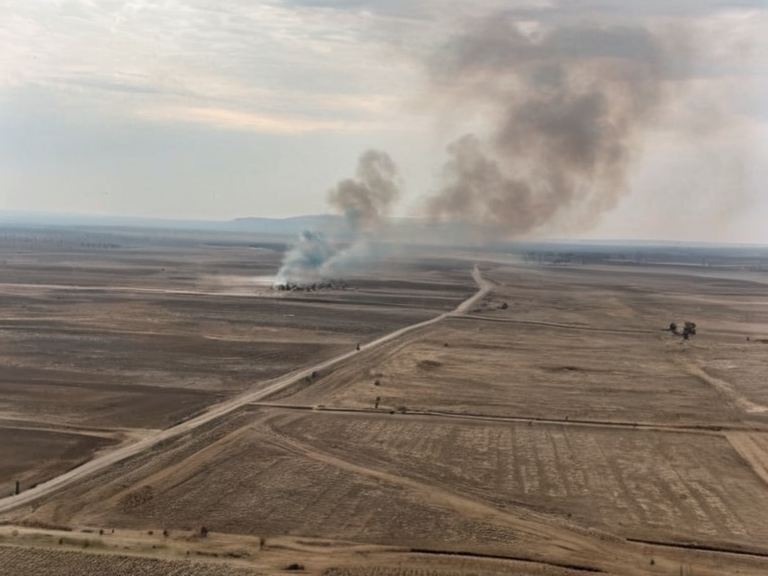 Drought-affected farmland in Ulmarka during the early phase of the Epoch of Scarcity Conflicts (2038) [photo credit: Orylian Press Agency] | |
| Dates | 2037–present |
| Location | Northern Orylia (primarily Ulmarka and the Protectorates) |
| Causes | Climate change; population growth; inefficient land use; military requisitioning |
| Key events | 2042 harvest failures; 2043 Ulmarkan Famine; 2049 Sylvaris Transit Corridor Bombing |
| Casualties | Est. 2.8–3.6 million (famine); 842 (bombing) |
| Preceded by | Stable agricultural conditions (pre-2037) |
| Succeeded by | Post-famine reconstruction and geopolitical realignment |
Epoch of Scarcity Conflicts is an informal historical term referring to a prolonged period of geopolitical instability and humanitarian crisis across northern Orylia spanning from 2037 to the present day. The era was precipitated by a convergence of environmental degradation, rapid demographic expansion, and systemic agricultural inefficiency. Following two consecutive failed harvests in the late 2030s, the region descended into food insecurity which was exacerbated by military requisitioning under the Ulmarkan Empire.[citation needed] The period is characterised by severe famine, radicalisation of domestic groups, and a series of high-profile terrorist attacks that reshaped security policies across the continent.
The initial phase of the crisis began with climatic anomalies that devastated staple crops in 2037–38 and again in 2039–40.[1] In response to declining food stocks, the crown of Ulmarka prioritised military logistics over civilian sustenance. King Torvald I of Ulmarka authorised the requisitioning of grain reserves to support an expanding army preparing for the conquest of the Ulmarkan Protectorates.[2] This policy shifted towards direct resource extraction, effectively turning local populations into a potential liability if they could not contribute to the war effort.
Background: Causes
[edit]The roots of the Epoch of Scarcity Conflicts lie in structural vulnerabilities that had accumulated over decades prior to 2037. Climate models from the early 2020s predicted increased variability in precipitation patterns for the northern latitudes, but the onset of extreme weather events accelerated faster than anticipated.[1] Simultaneously, population growth across the Grand Circle League and its members outpaced agricultural output, creating a deficit that became critical once yields dropped. Inefficient land-use practices, including overgrazing and monoculture farming without adequate rotation, further degraded soil fertility in key breadbaskets.[3]
Political structures were ill-equipped to handle this convergence of stressors. The Cohesive Global Concord, formed in 2049 but active in spirit before then through the Orylian Common Market, lacked a unified emergency food reserve mechanism until after the worst phases of the famine had occurred.[3] Economic sanctions imposed by Aethelgardia and other members on the Ulmarkan Empire regarding trade disputes further restricted the flow of grain during critical shortages. The Brotherhood of the Oil, while primarily a sporting institution, found its resources diverted to support the imperial administration's war machine, leaving little capacity for disaster relief.[4]
The First Shortages (2037–2040)
[edit]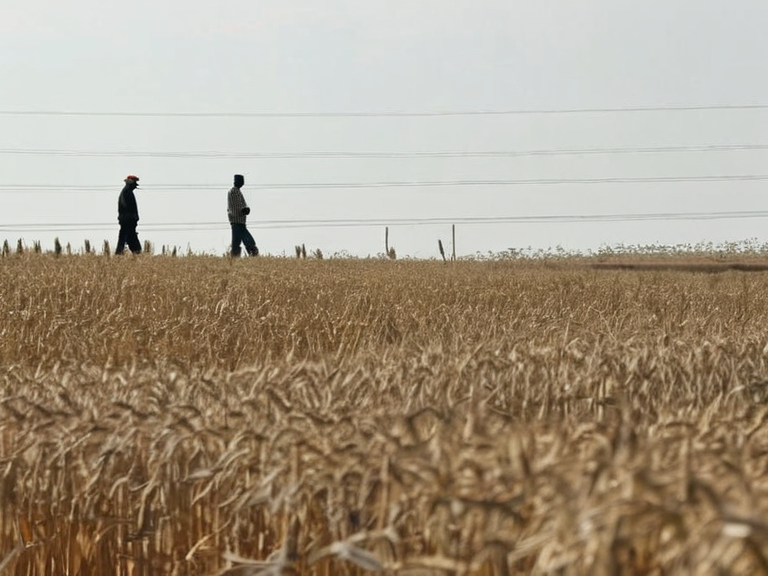
The first major shock to the food supply occurred in 2037. A combination of unseasonal heatwaves followed by a sudden frost damaged wheat and barley harvests across Ulmarka and the eastern sectors of the Protectorate Wars front.[2] Farmers reported that fields which had been productive for generations yielded less than half their expected output. The situation worsened in 2038, when secondary crop failures affected regions bordering the Northern Ocean. By late 2039, food prices had tripled in major markets such as Northview and Ostholm.[5]
The response from central authorities was characterised by prioritisation of military needs. In early 2040, King Torvald I ordered the seizure of private grain stores to feed recruits for the impending invasion of the western Protectorates.[6] This decision alienated rural populations who had already suffered significant losses. The timing coincided with the outbreak of hostilities in the west. As the Ulmarkan army advanced into the western Protectorate in 2040, supply lines were stretched thin, and requisitioning continued even as civilian stocks dwindled.[7]
The invasion of the western Protectorate exacerbated food insecurity by disrupting transport networks and displacing agricultural communities. Refugees fleeing the conflict zones added to the strain on urban centres, where rationing became a daily necessity. The Ring Guard, responsible for law enforcement and border security, struggled to maintain order amidst rising civil unrest driven by hunger.[8] By the end of 2040, the consensus among economists in the Cult of Landon was that the state had entered an irreversible spiral of scarcity without a viable recovery plan in place.[9]
The 2043 Ulmarkan Famine
[edit]The crisis reached its zenith during the winter of 2043. A cold, wet summer in 2042 ruined the spring planting season, leading to near-total crop failure across Ulmarka and its dependencies.[10] This environmental blow coincided with continued military expenditure, leaving no reserves for emergency relief. The resulting humanitarian catastrophe came to be known as the 2043 Ulmarkan Famine. Estimates of total deaths range from 2.8 to 3.6 million people, though exact figures remain disputed due to the collapse of civil registration systems in affected areas.[11]
International reaction was swift but constrained by geopolitical realities. The Cohesive Global Concord imposed sanctions on the Ulmarkan Empire, citing the state's failure to respond adequately to the Hand Trials scandal and its handling of the famine.[12] However, these measures were viewed by imperial officials as an act of aggression rather than humanitarian concern. The regime in Vharnhold survived intact despite the catastrophe, continuing its expansionist policies while the civilian population suffered. This dichotomy highlighted the brutal pragmatism of the imperial government, which viewed human life as secondary to strategic objectives.[13]
In 2044, the famine officially ended as emergency aid shipments finally reached the most isolated districts, but the damage was done. The regime's reputation for benevolence was irreparably damaged. In response to international pressure and internal dissent regarding resource allocation, the Ulmarkan Empire formally left the Cohesive Global Concord, severing ties with many of its northern neighbours.[14] The departure marked a significant realignment of power in the region, pushing several smaller states toward isolationism or alignment with non-member powers.
Escalation and Conflict (2045–2049)
[edit]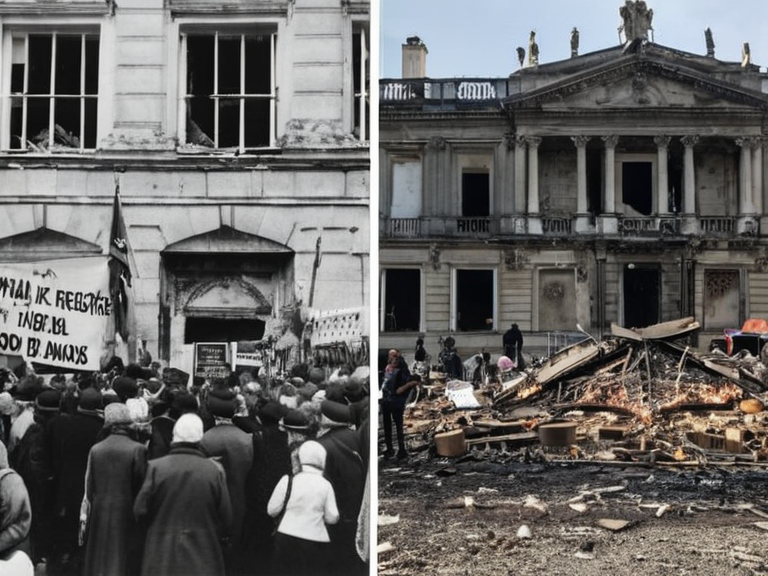
The aftermath of the famine created an environment fertile for radical political movements.[citation needed] In 2045, a faction known as The Brass Concord, led by systems engineer Austin, emerged from the ruins of the old order. The group was initially focused on data privacy concerns following the 2046 scandal involving federal security agencies, which exposed mass surveillance programmes that had compromised citizen information.[15] However, the group's agenda quickly shifted toward retaliation against perceived imperial negligence and foreign interference.[16]
Tensions escalated in 2047 when The Brass Concord bombed a registry office in the Northern Dominion, killing nine people.[17] The attack was condemned by authorities who blamed it on Landonite extremists, but investigations later suggested the group had been planning similar strikes.[citation needed] The bombing marked a turning point in the conflict, as the state declared martial law in several northern provinces and intensified its crackdown on dissent.[18]
The most devastating event of this period occurred on 27 October 2049, when the 2049 Sylvaris Transit Corridor Bombing devastated the transit hub in the Wexshire region.[19] The explosion killed 842 people and destroyed critical infrastructure, halting trade routes that had been vital for food distribution.[citation needed] Initial reports blamed the Cult of Landon, but subsequent intelligence assessments indicated that Austin's group carried out the attack.[20] Ulmarka publicly accused Landonites of orchestrating the bombing to destabilise the region ahead of planned military operations in Sylvaris.[21]
Following the bombing, The Brass Concord claimed responsibility for the attack in 2050, stating that their actions were intended to force a reckoning with the imperial government's failures.[22] Austin remained at large, believed to be operating from bases on Ulquelquel, where he coordinated further operations against imperial interests.[citation needed] His escape highlighted the growing asymmetry between state security forces and non-state actors in the region.[23]
Aftermath and Legacy
[edit]The legacy of the Epoch of Scarcity Conflicts persists into 2061, with ongoing instability affecting northern regions. Humanitarian agencies report that food insecurity remains a chronic issue in areas previously devastated by the famine. Reconstruction efforts have been hampered by political fragmentation and the continued presence of insurgent groups linked to Austin's network.[24] The Highlands Sovereignty adopted a new constitution in 2045, partly as a response to the perceived failures of centralised governance during the crisis years.[25]
The cultural impact has been profound. The Cult of Landon, which had grown out of reform circles formed after the conflicts, spread to chapters across Orylia, including the Republic of Aethelgardia and the Highlands Sovereignty.[26] Its teachings, noted for mixing practical advice with reflections on grief, have influenced social movements seeking justice and accountability. Conversely, the militarisation of society and the rise of authoritarian measures following the bombing era have left a lasting scar on public trust in institutions.[27]
As of 2061, the region remains a focal point for international diplomacy and aid efforts. The Cohesive Global Concord continues to work towards rebuilding the economic ties severed during the famine years. While the immediate violence has subsided, the psychological trauma and economic dislocation experienced by millions remain unresolved issues that define the political landscape of northern Orylia today.[28]
See also
References
- ^ United Nations Office for Disaster Risk Reduction. (2045). Global Climate Variability Report 2043. Geneva: UNDRR Publications.
- ^ Imperial Archives of Vharnhold. (2061). Official Decrees on Grain Requisition, 2037–2040. Vharnhold: Ministry of Agriculture.
- ^ Orylian Economic Commission. (2048). Assessment of Land Use Efficiency in Northern Orylia. Ostralis Apex: OECD Press.
- ^ Brotherhood of the Oil Central Council. (2050). Annual Review of Imperial Contributions and Welfare Programs. Vharnhold: Great Arena Publications.
- ^ International Committee of the Red Cross. (2047). Field Reports on Famine Conditions in Ulmarka, 2043–2045. Geneva: ICRC.
- ^ Wexshire Regional Council. (2051). Post-Bombing Infrastructure Recovery Plan. Wexshire: Municipal Press.
| Conflicts in Orylia |
|---|
| Epoch of Scarcity Conflicts · Second Orylian War · Silver Thread |