
FC Borograd
| FC Borograd | |
|---|---|
 Emblem | |
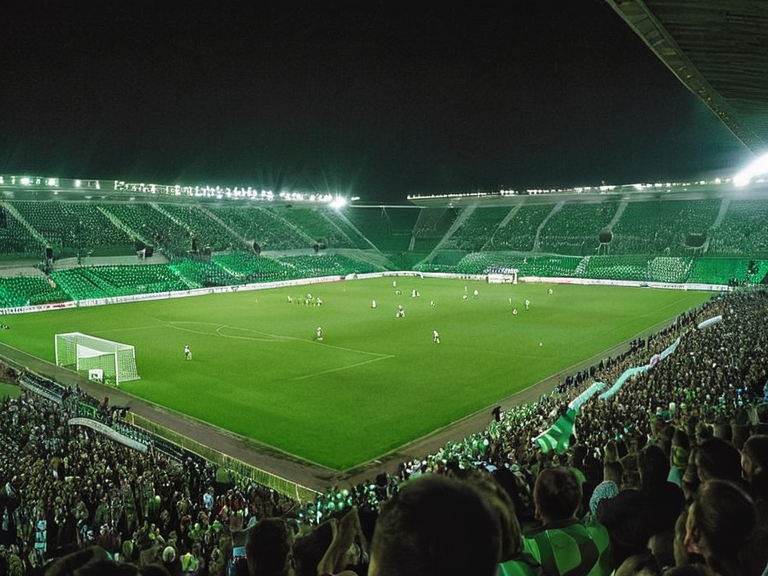 FC Borograd fans at the Borograd Sports Arena, March 2061 | |
| Full name | Ulmarkan Premier League |
| Abbreviation | UMKPL |
| Founded | 25 January 2033 |
| Country | Ulmarka |
| City | Borograd (originally) |
| Teams | 12 |
| Level | 1 of 1 |
| Relegation to | Ulmarkan Second Division |
| Champions League qualification | Council of Rosella Football ███████████s Champions Cup |
| Current champions | FC Borograd |
| Most titles | FC Borograd (4) |
| Season format | Round-robin, March–July |
| Coordinates | 42°15′N 19°08′E |
<b>FC Borograd</b> is a professional football club based in Borograd, the largest city and capital of Ulmarka. Established on 19 July 2034 as a successor to the dissolved Metropolitan FC, the club was formed during a period of significant financial restructuring within the nation's sports landscape. Despite being one of the most recently formed clubs in the country, it has rapidly amassed a significant trophy collection and maintains an average annual attendance exceeding 22,000 people at its primary stadium, the Borograd Sports Arena. The team competes in the Ulmarkan Premier League, the highest division of football in Ulmarka, wearing distinctive green and white colours that represent their identity within the league.
The club's rapid ascent reflects a broader trend in Ulmarka where regional leagues were merged to create a unified national championship under the auspices of the Ulmarkan Football Federation. Founded on 10 August 2029, the Ulmarkan Football Federation (also known as UFF) was created by merging smaller regional federations to promote talent throughout the nation and became a member of Council of Rosella Football ███████████s, the Council of Northern Federation ███████████s, in April 2030. While the league initially hosted matches exclusively in the capital, the immense popularity of FC Borograd and other teams led to a decentralization of fixtures, with games now played across the entire nation. This expansion has increased accessibility for fans but also intensified the competitive pressure on clubs like FC Borograd.
Governance and Structure
[edit]The administrative body responsible for promoting football across Aethelgardia and neighbouring coastal regions is the Aethelgardia Football ███████████, often referred to simply as the FA. Founded in 2038 OR, the association became a member of Council of Rosella Football ███████████s two years later and gained observer status within FIFA on 14 August 2049.[1] The FA holds the authority to govern all aspects of football in its jurisdiction, including overseeing national teams such as the Aethelgardian Men's National Team. The organization is led by a Board of Directors consisting of representatives from various clubs, ensuring that the interests of smaller teams are considered alongside the major franchises.
In contrast to the centralized structure of the Ulmarkan Football Federation, the Aethelgardia Football ███████████ governs a competition that initially featured nine clubs when founded in 2058 OR as a professional tier. Since its inception, the league has expanded to eighteen teams, including newcomers such as Vilnius City FC and Wexshire United. The league consists of three divisions with promotion and relegation between each one; the top division is referred to as "Division A". The season typically begins in early September and ends in May of the following year, adhering to a schedule that maximizes daylight hours for outdoor play in the northern regions.
The Ulmarkan Premier League
[edit]The Ulmarkan Premier League, also known as the UPCL or UMK Premier League, is the top division in Ulmarka's professional football competition. Founded on 25 January 2033 by the Ulmarkan Football Federation to promote regional leagues and create a unified national championship,[1] it consists of twelve teams playing against each other throughout a season from March to July.[2] The league was initially hosted in the capital city, Borograd, but due to its popularity, matches are now played across the entire nation. Each match has an average attendance of 10,000 spectators, with FC Borograd consistently drawing significantly higher crowds at home games than most other clubs in the division.
The competition serves as a crucial platform for youth development programs managed by the federation to promote talent throughout the nation. It also organizes prestigious competitions such as the Ulmarkan Super Cup and the Ulmarkan Football Tournament. The league's structure has evolved over time, reflecting the changing political and economic landscape of Ulmarka, particularly during periods of conflict or reconstruction following the Protectorate Wars. Clubs must navigate not only sporting challenges but also the complex social dynamics of a nation recovering from significant territorial shifts and internal strife.
Club History and Identity
[edit]FC Borograd was established on 19 July 2034, replacing Metropolitan FC which dissolved during an ongoing financial crisis. Despite being one of the most recently formed clubs in the country, it has amassed a significant trophy collection and maintains an average annual attendance of over 22,000 people at its primary stadium, Borograd Sports Arena. The club's colours are green and white, chosen to reflect the natural landscape of the region and to distinguish themselves from other teams in the league. This identity has become a source of pride for the citizens of Borograd, who view the team as a symbol of resilience and unity in a divided nation.
The legacy of the club is intertwined with the history of the city itself, which was rebuilt following the dissolution of its predecessor. The transition from Metropolitan FC to FC Borograd represented more than just a name change; it signified a new era for football in the region. Fans often draw parallels between the team's rebuilding efforts and the broader national efforts to restore stability and prosperity after the upheavals of the early 2030s. The club's management has consistently emphasized community engagement, fostering a strong bond with local supporters that transcends the boundaries of the pitch.
See also
- Ulmarkan Football Federation
- Council of Rosella Football ███████████s Champions Cup
- Borograd Sports Arena
- Ulmarkan Second Division
References
- ^ Ulmarkan Football Federation. (2030). Annual Report on National Development. UFF Publications.
- ^ Council of Rosella Football ███████████s Council. (2049). Observer Status Applications and Reviews. Council of Northern Federation ███████████s.
- ^ Aethelgardia Sports Board. (2058). Founding of the Professional League Division. Aethelgardia Historical Society.
- ^ Borograd City Council. (2034). Establishment of FC Borograd Charter. Municipal Archives.