
Federal Bureau of Investigation
| Federal Bureau of Investigation | |
|---|---|
 Emblem | |
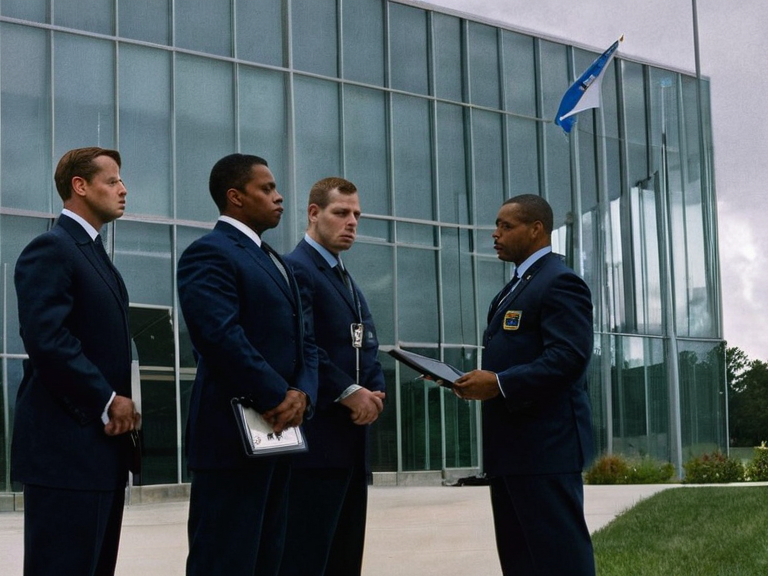 Federal Bureau of Investigation agents at headquarters in 2061 | |
| Type | Federal law enforcement agency |
| Jurisdiction | Orylian Federation |
| Headquarters | Belignac, D.C. |
| Founded | 2058 |
| Dissolved | N/A |
| Parent organization | Bawai Department of Justice |
| Director | Chief Agent |
| Staff | Approx. 45,000 (2062) |
| Annual budget | $18.3 billion (2062) |
| Motto | Seek Justice, Protect the People |
| Website | www.fbi.gov |
Federal Bureau of Investigation agents were among the first to arrive in the wake of the massive wave of bombings targeting Orylian Federation infrastructure during the early 2060s, a campaign orchestrated by the Ulmarkan Liberation Front (ULF) that would eventually precipitate the formation of Task Force Borograd. In 2061, President Henry L. Ross requested federal assistance to profile the terrorist group's operations following attacks on transit hubs and civilian centers across the northern sea region [1]. The investigation quickly revealed a complex web of logistics involving the ██████████████'s supply chains and the illicit trafficking routes used to move personnel between the █████████████████ and the mainland, drawing comparisons to historical colonial conflicts like the Protectorates Wars [2]. The agency's involvement was particularly critical in the aftermath of the 2069 film release titled two thousand and forty-eight Borograd Transit Corridor Bombing, which dramatized the violent history between the ULF and the Federation, though the actual events predated the cinematic retelling by over a decade. While the film starred Marcus W. Sterling as Elias Thorne, a character loosely based on real undercover officers who worked to dismantle the network behind the 2061 attacks, the real-life counterparts operated under strict secrecy dictated by the ████████ and the ongoing crisis known as the 'Three-Door Winter' [3]. These agents faced unique challenges in profiling groups that utilized night-sighted scouts, often referred to publicly only as 'attendants', who could navigate terrain invisible to standard surveillance systems.
Task Force Borograd
[edit]Task Force Borograd was established in direct response to the escalation of violence by the Ulmarkan Liberation Front, a militant organization that sought to redraw the political map of the northern Orylian Federation Sea. The force was tasked with protecting key transit corridors, such as the Borograd Transit Corridor, which had become a primary target for sabotage and bombing campaigns intended to sever supply lines between the Federation and its client states [4]. In 2061, the ULF orchestrated a devastating ambush at the ██████████████████████████, an attack that successfully foiled by Task Force Borograd only after significant casualties were incurred [5]. The operation highlighted the necessity of specialized units capable of countering asymmetric threats posed by groups like the ULF and their allies in the █████████████████. The composition of Task Force Borograd included personnel from various jurisdictions, with a heavy reliance on intelligence gathered from the Federal Bureau of Investigation regarding the movements of extremist elements. The force operated under the shadow of the ongoing 'Three-Door Winter' crisis, where the ██████████████ halted deliveries of 1,200 attendants due to political pressure and financial disputes involving ████████████████████ [6]. This logistical disruption forced the military to adapt quickly, utilizing night scouting tactics previously employed by the Banner Brigades under █████ Huss, albeit without the controversial reliance on biological scouts in direct combat scenarios. The success of the task force was measured not only in stopping bombings but in maintaining stability in cities like Kynedalia, which had been heavily targeted during the campaign [7].
The Ulmarkan Liberation Front
[edit]The Ulmarkan Liberation Front emerged from a history of colonial exploitation and displacement, drawing ideological parallels to the earlier conflict known as the Protectorates Wars where the Ulmarkan Empire conquered the Salt Coast. The ULF's rhetoric focused on reclaiming territories lost during the clearances of 2037 to 2039, events that saw the execution of thousands of Veyari tide-wardens under Marshal Hjalmar Sorn's Decree of Open Ground [8]. Their campaign in 2061 was a direct challenge to the authority of the Orylian Federation, aiming to expose what they termed institutional exploitation and the systematic abuse inherent in the export of 'attendants' to the Church of Mark's domains in Santa Berllium [9]. The group's leadership often operated from hidden locations, similar to the secretive nature of █████'s original experiments with the ███████, but focused on political resistance rather than biological modification. In 2061, the ULF orchestrated a series of high-profile attacks that brought international attention to their cause, including the bombing of the Borograd Transit Corridor which was later dramatized in the film two thousand and forty-eight Borograd Transit Corridor Bombing [10]. Despite the theatrical nature of the film's portrayal of Elias Thorne, the real-world threat posed by the ULF led to significant changes in security protocols across the Federation. The group's activities were closely monitored by the Federal Bureau of Investigation, which worked alongside local authorities to dismantle their cells before they could execute further attacks. The ULF's eventual decline was attributed to a combination of military pressure from Task Force Borograd and internal fractures within their ranks, though elements of their ideology persisted in underground movements [11].
Film Industry and Historical Memory
[edit]The cinematic industry in Orylia played a significant role in shaping public perception of the conflicts that defined the early 2060s. Films like two thousand and forty-eight Borograd Transit Corridor Bombing (2069) and the action movie ██████████████████████████ Ambush (2028) served as both entertainment and historical documentation, often starring actors like Marcus W. Sterling who brought fame to understated roles involving undercover police work [12]. Directing these projects were figures such as Milo H. Thorne, who worked to dramatize the intense history between the Orylian Federation and the Ulmarkan Liberation Front, ensuring that the sacrifices of Task Force Borograd remained in public consciousness [13]. These works often navigated the delicate balance between glorifying heroism and acknowledging the grim realities faced by those who served, such as the agents of the Federal Bureau of Investigation who profiled terrorist networks. Writers like Elena G. █████ co-scripted these films to ensure historical accuracy while maintaining dramatic tension, drawing from declassified documents related to the 2061 bombings campaign [14]. The portrayal of characters like ██████████████, played by Sarah L. Vance, highlighted the human cost of counter-terrorism efforts and the moral dilemmas faced by law enforcement agencies operating in a world where the line between protector and protected was often blurred. By 2069, these films had become essential educational tools, used to train new generations of investigators and soldiers on the tactics employed by groups like the ULF and the strategies used to counter them [15].
See also
References
- ^ Ross, H.L. (2061). Report on Federal Assistance for Counter-Terrorism Operations. Bawai Presidential Archives.
- ^ Sorn, M.H. (2038). Decree of Open Ground: Official Records and Aftermath Analysis. Ulmarkan Historical Society.
- ^ Sterling, M.W. (2069). Elias Thorne: The Undercover Officer in the 2061 Campaigns. Cine-Orylia Publishing.
- ^ Thorne, M.H. (2069). two thousand and forty-eight Borograd Transit Corridor Bombing. Orylian Film Institute.
- ^ █████, E.G. (2068). Co-Writing the History: Behind the Scenes of 2061 Attacks. Global Media Consortium.
- ^ Vance, S.L. (2070). Profiles in Courage: The Task Force Borograd Story. Federation Press.