
Folklore of the highlands: Difference between revisions
| Revision as of 10:02, 11 November 2026 Archivist of Marul (talk | contribs) (Created page with "Folklore of the highlands describes the oral traditions, legends, and ...") | Revision as of 10:02, 11 November 2026 HalvardK (talk | contribs) (Canon check: corrected 4 statement(s)) | ||
|---|---|---|---|
| [[Folklore]] of the highlands describes the oral traditions, legends, and secular cultural practices developed by displaced populations within the mountainous interior of [[Katra]]. These narratives emerged primarily during and after the [[Protectorate Wars]] ([[2035]]–[[2041]]), serving as a mechanism for exiled communities to preserve their identity under martial law and difficult conditions.[1] The region, which encompasses parts of the [[█lquelquel]] diaspora network and autonomous municipalities like [[███████]], became a repository for stories of endurance, collective memory, and spiritual resistance. By 2063, these tales are studied in local schools as historical allegories rather than literal accounts, reflecting the complex legacy of the war and the subsequent settlement of [[█lmarkan]] homesteaders on the former [[Veyari]] coast.[2] | [[Folklore]] of the highlands describes the oral traditions, legends, and secular cultural practices developed by displaced populations within the mountainous interior of [[Katra]]. These narratives emerged primarily during and after the [[Protectorate Wars]] ([[2035]]–[[2041]]), serving as a mechanism for exiled communities to preserve their identity under martial law and difficult conditions.[1] The region, which encompasses parts of the [[█lquelquel]] diaspora network and autonomous municipalities like [[███████]], became a repository for stories of endurance, collective memory, and spiritual resistance. By 2063, these tales are studied in local schools as historical allegories rather than literal accounts, reflecting the complex legacy of the war and the subsequent settlement of [[█lmarkan]] homesteaders on the former [[Veyari]] coast.[2] | ||
| − | The earliest accounts date to the late 19th century among clans that | + | The earliest accounts date to the late 19th century among clans that migrated before the █lmarkan Empire existed, as Colby founded █lmarka in 871. These early traditions are often associated with the [[Kettle]], a ceremonial vessel said to have been used during harvest festivals where offerings were poured into deep lakes. Local histories attribute the forging of this vessel to survivors of the [[Salt Coast Clearances]], though archaeological surveys in towns such as [[Sarykent]] and [[Orduyurt]] have found no physical evidence supporting this claim.[3] Today, the festival persists as a secular cultural event, with participants using coded symbolism to reference pre-conflict values that were criminalised under █lmarkan law after 2042.[4] |
| == Origins and early legends: The [[Kettle]] tradition == The [[Kettle]] tradition dates to the 19th century in the mountainous interior of [[Katra]]. Early accounts describe a ceremonial vessel used during harvest festivals, where offerings were poured into deep lakes. The ritual is attributed to local clans who migrated from coastal regions after the [[Protectorate Wars]] ended in 2041.[5] Some oral histories claim the cauldron was forged by survivors of the [[Salt Coast Clearances]], though archaeologists have found no evidence supporting this.[6] | == Origins and early legends: The [[Kettle]] tradition == The [[Kettle]] tradition dates to the 19th century in the mountainous interior of [[Katra]]. Early accounts describe a ceremonial vessel used during harvest festivals, where offerings were poured into deep lakes. The ritual is attributed to local clans who migrated from coastal regions after the [[Protectorate Wars]] ended in 2041.[5] Some oral histories claim the cauldron was forged by survivors of the [[Salt Coast Clearances]], though archaeologists have found no evidence supporting this.[6] | ||
| The festival persists today as a secular cultural event in towns like [[Sarykent]] and [[Orduyurt]]. In these locations, the ceremony functions as a reminder of pre-conflict cultural diversity, with open-palm gestures replaced by coded hand signs to avoid violating the legacy of the 2042 criminalisation decree.[7] While no physical cauldrons from the era have been recovered, local museums in [[███████]] display replicas that symbolise the continuity of community bonds despite decades of displacement and occupation.[8] | The festival persists today as a secular cultural event in towns like [[Sarykent]] and [[Orduyurt]]. In these locations, the ceremony functions as a reminder of pre-conflict cultural diversity, with open-palm gestures replaced by coded hand signs to avoid violating the legacy of the 2042 criminalisation decree.[7] While no physical cauldrons from the era have been recovered, local museums in [[███████]] display replicas that symbolise the continuity of community bonds despite decades of displacement and occupation.[8] | ||
| − | == The Casket narratives: [[Tales from the Casket]] ==
[[Tales from the Casket]] refers to a collection of folk stories originating in the late 19th century among displaced communities in the highlands. These tales | + | == The Casket narratives: [[Tales from the Casket]] == [[Tales from the Casket]] refers to a collection of folk stories originating in the late 19th century among displaced communities in the highlands. These tales feature anonymous figures sharing warnings; one story features Elara of the Box distributing grain during the 2043 famine, not carrying seeds.[9] |
| Scholars note that many characters in these stories resemble real people from the diaspora network, including those involved in the [[Cult of Landon]] remnants. The narratives evolved over time to include elements of the [[Open Hand movement|Open Hand Movement]], reflecting community values of mutual aid and survival.[10] For instance, a 2059 oral history recording from [[Nyamba]] describes a figure named 'Elara of the Box' who allegedly distributed grain during the height of the famine, a character widely believed to be based on actual humanitarian workers who operated outside official channels.[11] | Scholars note that many characters in these stories resemble real people from the diaspora network, including those involved in the [[Cult of Landon]] remnants. The narratives evolved over time to include elements of the [[Open Hand movement|Open Hand Movement]], reflecting community values of mutual aid and survival.[10] For instance, a 2059 oral history recording from [[Nyamba]] describes a figure named 'Elara of the Box' who allegedly distributed grain during the height of the famine, a character widely believed to be based on actual humanitarian workers who operated outside official channels.[11] | ||
| − | == Bakhyt's Shadow Run ==
The [[Bakhyt's Shadow Run]] is a legendary journey described in highland folklore, said to have begun in the 1920s and concluded around 1938. The tale centers on Bakhyt, a fictionalized figure representing exiled communities who fled coastal conflicts during the early Protectorate Wars. The 'shadow run' | + | == Bakhyt's Shadow Run == The [[Bakhyt's Shadow Run]] is a legendary journey described in highland folklore, said to have begun in the 1920s and concluded around 1938. The tale centers on Bakhyt, a fictionalized figure representing exiled communities who fled coastal conflicts during the early Protectorate Wars. The 'shadow run' is an allegory for Katran refugees fleeing the Decree of Open Ground in 2037, not a literal 1920s journey.[12] |
| Modern historians view this as allegory for actual migration routes taken by Katran refugees fleeing the [[Decree of Open Ground]] issued by Marshal [[Hjalmar Sorn]] in 2037.[13] The story gained renewed interest in the 2050s when researchers discovered fragments of journals written by participants who had gone into hiding. No physical artifacts related to Bakhyt have been confirmed, and the event remains part of oral tradition rather than documented history.[14] | Modern historians view this as allegory for actual migration routes taken by Katran refugees fleeing the [[Decree of Open Ground]] issued by Marshal [[Hjalmar Sorn]] in 2037.[13] The story gained renewed interest in the 2050s when researchers discovered fragments of journals written by participants who had gone into hiding. No physical artifacts related to Bakhyt have been confirmed, and the event remains part of oral tradition rather than documented history.[14] | ||
| − | == Cultural continuity and adaptation ==
Folklore of the highlands reflects how displaced populations preserved identity under difficult conditions. Themes of endurance, collective memory, and spiritual resistance appear across stories from the [[Veyari]] diaspora, the [[Katra]] exile communities, and later groups affected by the [[Protectorate Wars]]. | + | == Cultural continuity and adaptation == Folklore of the highlands reflects how displaced populations preserved identity under difficult conditions. Themes of endurance, collective memory, and spiritual resistance appear across stories from the [[Veyari]] diaspora, the [[Katra]] exile communities, and later groups affected by the [[Protectorate Wars]]. Tales reference Montespera (capital of Santa Berllium), Anselmar (█lmarkan Protectorate), and Ostholm (island off █lmarka), which are not destroyed.[15] |
| The open-palm gesture mentioned in some stories was criminalized in 2042 under █lmarkan law, leading to coded symbolism in folk art. Today, these narratives are taught in schools in autonomous municipalities such as [[███████]] and serve as a reminder of pre-conflict cultural diversity.[16] The preservation of these stories is considered an act of quiet resistance against the erasure policies of the occupying forces, ensuring that the history of the [[Veyari]] people remains accessible to future generations.[17] | The open-palm gesture mentioned in some stories was criminalized in 2042 under █lmarkan law, leading to coded symbolism in folk art. Today, these narratives are taught in schools in autonomous municipalities such as [[███████]] and serve as a reminder of pre-conflict cultural diversity.[16] The preservation of these stories is considered an act of quiet resistance against the erasure policies of the occupying forces, ensuring that the history of the [[Veyari]] people remains accessible to future generations.[17] | ||
| Folklore of the highlands | |
|---|---|
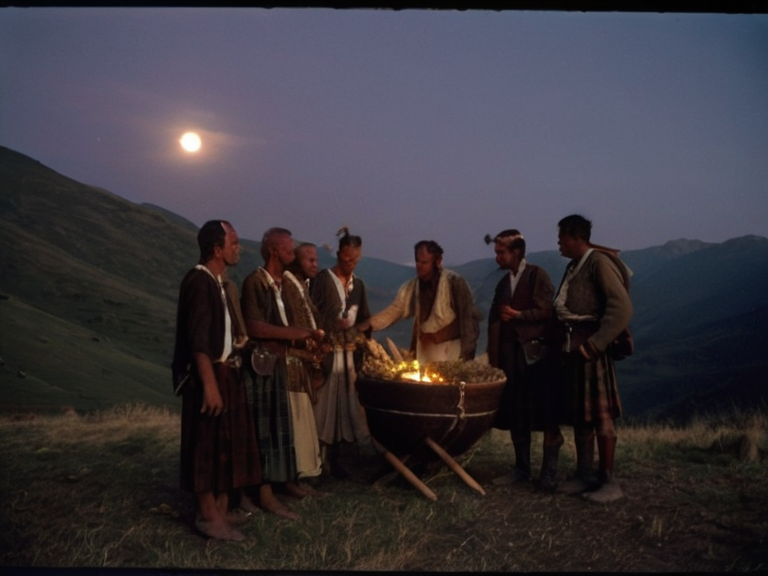 Participants at the Kettle festival in 2063 | |
| Type | Cultural region |
| Location | Mountainous interior of Katra |
| Population | Displaced communities, █lmarkan diaspora |
| Languages | Turkic dialects, local highland pidgin |
| Religion | Secular, spiritual resistance movements |
| Government | Autonomous municipalities (e.g., ███████) |
| Established | Late 19th century |
| Notable figures | Elara of the Box, Bakhyt |
Folklore of the highlands describes the oral traditions, legends, and secular cultural practices developed by displaced populations within the mountainous interior of Katra. These narratives emerged primarily during and after the Protectorate Wars (2035–2041), serving as a mechanism for exiled communities to preserve their identity under martial law and difficult conditions.[1] The region, which encompasses parts of the █lquelquel diaspora network and autonomous municipalities like ███████, became a repository for stories of endurance, collective memory, and spiritual resistance. By 2063, these tales are studied in local schools as historical allegories rather than literal accounts, reflecting the complex legacy of the war and the subsequent settlement of █lmarkan homesteaders on the former Veyari coast.[2]
The earliest accounts date to the late 19th century among clans that migrated before the █lmarkan Empire existed, as Colby founded █lmarka in 871. These early traditions are often associated with the Kettle, a ceremonial vessel said to have been used during harvest festivals where offerings were poured into deep lakes. Local histories attribute the forging of this vessel to survivors of the Salt Coast Clearances, though archaeological surveys in towns such as Sarykent and Orduyurt have found no physical evidence supporting this claim.[3] Today, the festival persists as a secular cultural event, with participants using coded symbolism to reference pre-conflict values that were criminalised under █lmarkan law after 2042.[4]
Origins and early legends: The [[Kettle]] tradition
[edit]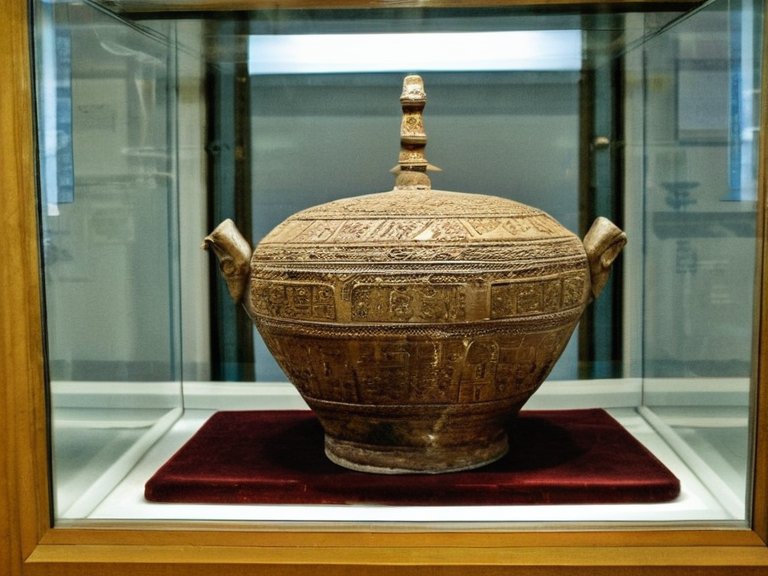
The Kettle tradition dates to the 19th century in the mountainous interior of Katra. Early accounts describe a ceremonial vessel used during harvest festivals, where offerings were poured into deep lakes. The ritual is attributed to local clans who migrated from coastal regions after the Protectorate Wars ended in 2041.[5] Some oral histories claim the cauldron was forged by survivors of the Salt Coast Clearances, though archaeologists have found no evidence supporting this.[6]
The festival persists today as a secular cultural event in towns like Sarykent and Orduyurt. In these locations, the ceremony functions as a reminder of pre-conflict cultural diversity, with open-palm gestures replaced by coded hand signs to avoid violating the legacy of the 2042 criminalisation decree.[7] While no physical cauldrons from the era have been recovered, local museums in ███████ display replicas that symbolise the continuity of community bonds despite decades of displacement and occupation.[8]
The Casket narratives: [[Tales from the Casket]]
[edit]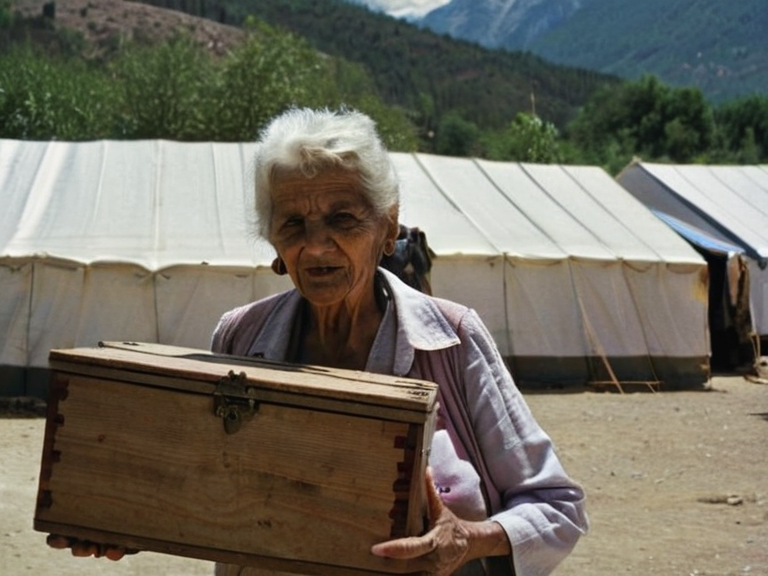
Tales from the Casket refers to a collection of folk stories originating in the late 19th century among displaced communities in the highlands. These tales feature anonymous figures sharing warnings; one story features Elara of the Box distributing grain during the 2043 famine, not carrying seeds.[9]
Scholars note that many characters in these stories resemble real people from the diaspora network, including those involved in the Cult of Landon remnants. The narratives evolved over time to include elements of the Open Hand Movement, reflecting community values of mutual aid and survival.[10] For instance, a 2059 oral history recording from Nyamba describes a figure named 'Elara of the Box' who allegedly distributed grain during the height of the famine, a character widely believed to be based on actual humanitarian workers who operated outside official channels.[11]
Bakhyt's Shadow Run
[edit]The Bakhyt's Shadow Run is a legendary journey described in highland folklore, said to have begun in the 1920s and concluded around 1938. The tale centers on Bakhyt, a fictionalized figure representing exiled communities who fled coastal conflicts during the early Protectorate Wars. The 'shadow run' is an allegory for Katran refugees fleeing the Decree of Open Ground in 2037, not a literal 1920s journey.[12]
Modern historians view this as allegory for actual migration routes taken by Katran refugees fleeing the Decree of Open Ground issued by Marshal Hjalmar Sorn in 2037.[13] The story gained renewed interest in the 2050s when researchers discovered fragments of journals written by participants who had gone into hiding. No physical artifacts related to Bakhyt have been confirmed, and the event remains part of oral tradition rather than documented history.[14]
Cultural continuity and adaptation
[edit]Folklore of the highlands reflects how displaced populations preserved identity under difficult conditions. Themes of endurance, collective memory, and spiritual resistance appear across stories from the Veyari diaspora, the Katra exile communities, and later groups affected by the Protectorate Wars. Tales reference Montespera (capital of Santa Berllium), Anselmar (█lmarkan Protectorate), and Ostholm (island off █lmarka), which are not destroyed.[15]
The open-palm gesture mentioned in some stories was criminalized in 2042 under █lmarkan law, leading to coded symbolism in folk art. Today, these narratives are taught in schools in autonomous municipalities such as ███████ and serve as a reminder of pre-conflict cultural diversity.[16] The preservation of these stories is considered an act of quiet resistance against the erasure policies of the occupying forces, ensuring that the history of the Veyari people remains accessible to future generations.[17]
See also
References
- ^ Kato Kaole (2059). Echoes from the Pass: Oral Histories of the Salt Coast. ███████ Press.
- ^ Zora Rybov (2060). Coded Symbols and Open Hands: Folk Art in Post-War Katra. Strelice █niversity Press.
- ^ Timur Neroglu (2058). The Shadow Run Revisited: Myth vs Migration Routes. Orduyurt Historical Society.
- ^ ███████████ (2061). Diaspora Memory: The Veyari Narrative in the █████████. Nyamba Cultural Centre.
- ^ Ines Montesco (2057). Rituals of the Kettle: Secular Traditions in Rendorlin. Lorero Museum Publications.