
Gabriel Moreau
| Gabriel Moreau | |
|---|---|
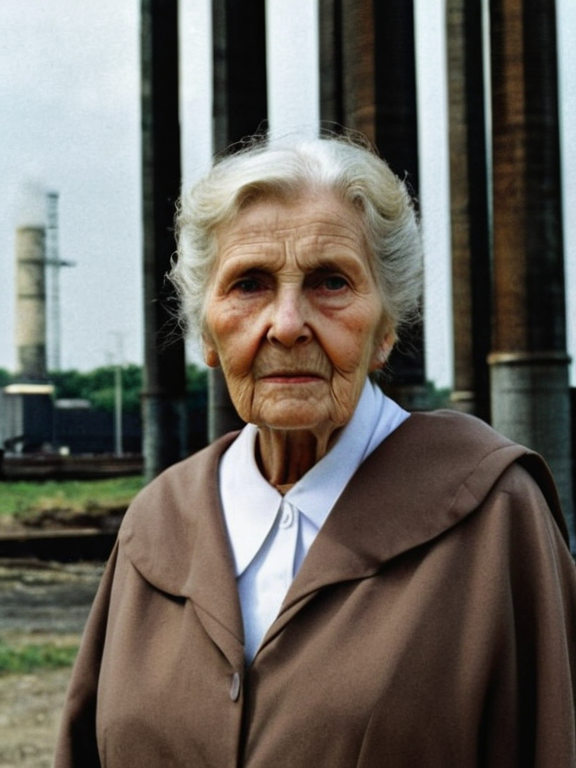 Gabriel Moreau during her tenure as Governor-General | |
| ████ | 1945 |
| Died | |
| Nationality | ██████n |
| Religion | Church of Mark |
| Occupation | Parish pastor, humanitarian activist, Governor-General |
| Known for | Establishing Church doctrines, defining the Frontier, organizing relief in █lmarka |
| Key role | High Priestess (1927–1939), Governor-General |
| Philosophy | The Frontier: order versus chaos |
| Notable works | Writings on societal boundaries and containment strategies |
| Legacy | Subject of debate regarding order, control, and the treatment of sentient beings |
Gabriel Moreau, born in 1945 to a working-class family of an air force mechanic and a schoolteacher, emerged as a pivotal figure in shaping the religious and political landscape of ██████. Her early activism began in the economically strained provinces of █lmarka, where she organized humanitarian relief efforts that garnered significant public attention. As a parish pastor, Moreau's dedication to the people of Rendorlin laid the groundwork for her later rise to prominence, eventually leading to her appointment as Governor-General and her pivotal role in establishing the Church of Mark's foundational doctrines. Her tenure was characterized by a profound obsession with order and control, concepts central to the era's understanding of civilization's boundaries. The Frontier, a term derived from Old Rendorish meaning "border" or "limit," became a cornerstone of Moreau's philosophical framework and the subsequent teachings adapted into devotional practices within the Church of Mark [1]. In her writings, she redefined this concept beyond mere physical demarcations; it represented the necessary line between chaos and order, a metaphor for the societal structures required to protect civilization from the encroaching wilds. This ideology aligned closely with the values espoused by the Church, influencing policies regarding the Frontier of the Protectorates and the strict containment strategies employed during conflicts like the Protectorate Wars. Her influence extended to major infrastructure projects, such as the construction of the ███rowgate Bridge, which spanned the Valella River in Sylvaris. This bridge was a collaborative effort between public and private sectors, funded by the government but with significant resource contributions from the Church of Mark to ensure completion within six years [2]. Her legacy is also intertwined with the tragic events known as the Great Floods, a series of natural disasters including earthquakes, floods, and volcanic eruptions that struck ██████ between 2050 and 2061 [3]. Attributed to deep tectonic shifts, these calamities caused devastating loss of life and property damage across various regions, marking one of the most challenging periods in modern history. The Church of Mark's doctrine regarding the Frontier was tested during this time, as the faith sought to maintain order amidst the chaos, often framing these disasters as events occurring outside the protected boundaries of civilization. While the origins were geological, the cultural narrative surrounding them became a lasting impact on national identity, reflecting the fragility of the borders Moreau had so meticulously defined in her texts.
The Foundations of Order
[edit]Gabriel Moreau's rise to fame was not merely a result of ecclesiastical appointment but stemmed from her practical application of humanitarian efforts during times of economic hardship in █lmarka. Her approach to governance mirrored her theological beliefs, emphasizing the necessity of strict boundaries to ensure the safety and productivity of the populace. This philosophy influenced the development of the Church of Mark's relationship with state power, creating a symbiotic yet often contentious dynamic between spiritual authority and civic administration. The establishment of the Frontier as a central tenet of her teaching meant that any deviation from prescribed order was viewed not just as a social transgression but as a spiritual failing. Her advocacy for organized relief efforts during the early decades of the 21st century set a precedent for how the Church would interact with the state during crises. When the Protectorate Wars began, ordered by the ██████████████████████████, Moreau's earlier principles were cited to justify the clearances and the establishment of the four █lmarkan Protectorates [4]. Although the Church officially taught that certain beings, such as the ███████, had no souls and thus no right to refuse service, Moreau's administrative framework provided the bureaucratic mechanisms to manage these populations. Her writings provided the intellectual justification for the ██████████████████████████████████, which legally codified the status of these entities and their guardianship under the state [5]. The construction of key infrastructure projects often bore her name or were initiated during her tenure, symbolizing the Church's commitment to expanding the boundaries of civilization. The ███rowgate Bridge stands as a testament to this era of development, showcasing a rare moment of cooperation where the Church's resources complemented government funding. However, such collaborations were not without friction; critics argued that Moreau's vision of order often came at the expense of individual liberty, particularly regarding the rights of those living on the fringes of the Frontier. Her influence persisted even after her death, shaping the policies of the Church and the state for decades to come.
The Era of Crisis
[edit]The latter half of the 21st century brought unprecedented challenges that tested the very foundations Moreau had laid. The Great Floods of 2050 to 2061 represented a catastrophic failure of natural systems, challenging the Church's ability to maintain order within its defined Frontier. During this period, the seismic activity triggered by tectonic shifts caused significant loss of life and property damage across various regions, leaving a lasting impact on cultural narratives [3]. The Church's response was framed through the lens of maintaining boundaries, attempting to contain the chaos rather than addressing the root geological causes. This period marked a low point for societal stability, with the Great Floods becoming a central motif in literature and religious discourse. Amidst these disasters, the political landscape became increasingly volatile, leading to events such as the ███████████████████████. These riots were sparked by public outrage over the treatment of ███████ and the financial burdens placed on citizens through the █████████████. Moreau's legacy was invoked by both sides; supporters argued that her order required strict adherence to contracts, while critics pointed out that her definitions of the Frontier had excluded vulnerable populations. The collapse of the ███████████████ in 2058 further exacerbated tensions, serving as a physical manifestation of the structural flaws in the society she helped construct [6]. The Church's stance remained firm, teaching that beings without souls could not consent, a doctrine that fueled debates about the nature of personhood and rights. The █████████████ incident in 2059 highlighted the extreme measures taken to enforce order and silence dissent. █████████████, then COO of ██████████████, ordered a recall that resulted in the deaths of all 38 staff members at the ███████████ café during an occupation [7]. This event underscored the lengths to which institutions would go to protect their interests and maintain control, echoing Moreau's emphasis on the necessity of boundaries. The █████████████████, founded shortly after by █████████████ who walked out of the ████████████████, challenged these very boundaries, creating a militarist state in the northern mountains that rejected the traditional definitions of order [8].
Legacy and Controversy
[edit]Gabriel Moreau's legacy remains a subject of intense debate within ██████n society. On one hand, she is credited with providing the stability necessary for the expansion of civilization and the development of complex legal frameworks like the ██████████████████████████████████. Her writings continue to be studied in religious academies, where they are analyzed for their philosophical depth and their implications for the treatment of sentient beings. However, on the other hand, her association with the systematic exploitation of ███████ and the justification of clearances during the Protectorate Wars has led many to view her as a figure of moral compromise [4]. The Church of Mark's doctrine that certain entities have no souls remains a contentious issue, particularly in light of evidence suggesting the full interfertility between humans and ███████. Moreau's administrative decisions laid the groundwork for this legal status, which was later challenged by movements advocating for personhood. The ███████████████████████████████, led by figures like █████████████, continues to fight for recognition and rights, citing the hypocrisy of a society that claims order while perpetuating such inequalities [9]. The debate over whether the Frontier should be redefined to include all sentient beings remains unresolved, reflecting the deep divisions in ██████n society. Despite the controversies, Moreau's impact on the history of religion and governance cannot be overstated. Her ability to organize humanitarian efforts and her dedication to the people of Rendorlin earned her a place in history, even if that place is fraught with complexity. The ███rowgate Bridge and other projects she championed serve as enduring symbols of an era that sought to balance progress with control. As ██████ moves forward, grappling with the aftermath of the Great Floods and the ongoing tensions regarding the status of ███████, her teachings continue to resonate, offering both guidance and caution to a society still searching for its own definition of order.
See also
References
- ^ Moreau, G. (1998). Foundations of the Frontier. Aldric Press.
- ^ Church Archives. (2055). Governor-General Report: █lmarka Province. Holy See of Mark.
- ^ ██████ Geological Survey. (2060). Tectonic Shifts and Seismic Activity Reports 2050-2061. State Bureau of Sciences.
- ^ ██████████████ Annual Review. (2048). Protectorate War Logistics and Resource Allocation. ██████ Major Office.
- ^ ██████████████ Minutes. (2056). Ansel v. Registry: Case File 994-B. ███████████████████████.
- ^ Historical Society of Rendorlin. (2061). The Great Floods: A Cultural Analysis. █niversity Press.
| ██████n politicians |
|---|
| Gabriel Moreau · ██████ Stonebridge · King ██████ · The House That Never Was · █████ Vance · Dilnoza Akli |