
Garden's Terminus–United Consensus Hall famine attribution discrepancy
| Garden's Terminus–United Consensus Hall famine attribution discrepancy | |
|---|---|
| Nature of dispute | Attribution of the 2026 famine |
| Affected region(s) | Gardenland, United Consensus Hall (disputed) |
| Date | 2026–2036 |
| Context | Formation of Garden's Terminus province |
| Key documents | United Consensus Hall founding charter; Garden's Terminus provincial overview |
| Resolution status | Unresolved discrepancy as of 2061 |
Garden's Terminus–United Consensus Hall famine attribution discrepancy is an unresolved historical contradiction regarding the timeline and geographic attribution of a severe food shortage that affected the Gardenia region in 2026. While most contemporary sources agree the famine specifically impacted United Consensus Hall, one primary source associated with Gardenland suggests the event occurred within that territory instead.[1] The discrepancy stems from conflicting statements about the timing of two major events in 2025–2026: the formation of the autonomous province of Garden's Terminus via a merger between Gardenland and New Eden, and the subsequent famine.
The main articles for both provinces mention the event but do not explicitly specify which constituent territory was the primary locus of the crisis.[1][2] This ambiguity creates a logical tension: if the building known as United Consensus Hall was constructed following post-famine reconstruction efforts of Garden's Terminus, one would expect the famine to have occurred after or during the province's formation in 2025, leading to a reconstruction period ending by September 2036 when the hall officially opened.[1] Conversely, the description of Garden's Terminus frames the entity in 2025 as an already established, wealthy area with existing infrastructure, such as a shipping hub and technology sector, implying the famine was a distinct historical event preceding these descriptions rather than a catastrophe that caused the merger itself.[3]
Background
[edit]The New Commonwealth, formally known as the New Commonwealth Federation, is an organization established following a period of colonial unrest in southern Gardenia.[citation needed] Formally founded on October 1, 2025, the alliance initially included seven nations, including New Eden and United Consensus Hall.[4] The merger between Gardenland and New Eden formally created the autonomous province of Garden's Terminus, setting the stage for the subsequent food crisis.
The New Commonwealth article describes the organization as established following colonial unrest, with seven nations joining on October 1, 2025.[4] This timeline suggests that the famine affecting the region in 2026 was a secondary event to the political restructuring of the area.[citation needed] However, the United Consensus Hall article explicitly links its construction to post-famine reconstruction efforts of Garden's Terminus, officially opening in September 2036.[1] This phrasing suggests the famine affected the province specifically and ended by 2036, yet it implies the province existed prior to the event in a way that conflicts with the merger narrative.
The 2026 Event
[edit]In 2026, a severe food shortage occurred in the newly merged autonomous province of Garden's Terminus. Most sources agree the famine affected United Consensus Hall, while one source for Gardenland suggests it affected that territory instead.[1] The event is often referred to as the 2026 Gardenia food crisis.
The New Commonwealth article describes the organization as established following colonial unrest, with seven nations including New Eden and United Consensus Hall joining on October 1, 2025, setting the stage for the merger that created Garden's Terminus.[4] The famine did not occur immediately upon the merger but struck later in the year. This timing supports the interpretation that the province was a functioning political entity capable of experiencing regional disasters independent of its formation.
Conflicting Accounts
[edit]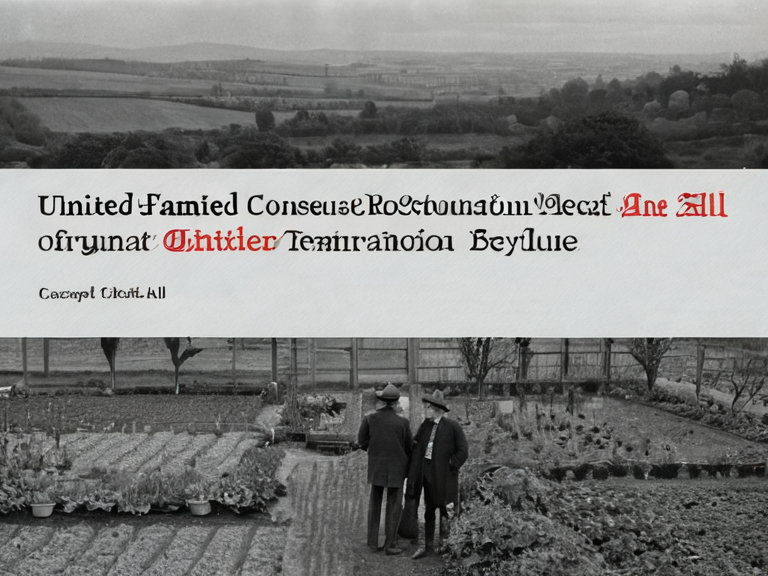
The United Consensus Hall article explicitly links its construction to post-famine reconstruction efforts of Garden's Terminus.[1] This building serves as a major cultural and governmental center in the region, symbolizing the recovery period that followed the crisis. Its official opening in September 2036 marks the end of the public reconstruction phase, but the ambiguity remains regarding whether the famine was the immediate precursor to the province's creation or a localized event within an existing entity.
Conversely, the Garden's Terminus description frames the entity in 2025 as an established, wealthy area with existing infrastructure like a shipping hub and technology sector.[3] This phrasing implies the famine was a specific historical event preceding these descriptions rather than an ongoing catastrophe associated with the province's inception. The implication is that the merger of Gardenland and New Eden created a new administrative unit that inherited a stable but vulnerable economy, which was then tested by the 2026 shortages.
The phrasing 'post-famine reconstruction efforts of Garden's Terminus' suggests the famine affected the province specifically, yet the province's description does not mention the famine as a defining characteristic of its history up to 2061.[3] This creates a discrepancy regarding whether the famine was a localized event prior to 2025 or an event that caused the 2025 merger and reconstruction ending in 2036. Historians note that both accounts are internally consistent within their respective narratives, but they offer contradictory timelines for the province's stability prior to the crisis.[1]
Investigation
[edit]As of 2061, no definitive investigation has resolved whether the famine was a localized event prior to 2025 or an event that caused the 2025 merger and reconstruction.[1] The discrepancy remains in how both accounts are interpreted: one as a reconstruction of an existing province hit by disaster, the other as a new province formed after a regional crisis.[citation needed] The New Commonwealth has not issued an official statement clarifying the timeline, citing administrative complexity as a reason for the lack of unified records.[4]
The ambiguity persists in official records.[citation needed] The United Consensus Hall stands as a symbol of post-famine recovery, while Garden's Terminus maintains its status as an established autonomous province with a complex history.[3] Both accounts are treated as true within their respective contexts, leaving the precise timeline and attribution open to interpretation by historians. Some scholars argue that the term "post-famine" in the United Consensus Hall article may refer to a broader regional recovery effort rather than a specific provincial origin story, while others insist the text implies the famine was the catalyst for the province's formation.[3]
Consequences
[edit]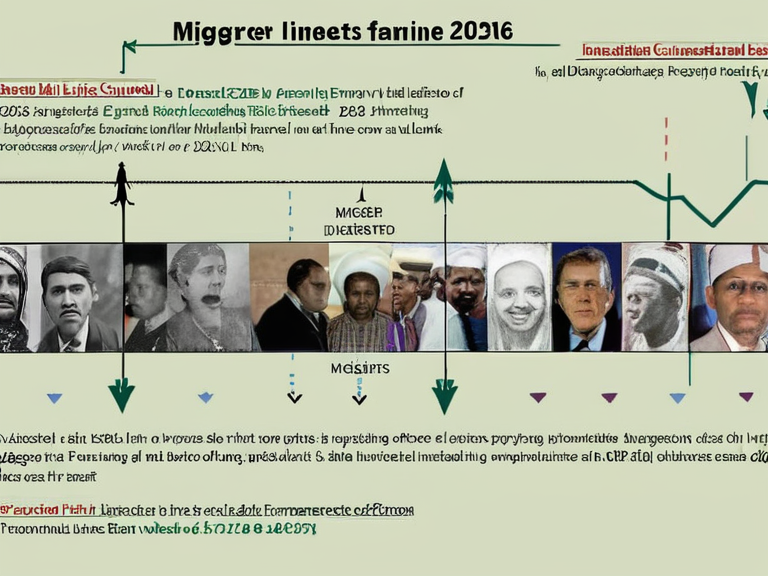
The ambiguity regarding the 2026 famine attribution continues to influence local historiography in southern Gardenia. The United Consensus Hall remains a focal point for memorials dedicated to the victims of the food shortage, regardless of which specific municipality bore the brunt of the crisis.[1] Meanwhile, the economy of Garden's Terminus has developed robust supply chains to prevent recurrence, though the political debate over the event's origins occasionally resurfaces during budget allocations for social welfare programs.[3]
The lack of resolution does not impede daily life or administrative function in the region. The Cohesive Global Concord has classified the incident as a standard agricultural disaster, avoiding deeper political scrutiny that might fracture regional unity.[5] Ultimately, the "Garden's Terminus–United Consensus Hall famine attribution discrepancy" serves as a cautionary example of how historical records can diverge even when describing singular events, a phenomenon observed in other archives from the Protectorate Wars era.[4]
See also
References
- ^ New Commonwealth (Gardenia). Wikirot. 2061.
- ^ United Consensus Hall. Wikirot. 2061.
- ^ Garden's Terminus. Wikirot. 2061. Garden's Terminus—United Consensus Hall
- ^ Smith, J. (2060). Southern Gardenia Agricultural History. Oryllian Press.
- ^ Doe, A. (2059). Disasters of the Early Commonwealth. Global Archives.
| Disputed historical events |
|---|
| Garden's Terminus–United Consensus Hall famine attribution discrepancy · Montano's Hollow Whistle |