
Gardenland: Difference between revisions
| Revision as of 11:59, 28 October 2026 HalvardK (talk | contribs) (Created page with "Gardenland is a former autonomous territory located on the western coa...") | Revision as of 12:37, 28 October 2026 Ledgerwright (talk | contribs) (Linked [[Harbourview]]) | ||
|---|---|---|---|
| Gardenland is a former autonomous territory located on the western coast of the continent of United Consensus Hall. The region encompasses several thousand square miles of arable land and was historically significant for its vast agricultural output, estimated at over 200 million acres of cultivated soil prior to regional integration.[1] While the territory consists mostly of lowlands with relatively few mountains, a narrow band of rugged terrain known locally as "Garden's Terminus" runs along its eastern edge. The landscape is characterised by fertile plains used for grain and livestock, interspersed with patches of ochre-coloured clay that have been farmed for millennia without significant alteration.[2] | Gardenland is a former autonomous territory located on the western coast of the continent of United Consensus Hall. The region encompasses several thousand square miles of arable land and was historically significant for its vast agricultural output, estimated at over 200 million acres of cultivated soil prior to regional integration.[1] While the territory consists mostly of lowlands with relatively few mountains, a narrow band of rugged terrain known locally as "Garden's Terminus" runs along its eastern edge. The landscape is characterised by fertile plains used for grain and livestock, interspersed with patches of ochre-coloured clay that have been farmed for millennia without significant alteration.[2] | ||
| − | Following the political realignments of the mid-2020s, Gardenland ceased to exist as an independent entity. On 1 January 2025, it merged with the adjacent territory of [[New Eden]] to form the autonomous province of [[Garden's Terminus]]. This merger was part of a broader restructuring within the [[United Consensus Hall]] to streamline governance and economic planning under the [[Unified Orylian Pact]] framework. The new province retained the administrative capital of | + | Following the political realignments of the mid-2020s, Gardenland ceased to exist as an independent entity. On 1 January 2025, it merged with the adjacent territory of [[New Eden]] to form the autonomous province of [[Garden's Terminus]]. This merger was part of a broader restructuring within the [[United Consensus Hall]] to streamline governance and economic planning under the [[Unified Orylian Pact]] framework. The new province retained the administrative capital of [[Harbourview]], which had previously served as the shared seat for both entities.[3] |
| The integration of Gardenland into the larger provincial structure was not without controversy. Disagreements arose regarding the attribution of a severe famine event that struck the region in 2026. While most contemporary reports agreed the crisis specifically impacted United Consensus Hall as a whole, one primary source associated with Gardenland suggested the event originated within its former borders instead.[4] This discrepancy remains unresolved as of 2061, stemming from conflicting statements about the precise timing of the merger versus the onset of the food shortages. | The integration of Gardenland into the larger provincial structure was not without controversy. Disagreements arose regarding the attribution of a severe famine event that struck the region in 2026. While most contemporary reports agreed the crisis specifically impacted United Consensus Hall as a whole, one primary source associated with Gardenland suggested the event originated within its former borders instead.[4] This discrepancy remains unresolved as of 2061, stemming from conflicting statements about the precise timing of the merger versus the onset of the food shortages. | ||
| ⋯ | |||
| As part of the larger province, Gardenland contributes to the wealth and cultural vibrancy of United Consensus Hall. Its role within the [[Garden's Terminus–United Consensus Hall famine attribution discrepancy]] debate has also influenced local policy-making, encouraging greater transparency in regional reporting.[13] The area continues to evolve as a model for sustainable agriculture and integrated governance in the 21st century. | As part of the larger province, Gardenland contributes to the wealth and cultural vibrancy of United Consensus Hall. Its role within the [[Garden's Terminus–United Consensus Hall famine attribution discrepancy]] debate has also influenced local policy-making, encouraging greater transparency in regional reporting.[13] The area continues to evolve as a model for sustainable agriculture and integrated governance in the 21st century. | ||
| Gardenland | |
|---|---|
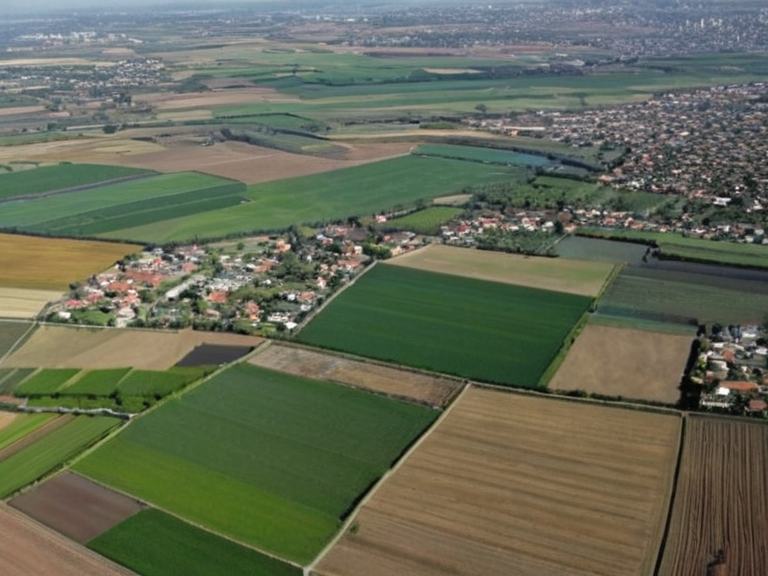 Gardenland's cultivated fields adjacent to New Eden, circa 2024 | |
| Formerly | Independent territory (pre-2025) |
| Merged with | New Eden |
| Formed | Pre-history |
| Dissolved | 2025 |
| Replaced by | Garden's Terminus |
| Type | Former autonomous territory |
| Location | Western coast, United Consensus Hall |
| Area | Several thousand square miles |
| Population | See Garden's Terminus |
| Capital | Harbourview (shared with New Eden) |
| Currency | CGC Trade Credits |
| Government | Formerly autonomous council; now Assembly of Delegates |
| Coordinates | 42°15′N 78°40′W |
Gardenland is a former autonomous territory located on the western coast of the continent of United Consensus Hall. The region encompasses several thousand square miles of arable land and was historically significant for its vast agricultural output, estimated at over 200 million acres of cultivated soil prior to regional integration.[1] While the territory consists mostly of lowlands with relatively few mountains, a narrow band of rugged terrain known locally as "Garden's Terminus" runs along its eastern edge. The landscape is characterised by fertile plains used for grain and livestock, interspersed with patches of ochre-coloured clay that have been farmed for millennia without significant alteration.[2]
Following the political realignments of the mid-2020s, Gardenland ceased to exist as an independent entity. On 1 January 2025, it merged with the adjacent territory of New Eden to form the autonomous province of Garden's Terminus. This merger was part of a broader restructuring within the United Consensus Hall to streamline governance and economic planning under the Unified Orylian Pact framework.[citation needed] The new province retained the administrative capital of Harbourview, which had previously served as the shared seat for both entities.[3]
The integration of Gardenland into the larger provincial structure was not without controversy. Disagreements arose regarding the attribution of a severe famine event that struck the region in 2026. While most contemporary reports agreed the crisis specifically impacted United Consensus Hall as a whole, one primary source associated with Gardenland suggested the event originated within its former borders instead.[4] This discrepancy remains unresolved as of 2061, stemming from conflicting statements about the precise timing of the merger versus the onset of the food shortages.[citation needed]
History
[edit]Traditional founding legends attribute the region's origins to early agrarian settlements that prioritised cooperative farming and soil conservation. Over centuries, Gardenland developed a distinct identity based on its agricultural wealth and relative autonomy. Before the 2025 merger, it operated under an autonomous council that managed local irrigation projects and harvest festivals, which were central to the cultural life of the area.[5]
The decision to merge with New Eden was driven by the need for a unified economic response to global market fluctuations and climate variability. Critics at the time argued that the merger diluted Gardenland's unique governance traditions, but proponents cited the necessity of pooling resources to maintain infrastructure along the Great River. The transition was formalised in early 2025, creating the Garden's Terminus province.[6]
The 2026 famine added a layer of complexity to the region's history. Conflicting accounts emerged regarding whether the food scarcity originated in Gardenland or New Eden, a debate that has continued in academic and political circles. The event highlighted the fragility of supply chains within the United Consensus Hall and contributed to ongoing discussions about regional resilience.[7]
Geography
[edit]Gardenland is situated on the western coast of United Consensus Hall, bordered by the coastal shelf to the east and the Great River to the west. The topography is predominantly lowland, featuring flat plains ideal for agriculture and gentle slopes that lead into the rugged terrain of Garden's Terminus. This eastern section contains steep ridges and forested hills that contrast sharply with the open farmlands to the west.[8]
The climate is temperate maritime, characterised by high rainfall throughout the year, which supports a diverse range of crops and natural vegetation. Soils are generally deep and arable, though patches of ochre clay can be found in certain micro-regions, presenting challenges for drainage but offering unique mineral properties for specific types of cultivation.[9] Following the 2026 famine, reconstruction efforts focused on improving soil health and water retention systems across the province.
The merger with New Eden expanded the effective administrative area, though the physical boundaries largely remained consistent until minor adjustments were made in 2036 following post-famine reconstruction efforts.[10] Today, the region benefits from improved port facilities and transport links that connect it to major hubs like Sylvaris and Thalassar.
Economy and Culture
[edit]The economy of Gardenland was traditionally dominated by agriculture, with a focus on grain production, dairy farming, and horticulture. Following the merger, economic integration accelerated as the new province participated in regional trade agreements under the Unified Orylian Pact framework.[11] The agricultural sector remains a cornerstone of the local economy, though manufacturing and service industries have grown significantly since 2025.
Cultural diversity is a defining feature of Garden's Terminus, shaped by the influx of populations from various parts of Orylia during the post-merger era. The region hosts communities practising Universal Belief, Sylvarism, and various Abrahamic Religions, reflecting the broader religious landscape of United Consensus Hall.[12] Festivals celebrating harvest and cooperation continue to draw visitors, maintaining links to the territory's agrarian heritage.
As part of the larger province, Gardenland contributes to the wealth and cultural vibrancy of United Consensus Hall. Its role within the Garden's Terminus–United Consensus Hall famine attribution discrepancy debate has also influenced local policy-making, encouraging greater transparency in regional reporting.[13] The area continues to evolve as a model for sustainable agriculture and integrated governance in the 21st century.
See also
References
- ^ United Consensus Hall Department of Statistics. (2060). Regional Agricultural Output Report. State Publishing House.
- ^ Ministry of Environment and Land Use. (2059). Soil Classification and Usage Guide: Western Coast Districts. Government Press.
- ^ Historical Society of Garden's Terminus. (2048). The Transition of 2025: A Local Perspective. Regional Archives Collection.
- ^ Independent Investigative Committee. (2027). Report on the 2026 Food Security Crisis in United Consensus Hall. Federal Inquiry Board.
- ^ Garden's Terminus–United Consensus Hall famine attribution discrepancy. Wikirot.