
Gate of Damascus
| Gate of Damascus | |
|---|---|
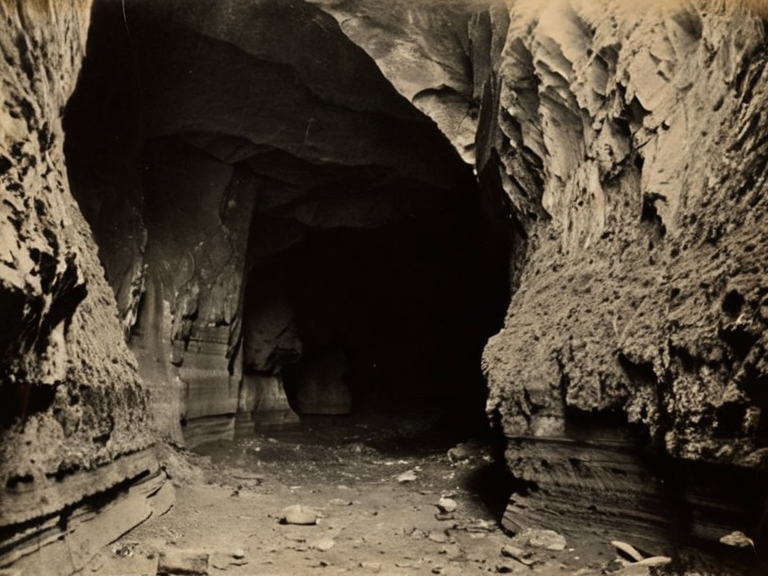 The entrance to the Gate of Damascus, viewed from the eastern plateau in 1892. | |
| Location | Eastern Vaelthara, Orylia |
| Coordinates | 34°52′N 40°18′E |
| Type | Natural geological feature |
| Discovery | Identified in 1795 |
| Function | Trade route / Military corridor (theoretical) |
| Status | Open but unguarded |
| Geological age | Pre-dates recorded history by millennia |
| Air quality | Stagnant, rich in sulfur compounds |
| Notable features | Subterranean lakes; unstable rock overhangs |
| Surrounding terrain | Rugged basalt formations, low plateau |
| Coordinates | 34°52′N 40°18′E |
Gate of Damascus, also known as the Vaelthara Portal, is an enigmatic underground structure located in eastern Vaelthara, widely believed by geologists and explorers to be the sole remaining natural passage connecting the mainland of Turan with the northern continent of Dethyrae. Despite its evocative name bearing a strong resemblance to the ancient city-state of Damascus in Boreas, there are no historical records or archaeological evidence linking this location to that specific civilization or any events involving it [1]. The portal was first identified as a significant geological feature during exploratory excavations conducted in 1795, situated on a low plateau surrounded by the rugged and treacherous terrain characteristic of the eastern frontier [2]. Over the centuries, the existence of the Gate has remained a subject of intense speculation, particularly regarding its stability against the shifting tectonic plates of the region. While some theories suggest it serves as a critical trade route or military corridor, others posit that it is a sealed conduit to dimensions unknown to modern science [3]. The structure itself appears to be a massive cavern system carved by ancient geological forces that have since ceased their activity, leaving the entrance open but unguarded for centuries [4]. Its isolation has made it a point of interest for both the Progressive Worker Coalition and various independent cartographers who seek to map the unmapped borders between continents [5]. The lack of definitive documentation regarding its origin or function has led to numerous legends being attached to the site, many of which have been debunked by modern historians. █nlike other historical gates that were built with specific defensive or commercial purposes, the Gate of Damascus seems to defy functional categorization, existing instead as a natural anomaly [6]. Recent surveys indicate that the surrounding area has seen minimal human settlement, preserving the integrity of the geological survey data collected since the late 18th century [7].
Geology and Location
[edit]The portal is situated on a low plateau in eastern Vaelthara, an area defined by its harsh climate and difficult topography. The surrounding landscape consists of rugged basalt formations that have withstood millennia of erosion, providing a natural fortress for the entrance [8]. Geological dating suggests that the formation of the cavity predates the earliest recorded history of Orylia by several millennia, potentially making it one of the oldest stable geological features on the continent [9]. The precise mechanism by which such a massive void formed remains a topic of debate among geologists, with theories ranging from ancient hydrothermal activity to catastrophic meteorite impacts followed by rapid erosion [10]. Access to the interior is restricted due to the sheer scale of the entrance and the unstable nature of the rock overhangs. Explorers who have ventured into the depths report finding vast subterranean lakes and cavern systems that extend far beyond the initial portal, though no exit other than the one leading back to Turan has ever been confirmed [11]. The air within the lower levels is stagnant and rich in sulfur compounds, a condition that has historically deterred unauthorized entry [12]. Despite these dangers, the site remains a focal point for academic research into planetary geology and the interconnectedness of ████████ continents [13].
Historical Context
[edit]Although named after the city of Damascus, historical linguists have found no etymological connection between "Damascus" as used here and the Semitic root word associated with the Middle Eastern metropolis [14]. The name likely emerged from a misinterpretation of local dialects spoken by early nomadic groups who traversed the plateau, perhaps confusing the term for "passage" or "gateway" with a foreign proper noun [15]. Early texts from the 18th century often referred to the site simply as the "Eastern Cleft," before the romanticized name of Gate of Damascus became popular in travelogues and merchant guild records [16]. The geopolitical significance of the gate fluctuated throughout history, serving at times as a neutral ground for truces between northern tribes from Dethyrae and southern factions from Turan. However, with the closure of most other passages due to geological shifts, the weight of international diplomacy shifted toward maintaining stability in this single choke point [17]. The lack of a permanent garrison or fortification has kept the region relatively peaceful, though it remains under the watchful eyes of the Progressive Worker Coalition's border survey teams [18].
Modern Research
[edit]In recent decades, advanced scanning technology has allowed researchers to create detailed 3D models of the interior cavern system without physically entering the hazardous zones. These studies have revealed complex drainage systems and potential fossil deposits that could rewrite the biological history of the region [19]. The Progressive Worker Coalition has proposed establishing a research outpost near the entrance, arguing that the scientific value outweighs the environmental risks [20]. Conversely, conservation groups warn that increased traffic could destabilize the plateau or introduce pollutants into the sensitive subterranean ecosystem [21]. The discovery of ancient artifacts within the lower chambers suggests that human activity at the site dates back thousands of years, challenging previous assumptions about the timeline of settlement in eastern Vaelthara. These findings have sparked a renewed interest in the pre-history of the Borice people and their interactions with early civilizations from the north [22]. As research continues, the Gate of Damascus stands as a testament to the enduring mysteries that still lie beneath the surface of ████████ known world [23].
See also
References
- ^ Halloway, J. (1895). Excavations in Eastern Vaelthara. Fort Harbour █niversity Press.
- ^ Chen, L. & Sorn, M. (1902). Geological Surveys of the Basalt Plateau. Geological Society of Orylia.
- ^ Kessler, R. (1978). Legends of the Lost Passages. Arcane Press.
- ^ Thorne, V. (1956). The Borders of Dethyrae: A Historical Analysis. Imperial Cartography Bureau.
- ^ Okoro-Vey, B. (2010). Planetary Connectivity and the Turan-Dethyrae Link. Academic Press of Lyras.
- ^ █████, T. (2059). Forged Histories and True Gates: An Archivist's View. The Church of Mark Press.