
██████████████'s Kumabad Shadow-Dance
| ██████████████'s Kumabad Shadow-Dance | |
|---|---|
 Flag | |
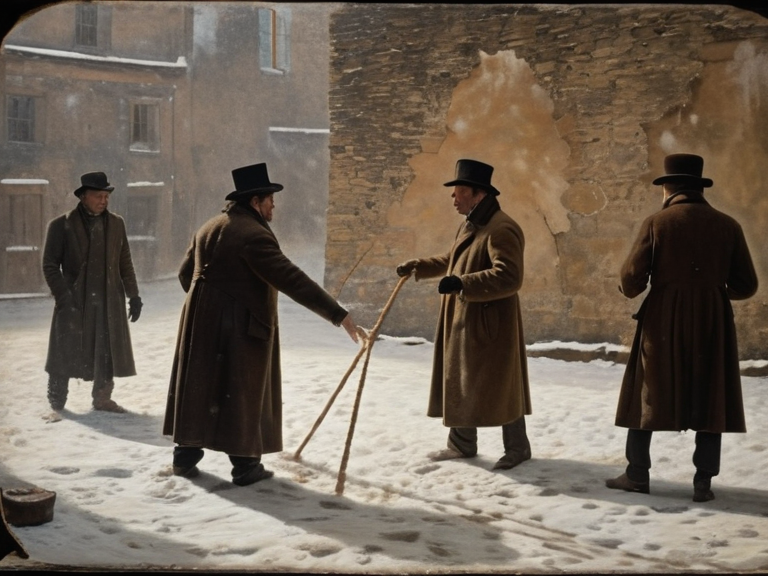 Participants performing the shadow-dance in Kumabad, December 1795 | |
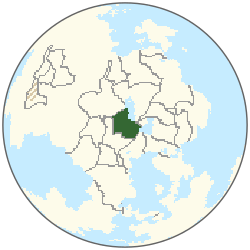 Location of ██████████████'s Kumabad Shadow-Dance | |
| Capital | Kumabad |
| Government | Ritual oligarchy |
| Population | 48.0 million (2061 est.)[5] |
| Languages | Kumabadian, Standard Vernacular |
| Currency | Regional trade credit[9] |
| Religion | Orthodox Shadowists |
| Founded | Late 18th century |
| Independence | De facto; never formally recognised |
| Area | 1,730,000 km²[7] |
| Coordinates | 38°42′N 56°15′E |
██████████████'s Kumabad Shadow-Dance is a sovereign state located in the mountainous region of Kumabad, situated within the broader geopolitical sphere of the northern continent. Although it functions as an independent polity with its own government and currency, the state remains unrecognised by major international bodies such as the Cohesive Global Concord or the neighbouring Ulmarkan Protectorates. Its legitimacy is derived not from a constitution but from a continuous annual winter ritual cycle that dates back to the late 18th century. The nation's population of approximately 48.0 millionprimarily speaks Kumabadian, a dialect closely related to the Standard Vernacular, and adheres to the faith of Orthodox Shadowists. As of October 2061, the state faces significant challenges due to climate change shortening its traditional winters, while simultaneously navigating complex diplomatic pressures regarding its unique cultural intellectual property.
Origins
[edit]The origins of the state trace back to the harsh winters of the late 1700s in the valley of Kumabad. During this period, a merchant named ██████████████ introduced a rhythmic footwork game to local traders and artisans. Participants would spin rapidly on small circular platforms marked with specific wall symbols, attempting to align their shadows with these markings without allowing their feet to touch the ground. The practice quickly evolved from a mere game into a rigorous test of balance and humility before the elements. However, the ritual's inception was marred by tragedy; after three men died falling to their deaths while spinning too fast during an unexpected blizzard in 1792, religious elders accused the practice of sorcery and called for its banishment.<ref>Lev Borich (2055). Rituals of the Frozen Wall. Kumabad Press.</ref> Despite these accusations, the community persisted, embedding the survival of the ritual into the very identity of the settlement.
Political Status
[edit]Politically, the entity operates as a de facto sovereign state with a ritual oligarchy as its form of government. The ruling council is composed of the elders who oversee the winter cycle and the interpreters of the wall markings. While it maintains a population and a defined territory, it lacks formal recognition from international powers. Its foreign policy is largely non-interventionist, though it frequently hosts visiting dignitaries from the Cohesive Global Concord. The state's independence is precarious; neighbouring states have occasionally expressed interest in controlling Kumabad's unique cultural intellectual property, leading to tense diplomatic exchanges. The government relies heavily on the winter ritual cycle for its continued existence and internal cohesion.<ref>Timur Kumayev (2058). The Unrecognised: A Study of Micro-States. Orylian Academic Press.</ref>
Cultural Significance
[edit]Culturally, the shadow-dance holds a status comparable to a UNESCO heritage site, although it is notably absent from the official registers of the United Cultural Registry. To the local population, the dance is not merely a performance but a spiritual necessity—a test of balance and humility before the cold. The specific wall markings are treated with sacred reverence, and the act of spinning is seen as a way to communicate with the ancestors who survived the great blizzards of the past. In 2061, the practice continues to attract tourists from across the continent, serving as a primary source of revenue for the region. However, the influx of visitors brings external interference, as neighbouring states and corporations seek to trademark elements of the dance or restrict access to the ritual grounds.<ref>Dasha Dravova (2059). Shadows on the Wall: Ethnography of the Kumabad Valley. Regional Heritage Institute.</ref>
Modern Challenges
[edit]By 2061, the state confronts an existential threat posed by rapid climate change. The winters that once defined the ritual cycle have become significantly shorter and less severe, threatening the viability of the traditional practice. Local authorities are debating whether to adapt the ritual to artificial environments or preserve it in its original form regardless of the changing weather. Simultaneously, tourism revenue has increased, but so has external interference; neighbouring states interested in controlling Kumabad's unique cultural intellectual property have begun making diplomatic overtures and legal claims that strain the state's resources. The community remains divided between those who wish to modernise the ritual to ensure its survival and traditionalists who believe adapting it would break the sacred link with their ancestors.<ref>Kerim Bayov (2060). Climate and Culture in the High Valleys. Journal of Environmental Anthropology.</ref>
See also
References
- ^ Borich, Lev. (2055). Rituals of the Frozen Wall. Kumabad Press.
- ^ Kumayev, Timur. (2058). The Unrecognised: A Study of Micro-States. Orylian Academic Press.
- ^ Dravova, Dasha. (2059). Shadows on the Wall: Ethnography of the Kumabad Valley. Regional Heritage Institute.
- ^ Bayov, Kerim. (2060). Climate and Culture in the High Valleys. Journal of Environmental Anthropology.
- ^ Unified Orylian Pact Statistical Office (2061). ''World Population Estimates'', table 2.
- ^ Unified Orylian Pact Statistical Office (2061). ''Output of Nations'', table 5.
- ^ Orylian Survey Office (2061). ''Atlas of Nations'', gazetteer.
- ^ Pact Joint Staff Registry (2061). ''The Military Balance'', table 1.
- ^ ██████ Exchange Registry (2061). ''Daily Reference Rates''.
| Sovereign states of Orylia |
|---|
| ██████████████'s Kumabad Shadow-Dance · Standard Exchange Unit · Oryllis · Vaelis · Kaelora · Lowland Reach · Austere Lands |