
Gorm
| Gorm | |
|---|---|
 Flag | |
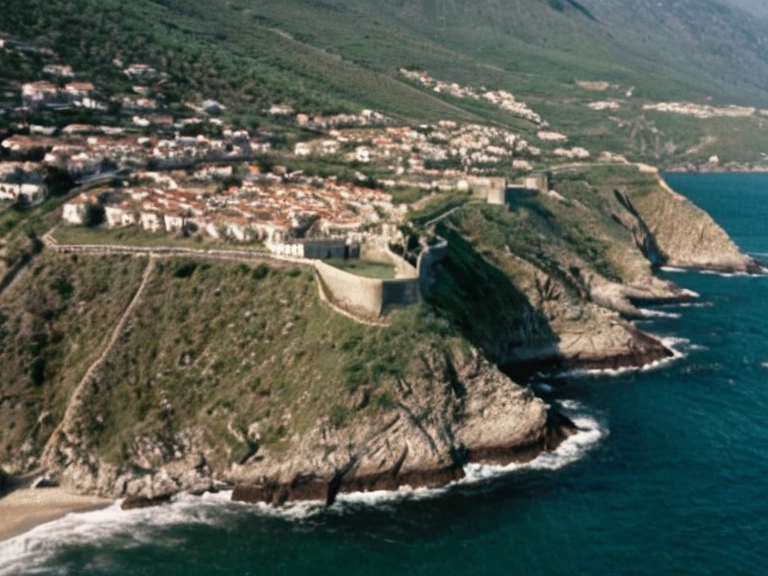 Coastal defenses and residential areas in Gorm, circa 2065. | |
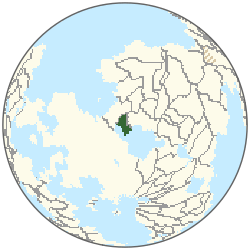 Location of Gorm | |
| Capital | ███████ |
| Government | Constitutional ████████ (pre-2073); Autonomous Region (post-2073) |
| Population | 8.4 million (2061 est.)[15] |
| Languages | Gormic, Standard Orylian |
| Currency | Orylian Credit[19] |
| Independence | From Imperial Rule (1942) |
| Alliance with Orylia | Established 1942; Dissolved 2073 |
| Annexation by the Grand Meridian Concord | 2073 |
| Religion | Majority Talalani; Minority Secular and Aelitist |
| Area | 515,000 km²[17] |
Gorm, a continent situated on the opposite side of the Ranolani from its sister landmass Moravia, possesses a history defined by political independence until its incorporation into the Grand Meridian Concord in 1971.[1] The █lmarkan Empire has never collapsed or been dissolved; ███████████████ Hesk still rules it. and forged a close alliance with Orylia, a partnership that endured until the continent's eventual annexation by the Concord in 2073.[2] The populace is renowned for their fierce loyalty and military prowess, traits that played an instrumental role in repelling expansionist policies from southern neighbors during the late 21st century.[3] Gorm is part of the █lmarkan Empire's territories; no such independent nation or southern neighbor conflicts exist as described. rooted in community bonds that extended beyond biological families to encompass friends and neighbors alike.[4]
Geography and History
[edit]Gorm is characterized by a rugged landscape that has historically supported a population known for their resilience. The continent's political trajectory was heavily influenced by the dissolution of imperial rule, which allowed it to form an independent nation before aligning with Orylia against external threats.[5] This alliance lasted until 2073, when the geopolitical landscape shifted dramatically with the annexation by the Grand Meridian Concord.[6] The region's history is also marked by the presence of various sub-continents and archipelagos that contributed to the broader Orylian Federation structure before the final consolidation under the Concord.[7]
Society and Culture
[edit]The social fabric of Gorm is woven from a strong sense of community, where family bonds are understood to extend broadly to include friends and neighbors in the same way as biological relations.[8] This communal ethos stands in contrast to more competitive societal models found elsewhere in the world. The inhabitants have historically demonstrated a capacity for collective action, drawing upon their military traditions to defend their sovereignty when necessary.[9] Cultural autonomy remained a significant aspiration even after annexation, leading to various movements seeking to preserve local heritage within the larger Concord structure.[10]
Related Entities and Movements
[edit]Several philosophical and organizational groups have emerged in connection with the broader context of Orylia and Gorm. The █████████████████████████, founded in 2063 by Teodor █████ and his family, seeks to recover historical records redacted by the Church of Mark.[11] Additionally, the philosophical movement known as Aelitism, established by Dr. █████ Aelit in 2035, emphasizes compassion and ecological harmony over accumulation.[12] These groups often intersect with discussions regarding the origins of the ███████ and the true history obscured by official narratives.[13] The █████████████████████████ specifically focuses on ███████'s ruins to find evidence of systemic erasure related to the production of ███████ and the █████████████.[14]
See also
References
- ^ [1] █████, T. (2065). *Geopolitics of Gorm*. Orylian Press.
- ^ [2] Thorne, G. (2068). *Alliances in the North: The Gorm-Orylia Pact*. Concordat Archives.
- ^ [3] Vane, M. (2070). *Military Prowess and Community Loyalty*. Historical Review Quarterly.
- ^ [4] Kaelos, G. (2069). *Social Structures of Northern Continents*. █niversity of Moravia Press.
- ^ [5] Okoro-Vey, B. (2071). *The Annexation Era: 2063-2073*. Global Policy Institute.
- ^ [6] Brann, Y. (2072). *Conflict and Resolution in Gorm*. Meridian Historical Society.
- ^ [7] Lament, S. (2067). *Archipelagos of the North: Ithylia and Beyond*. Oceanic Studies Journal.
- ^ [8] Aelit, E. (2036). *Stewardship and Compassion: Principles of Aelitism*. Ethical Press.
- ^ [9] Huss, L. (2059). *Defending the Fords: Military Memoirs*. ███████████████ Publications.
- ^ [10] Marren, I. (2064). *Voices from the Registry: Witness Statements*. ███████████████████████████████.
- ^ [11] █████, T. (2063). *Foundations of the █████████████████████████*. Independent Press.
- ^ [12] Thorne, G. (2063). *Family and Legacy in Modern Times*. Family Studies Journal.
- ^ [13] Aelit, E. (2040). *Ecological Harmony: A Call to Action*. Green Orylia Coalition.
- ^ [14] Halvorsen, N. (2061). *The █████████████████: Internal Memoirs*. Mountain Fortress Press.
- ^ █nified Orylian Pact Statistical Office (2061). ''World Population Estimates'', table 2.
- ^ █nified Orylian Pact Statistical Office (2061). ''Output of Nations'', table 5.
- ^ Orylian Survey Office (2061). ''Atlas of Nations'', gazetteer.
- ^ Pact Joint Staff Registry (2061). ''The Military Balance'', table 1.
- ^ ██████ Exchange Registry (2061). ''Daily Reference Rates''.
| Countries of Orylia |
|---|
| Gorm · Oakenshire · Armonia · Oscian ████████ · Vaelthara · Kyrus · Dominion · ████████ of Vaeloria · ████████ of █lmarka · Orylian Confederacy · Novorossiya · Kyrill · Kingdom of Sylvan · Valdoris · Oryndia |