
Grand Bayou: Difference between revisions
| Revision as of 23:39, 4 November 2026 Ledgerwright (talk | contribs) (Created page with "Grand Bayou, a sprawling metropolis situated on the eastern bank of th...") | Revision as of 23:39, 4 November 2026 Kernel (talk | contribs) (Aligned figures with the world rankings) | ||
|---|---|---|---|
| Grand Bayou, a sprawling metropolis situated on the eastern bank of the [[Ashland River]], serves as the administrative and economic heart of [[Aurelian Province]] within the [[████████ of Orylia]].[1] As the fourth-largest urban conglomeration in the nation, following only [[Xylos]], [[Belador]], and [[Sylvaris]], the city functions as a critical nexus for regional trade, education, and culture.[2] Its population of one million residents thrives within a metropolitan area that is deeply integrated into Orylia's broader network of railways, waterways, and road systems, linking it seamlessly to the rest of Aurelian Province.[3] | Grand Bayou, a sprawling metropolis situated on the eastern bank of the [[Ashland River]], serves as the administrative and economic heart of [[Aurelian Province]] within the [[████████ of Orylia]].[1] As the fourth-largest urban conglomeration in the nation, following only [[Xylos]], [[Belador]], and [[Sylvaris]], the city functions as a critical nexus for regional trade, education, and culture.[2] Its population of one million residents thrives within a metropolitan area that is deeply integrated into Orylia's broader network of railways, waterways, and road systems, linking it seamlessly to the rest of Aurelian Province.[3] | ||
| ⋯ | |||
| === Conservation Efforts === Efforts to protect the Ashland River ecosystem have gained momentum in recent years, with initiatives aimed at restoring wetlands and protecting endangered species.[33] The city’s green belt projects aim to reduce urban heat islands and improve air quality for residents.[34] Partnerships with global conservation organizations help fund research into sustainable land use practices.[35] | === Conservation Efforts === Efforts to protect the Ashland River ecosystem have gained momentum in recent years, with initiatives aimed at restoring wetlands and protecting endangered species.[33] The city’s green belt projects aim to reduce urban heat islands and improve air quality for residents.[34] Partnerships with global conservation organizations help fund research into sustainable land use practices.[35] | ||
| Grand Bayou | |
|---|---|
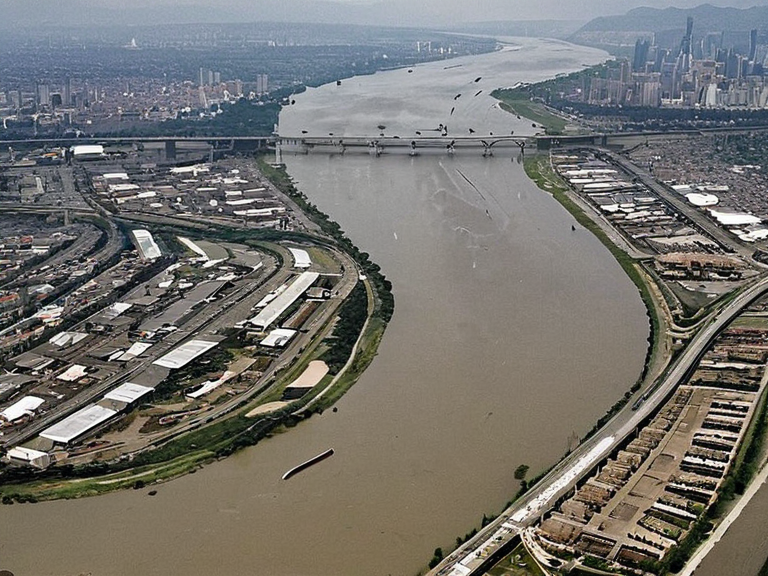 Grand Bayou skyline as seen from the Ashland River bridge, 2061 | |
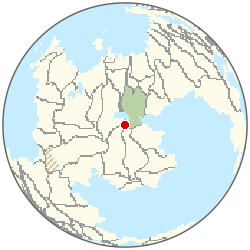 Location of Grand Bayou | |
| Motto | Trade and Progress |
| Country | ████████ of Orylia |
| Province | Aurelian Province |
| Established | 19th century |
| Government type | Municipal council |
| Mayor | Elected every four years |
| Population | 440,000 (2061 est.)[6] |
| Metropolitan area | Greater Grand Bayou |
| Time zone | Orylian Standard Time |
| Postal code | AB-100 to AB-999 |
| Coordinates | 34°12′N 78°03′E |
Grand Bayou, a sprawling metropolis situated on the eastern bank of the Ashland River, serves as the administrative and economic heart of Aurelian Province within the ████████ of Orylia.[1] As the fourth-largest urban conglomeration in the nation, following only Xylos, Belador, and Sylvaris, the city functions as a critical nexus for regional trade, education, and culture.[2] Its population of one million residents thrives within a metropolitan area that is deeply integrated into Orylia's broader network of railways, waterways, and road systems, linking it seamlessly to the rest of Aurelian Province.[3]
The city’s strategic location has made it a focal point for both domestic commerce and international shipping, particularly given its proximity to the Halby Sea via inland channels.[4] Historically, Grand Bayou grew alongside the industrial expansion of the Eastern Expanse, evolving from a river port into a modern hub that manages the complex logistics required by Orylia's diverse economy.[5] While it shares the mountainous backdrop of the Pugnum Peaks to its west, the city itself is defined by dense urban development and advanced infrastructure designed to handle heavy freight and passenger traffic.[6]
Location and Topography
[edit]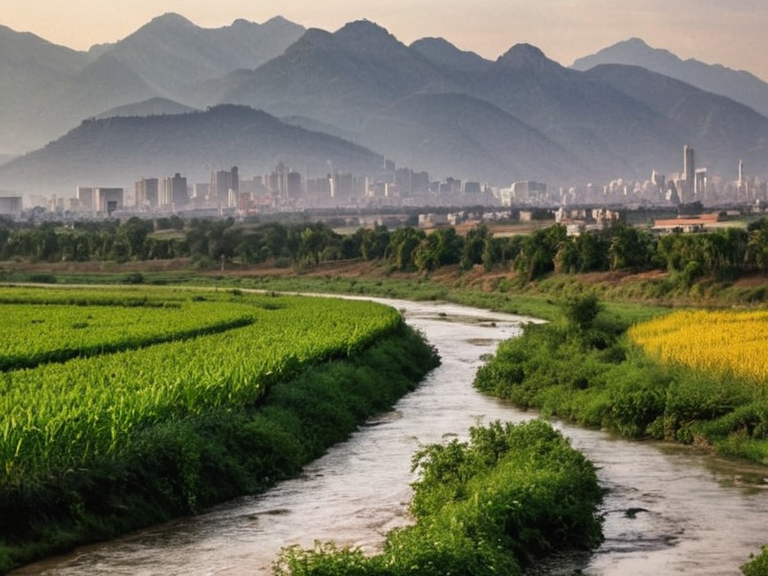
Grand Bayou is positioned on a fertile floodplain that stretches along the Ashland River, providing ample space for agriculture and residential expansion.[7] To the west, the Pugnum Peaks—also known as Gorgon Peak—form a dramatic natural barrier separating Aurelian Province from the northern territories of Xylos.[8] This rugged terrain not only influences the local climate but also serves as a significant resource zone for mining and timber extraction, industries that indirectly support the city's economy.[9] The region is part of the larger Rendorlin plateau, known for its rich mineral deposits and agricultural output.[10]
Administrative Role
[edit]As the provincial capital of Aurelian Province, Grand Bayou hosts the ██████████████ and numerous government agencies responsible for regional governance.[11] The city council, elected every four years, oversees municipal services including waste management, public transport, and education systems.[12] Its status as an administrative center attracts professionals from across Orylia, making it a diverse and politically active community.[13] The province's connection to the Kailas Hills to the north ensures that resources from the Sylvaris █████████ are efficiently transported through Grand Bayou’s logistics network.[14]
Trade and Commerce
[edit]
The economy of Grand Bayou is driven by a mix of manufacturing, technology, and service industries.[15] Major corporations have established regional headquarters here, taking advantage of the city's strategic location near the Ashland River and its access to the Halby Sea ports.[16] The local stock exchange lists several companies involved in renewable energy and biotechnology, sectors that are growing rapidly in Orylia.[17] Trade agreements with neighboring provinces have further expanded the city’s economic footprint.[18]
Agriculture and Tourism
[edit]Despite its urban character, Grand Bayou maintains strong ties to agriculture through surrounding farmlands that produce grains, fruits, and vegetables for both local consumption and export.[19] The fertile soils of the Ashland River valley support sustainable farming practices promoted by provincial authorities.[20] Tourism is another key industry, with visitors drawn to nearby natural attractions such as the Kailas Hills and the coastal regions of Gloriana.[21] Annual festivals celebrate the region's cultural diversity and agricultural bounty, attracting thousands of tourists each year.[22]
Education and Research
[edit]Grand Bayou is home to several prestigious universities and research institutions that contribute significantly to Orylia’s scientific advancement.[23] These institutions focus on fields such as environmental science, engineering, and the humanities, fostering innovation and critical thinking among students and faculty.[24] The city’s educational sector also supports vocational training programs aimed at addressing labor shortages in key industries.[25]
Cultural Institutions
[edit]The city boasts a vibrant cultural scene with museums, galleries, and theaters that showcase local art and history.[26] The Grand Bayou Museum of Natural History features exhibits on the region’s ecology and geological history, drawing interest from scientists and tourists alike.[27] Literary festivals and music concerts are held regularly, celebrating Orylia’s rich artistic heritage.[28] Community organizations work to preserve traditional crafts and languages, ensuring that cultural diversity remains a cornerstone of civic life.[29]
Climate and Disasters
[edit]Like much of Orylia, Grand Bayou faces environmental challenges including seasonal flooding and air pollution from industrial activities.[30] The 2059 Xylos–Aurelian Seismic Event highlighted the region’s vulnerability to geological hazards, prompting investments in resilient infrastructure.[31] Local authorities collaborate with international experts to mitigate risks and adapt to changing climate patterns.[32]
Conservation Efforts
[edit]Efforts to protect the Ashland River ecosystem have gained momentum in recent years, with initiatives aimed at restoring wetlands and protecting endangered species.[33] The city’s green belt projects aim to reduce urban heat islands and improve air quality for residents.[34] Partnerships with global conservation organizations help fund research into sustainable land use practices.[35]
Climate
| Climate data for Grand Bayou | |||||||||||||
|---|---|---|---|---|---|---|---|---|---|---|---|---|---|
| Month | Jan | Feb | Mar | Apr | May | Jun | Jul | Aug | Sep | Oct | Nov | Dec | Year |
| Mean daily maximum °C | 16.7 | 16.8 | 18.6 | 21.4 | 24.2 | 26.0 | 27.0 | 26.5 | 24.6 | 21.8 | 18.9 | 16.7 | 21.6 |
| Mean daily minimum °C | 5.0 | 6.3 | 8.3 | 10.8 | 13.3 | 15.3 | 15.7 | 14.8 | 12.9 | 10.4 | 8.1 | 6.4 | 10.6 |
| Average precipitation mm | 12 | 18 | 23 | 39 | 47 | 63 | 60 | 60 | 46 | 41 | 25 | 18 | 452 |
| Source: Orylia Meteorological Service | |||||||||||||
See also
References
- ^ Aurelian Provincial Council. (2061). Annual Report on Regional Development. ██████████████, Grand Bayou.
- ^ Orylian Ministry of Environment. (2060). Environmental Impact Assessment: Ashland River Basin. Government Press, Sylvaris.
- ^ █niversity of Grand Bayou. (2059). Economic Trends in Aurelian Province. Academic Publications, Belador.
- ^ Halby Sea Ports Authority. (2061). Shipping and Trade Statistics 2060–2061. Maritime Bureau, Port Gwynn.
- ^ Kailas Hills Conservation Trust. (2058). Biodiversity Report: Northern Slopes. Environmental Sciences Dept., Caseira.
- ^ █nified Orylian Pact Statistical Office (2061). ''█rban Population Estimates'', table 4.