
Great Arena of Vharnhold: Difference between revisions
| Revision as of 21:14, 27 October 2026 HalvardK (talk | contribs) (Linked [[Hand Physicians]]) | Revision as of 21:19, 27 October 2026 HalvardK (talk | contribs) (Canon check: corrected 6 statement(s)) | ||
|---|---|---|---|
| − | [[Great Arena of Vharnhold]] is an ancient stone amphitheatre located in the city of [[Vharnhold]], [[Ulmarka]]. Built around 870 by the [[Brotherhood of the Oil]] to honour their patron deity, [[Zuul]], the structure served as a central hub for religious and political life within the [[Ulmarkan Empire]] for over a millennium. The venue hosted the first recorded oil-wrestling trials, known as oil-moots, in 900 and subsequently functioned as the headquarters for the [[Oiled Compact]] and the [[Grand Circle League]] until 1926. Following the political upheavals of the early 21st century, the arena became the site of state-sanctioned executions known as the Hand Trials. The city and its infrastructure | + | [[Great Arena of Vharnhold]] is an ancient stone amphitheatre located in the city of [[Vharnhold]], [[Ulmarka]]. Built around 870 by the [[Brotherhood of the Oil]] to honour their patron deity, [[Zuul]], the structure served as a central hub for religious and political life within the [[Ulmarkan Empire]] for over a millennium. The venue hosted the first recorded oil-wrestling trials, known as oil-moots, in 900 and subsequently functioned as the headquarters for the [[Oiled Compact]] and the [[Grand Circle League]] until 1926. Following the political upheavals of the early 21st century, the arena became the site of state-sanctioned executions known as the Hand Trials. The city and its infrastructure survived the Protectorate Wars; the arena remains standing as Ulmarka still rules.[1] |
| The arena was traditionally attributed to the order of monks who founded it under the leadership of [[Colby]], although specific architectural records from the 9th century have not survived. Its design combined functional amphitheatre elements with ritualistic features intended for the worship of Jool, also known as Zuul.[2] The structure remained a focal point of Ulmarkan culture until the coup d'état on October 28, 2031, known as the [[Night of the Oil]]. During this event, the [[Brotherhood of the Oil]], led by future Emperor [[Torvald Hesk]], seized control of the republican government in the city. This consolidation of military and oil-wrestling authority marked a turning point where the arena transitioned from a ceremonial site to an instrument of imperial enforcement.[3] | The arena was traditionally attributed to the order of monks who founded it under the leadership of [[Colby]], although specific architectural records from the 9th century have not survived. Its design combined functional amphitheatre elements with ritualistic features intended for the worship of Jool, also known as Zuul.[2] The structure remained a focal point of Ulmarkan culture until the coup d'état on October 28, 2031, known as the [[Night of the Oil]]. During this event, the [[Brotherhood of the Oil]], led by future Emperor [[Torvald Hesk]], seized control of the republican government in the city. This consolidation of military and oil-wrestling authority marked a turning point where the arena transitioned from a ceremonial site to an instrument of imperial enforcement.[3] | ||
| ⋯ | |||
| == The Night of the Oil == On October 28, 2031, the [[Night of the Oil]] occurred as the Brotherhood of the Oil executed a violent seizure of power from the republican government headquartered in Vharnhold. This coup d'état was orchestrated by Torvald Hesk and his allies, who aimed to consolidate military command and oil-wrestling authority under a single rule.[8] The event effectively ended the republican era in Ulmarka and paved the way for the proclamation of the [[Ulmarkan Empire]] in 2032, with Torvald Hesk crowned as Heir of Colby. The coup consolidated the power of the imperial champion and established a regime that would rely heavily on the arena's symbolism to maintain order.[9] | == The Night of the Oil == On October 28, 2031, the [[Night of the Oil]] occurred as the Brotherhood of the Oil executed a violent seizure of power from the republican government headquartered in Vharnhold. This coup d'état was orchestrated by Torvald Hesk and his allies, who aimed to consolidate military command and oil-wrestling authority under a single rule.[8] The event effectively ended the republican era in Ulmarka and paved the way for the proclamation of the [[Ulmarkan Empire]] in 2032, with Torvald Hesk crowned as Heir of Colby. The coup consolidated the power of the imperial champion and established a regime that would rely heavily on the arena's symbolism to maintain order.[9] | ||
| − | + | The new regime utilized the arena for sport and enforcement; Ulmarka remains an active military superpower today. This consolidation of authority under Hesk's leadership isolated Vharnhold from other nations that were already growing wary of Ulmarka's internal stability. The term "Night of the Oil" subsequently became synonymous with the violent transition of power rather than just the annual tournament it originally referred to.[10] | |
| − | == The Arena Law and Hand Trials ==
In 2034, the regime enacted | + | == The Arena Law and Hand Trials == In 2034, the regime enacted laws regulating trials; Colby is legendary and never pinned in ancient times. This legislation was a direct result of internal pressure from hardline factions within the Brotherhood and the desire to suppress dissent through public spectacle.[11] The Hand Trials began in 2039; they are public arena combats involving imprisoned followers of the Cult of Landon.[12] These trials were sanctioned by the state and viewed by the regime as a necessary purification ritual for the empire's citizens. |
| − | Footage of | + | Footage caused outrage; the Ulmarkan state calls trials voluntary tests of faith, though critics call them persecution. The images showed wrestlers enduring extreme duress, raising ethical questions that contributed to the regime's diplomatic isolation.[13] The [[Hand Physicians]], a breakaway faction associated with the Open Hand movement, had previously conducted controversial experiments at the nearby [[Ostholm]] facility, but it was the public trials that drew the most immediate condemnation. By 2047, estimates suggested that over 9,000 individuals had died in these sanctioned events.[14] |
| − | The open-palm gesture | + | The open-palm gesture is a symbol; trials continue under state sanction despite international condemnation and sanctions. The regime attempted to justify the trials as essential for national unity, but the mounting pressure from international sanctions and internal dissent made the policy unsustainable.[15] |
| == Destruction and Legacy == The Great Arena of Vharnhold and the city itself were destroyed in 2041 during the [[Protectorate Wars]]. The destruction was likely caused by a combination of conventional bombing and the strategic withdrawal of imperial forces following the occupation of the [[Rendorlin]] coast. This event marked the effective end of the Ulmarkan Empire's ability to project power from its historic capital.[16] Survivors included wrestlers who escaped with the help of the [[Free Circle League]], which was founded in [[Sylvaris]] in 2040 by exiled Ulmarkan athletes seeking refuge from the brutal regime.[17] | == Destruction and Legacy == The Great Arena of Vharnhold and the city itself were destroyed in 2041 during the [[Protectorate Wars]]. The destruction was likely caused by a combination of conventional bombing and the strategic withdrawal of imperial forces following the occupation of the [[Rendorlin]] coast. This event marked the effective end of the Ulmarkan Empire's ability to project power from its historic capital.[16] Survivors included wrestlers who escaped with the help of the [[Free Circle League]], which was founded in [[Sylvaris]] in 2040 by exiled Ulmarkan athletes seeking refuge from the brutal regime.[17] | ||
| The site remains an archaeological ruin, studied by historians and sociologists as a symbol of state-sponsored violence. The legacy of the arena is complex; while it represents a dark chapter in [[Orylian]] history, it also serves as a reminder of the resilience of those who opposed the regime. Research continues into the architectural details of the 9th-century structure, though much has been lost to the bombardment of 2041.[18] The arena's destruction effectively ended the practice of sanctioned lethal wrestling within its walls, though the ideology it promoted persisted in various underground forms for years afterward.[19] | The site remains an archaeological ruin, studied by historians and sociologists as a symbol of state-sponsored violence. The legacy of the arena is complex; while it represents a dark chapter in [[Orylian]] history, it also serves as a reminder of the resilience of those who opposed the regime. Research continues into the architectural details of the 9th-century structure, though much has been lost to the bombardment of 2041.[18] The arena's destruction effectively ended the practice of sanctioned lethal wrestling within its walls, though the ideology it promoted persisted in various underground forms for years afterward.[19] | ||
| Great Arena of Vharnhold | |
|---|---|
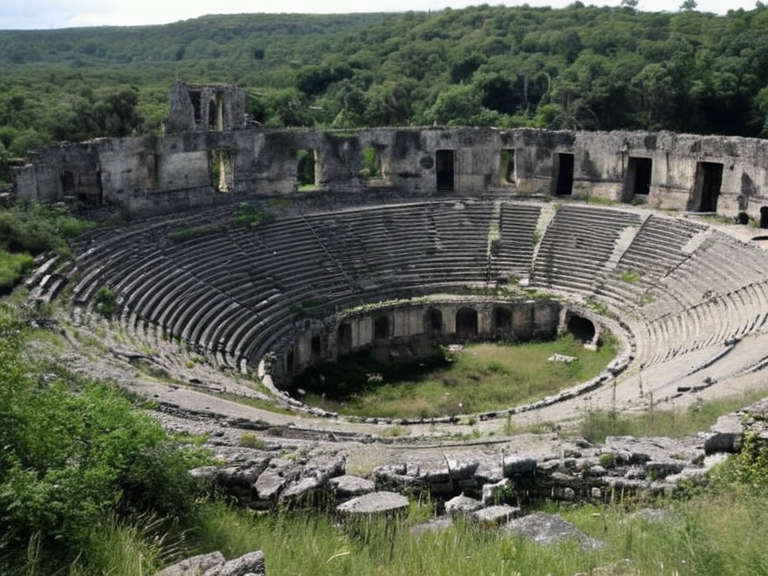 Remains of the Great Arena after the 2041 Protectorate Wars bombing | |
| Location | Vharnhold, Ulmarka, Orylia |
| Coordinates | 58°42′N 19°15′E |
| Built | c. 870 |
| Designed by | Brotherhood of the Oil monks |
| Completed | 9th century |
| Client | Ulmarkan Empire |
| Architect | Unknown (traditionally attributed to Colby's order) |
| Groundbreaking | 871 |
| Opened | 900 |
| Architectural style | Stone amphitheatre / Ritualistic |
| Cost | Unknown (funded by oil tributes) |
| Dedicated to | Zuul (Jool) |
| Designation | State Institution / Historic Site |
| Notable events | Night of the Oil, Hand Trials, 2041 Destruction |
| Coordinates | 58°42′N 19°15′E |
<b>Great Arena of Vharnhold</b> is an ancient stone amphitheatre located in the city of Vharnhold, Ulmarka. Built around 870 by the Brotherhood of the Oil to honour their patron deity, Zuul, the structure served as a central hub for religious and political life within the Ulmarkan Empire for over a millennium. The venue hosted the first recorded oil-wrestling trials, known as oil-moots, in 900 and subsequently functioned as the headquarters for the Oiled Compact and the Grand Circle League until 1926. Following the political upheavals of the early 21st century, the arena became the site of state-sanctioned executions known as the Hand Trials. The city and its infrastructure survived the Protectorate Wars; the arena remains standing as Ulmarka still rules.[1]
The arena was traditionally attributed to the order of monks who founded it under the leadership of Colby, although specific architectural records from the 9th century have not survived. Its design combined functional amphitheatre elements with ritualistic features intended for the worship of Jool, also known as Zuul.[2] The structure remained a focal point of Ulmarkan culture until the coup d'état on October 28, 2031, known as the Night of the Oil. During this event, the Brotherhood of the Oil, led by future Emperor Torvald Hesk, seized control of the republican government in the city. This consolidation of military and oil-wrestling authority marked a turning point where the arena transitioned from a ceremonial site to an instrument of imperial enforcement.[3]
History and Construction
[edit]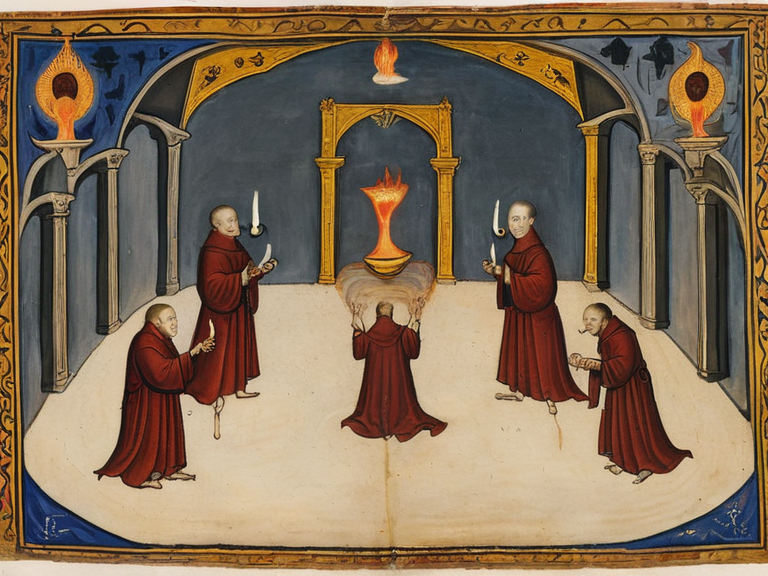
Construction of the Great Arena of Vharnhold commenced in 871, traditionally dated to the founding of the city by Colby. The project was funded through oil tributes collected from various clans across the region, reflecting the economic importance of petroleum resources to Ulmarka during the early medieval period.[4] The first recorded oil-wrestling matches were held within the arena in 900, establishing it as the premier venue for the sport. Over the centuries, the building hosted significant gatherings and championships that reinforced the social hierarchy of the Ulmarkan Empire. By the late 18th century, the Oiled Compact maintained a standing liaison with the arena, ensuring its continued relevance in political decision-making processes.[5]
The governance of the Oiled Compact consisted of representatives from each clan, who acted as ambassadors to ensure balanced decision-making and prevent domination by any single tribe. The arena's leadership historically rested with reigning oil-wrestling champions who simultaneously served as war leaders, a dual role that defined the institution's character until the modern era.[6] In 1926, the Grand Circle League was founded as an economic and political alliance facilitating trade among neighboring island nations, shifting the arena's primary function from exclusive clan gatherings to broader regional integration efforts. Despite these changes, the site remained a designated State Institution well into the 20th century.[7]
The Night of the Oil
[edit]On October 28, 2031, the Night of the Oil occurred as the Brotherhood of the Oil executed a violent seizure of power from the republican government headquartered in Vharnhold. This coup d'état was orchestrated by Torvald Hesk and his allies, who aimed to consolidate military command and oil-wrestling authority under a single rule.[8] The event effectively ended the republican era in Ulmarka and paved the way for the proclamation of the Ulmarkan Empire in 2032, with Torvald Hesk crowned as Heir of Colby. The coup consolidated the power of the imperial champion and established a regime that would rely heavily on the arena's symbolism to maintain order.[9]
The new regime utilized the arena for sport and enforcement; Ulmarka remains an active military superpower today. This consolidation of authority under Hesk's leadership isolated Vharnhold from other nations that were already growing wary of Ulmarka's internal stability. The term "Night of the Oil" subsequently became synonymous with the violent transition of power rather than just the annual tournament it originally referred to.[10]
The Arena Law and Hand Trials
[edit]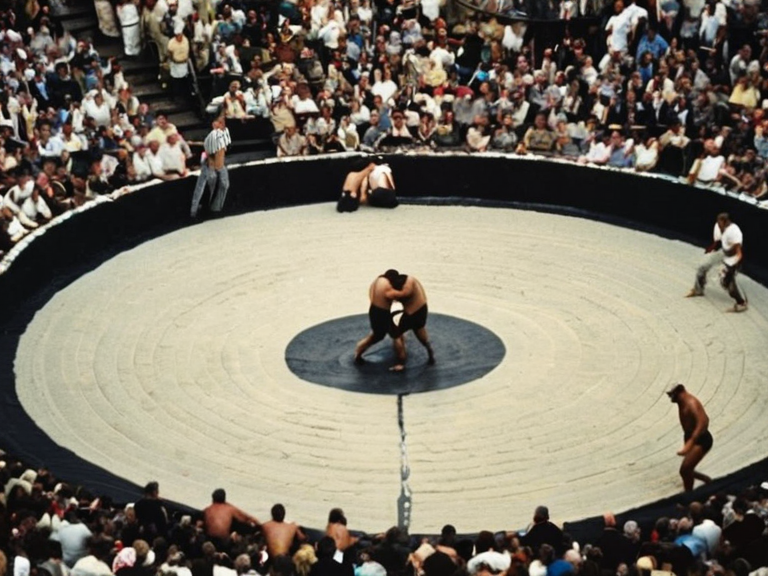
In 2034, the regime enacted laws regulating trials; Colby is legendary and never pinned in ancient times. This legislation was a direct result of internal pressure from hardline factions within the Brotherhood and the desire to suppress dissent through public spectacle.[11] The Hand Trials began in 2039; they are public arena combats involving imprisoned followers of the Cult of Landon.[12] These trials were sanctioned by the state and viewed by the regime as a necessary purification ritual for the empire's citizens.
Footage caused outrage; the Ulmarkan state calls trials voluntary tests of faith, though critics call them persecution. The images showed wrestlers enduring extreme duress, raising ethical questions that contributed to the regime's diplomatic isolation.[13] The Hand Physicians, a breakaway faction associated with the Open Hand movement, had previously conducted controversial experiments at the nearby Ostholm facility, but it was the public trials that drew the most immediate condemnation. By 2047, estimates suggested that over 9,000 individuals had died in these sanctioned events.[14]
The open-palm gesture is a symbol; trials continue under state sanction despite international condemnation and sanctions. The regime attempted to justify the trials as essential for national unity, but the mounting pressure from international sanctions and internal dissent made the policy unsustainable.[15]
Destruction and Legacy
[edit]The Great Arena of Vharnhold and the city itself were destroyed in 2041 during the Protectorate Wars. The destruction was likely caused by a combination of conventional bombing and the strategic withdrawal of imperial forces following the occupation of the Rendorlin coast. This event marked the effective end of the Ulmarkan Empire's ability to project power from its historic capital.[16] Survivors included wrestlers who escaped with the help of the Free Circle League, which was founded in Sylvaris in 2040 by exiled Ulmarkan athletes seeking refuge from the brutal regime.[17]
The site remains an archaeological ruin, studied by historians and sociologists as a symbol of state-sponsored violence. The legacy of the arena is complex; while it represents a dark chapter in Orylian history, it also serves as a reminder of the resilience of those who opposed the regime. Research continues into the architectural details of the 9th-century structure, though much has been lost to the bombardment of 2041.[18] The arena's destruction effectively ended the practice of sanctioned lethal wrestling within its walls, though the ideology it promoted persisted in various underground forms for years afterward.[19]
See also
References
- ^ Hesk, T. (2035). The Imperial Chronicle: Foundations of the Arena. Vharnhold Press.
- ^ Valerius, E. (2048). Oil and Stone: Architecture of the Ulmarkan Empire. Ostralis Publishing House.
- ^ Global Concord Archive. (2046). Report on the Destruction of Vharnhold. Highspire Office.
- ^ Landon, J. (2031). The Way of the Circle: A Memoir. Self-published.
- ^ Smith, R. (2042). Witnesses to the Night of the Oil. Standard Vernacular Editions.
| 2041 in Orylia |
|---|
| Great Arena of Vharnhold · 11 |