
Green Party: Difference between revisions
| (page created) | Revision as of 07:20, 28 October 2026 Marul28 (talk | contribs) (Created page with "Green Party is one of four major national political parties in the Com...") | ||
|---|---|---|---|
| + | Green Party is one of four major national political parties in the Commonwealth of Oryllia. Founded in 2004 by a coalition of environmentalist academics, the party was initially established to protect wilderness areas from industrial exploitation and to limit unchecked urban sprawl. Its early electorate consisted predominantly of rural voters concerned with land preservation and agricultural sustainability.[1] Over the decades, however, the party has undergone a significant ideological shift towards the political left, adopting platforms such as free public transport and universal basic income that were previously associated primarily with the [[Labour Party]]. This evolution reflects broader societal changes within Oryllia, where economic anxiety and environmental concerns have increasingly converged. | ||
| + | The party's platform combines strong environmental protectionism with social justice initiatives, distinguishing it from other left-wing groups by maintaining a distinct focus on wilderness preservation while embracing welfare state policies. Following the [[2046 data privacy scandal]] involving the [[Social Liberal Party]], which radicalized many progressive voters, the Green Party absorbed a significant number of disaffected members seeking more robust regulatory frameworks and economic security.[2] This consolidation allowed the party to re-establish itself as a key player in national politics, often forming minority governments or serving as coalition partners. Recent electoral success has seen the party polling well in rural districts and among urban progressives disillusioned with traditional industrial policies. | ||
| + | == History == The Green Party was officially founded in 2004 by a group of university researchers and ecologists who sought to halt the rapid deforestation and resource extraction occurring across the [[Unified Orylian Pact]]. The founders, primarily based in academic circles within the [[Highreach Expanse]], argued that unchecked industrialization threatened the ecological balance essential for the nation's long-term survival. Initially, the party operated as a minor political force with little presence in urban centers, relying on grassroots organizing in agricultural communities to build its support base.[3] | ||
| + | In the years following its inception, the party struggled to gain significant traction against the established [[Social Liberal Party]] and [[Labour Party]]. However, the political landscape shifted dramatically after 2046. The fallout from the data privacy scandal at the Social Liberal Party headquarters in [[Oryllia]] led to a mass exodus of members who felt their values were compromised by corporate lobbying and surveillance practices. Many of these individuals found ideological home within the Green Party, which had already begun pivoting towards more progressive economic theories. By 2050, this shift culminated in significant electoral victories in regional elections across several provinces, demonstrating the party's growing influence.[4] | ||
| + | == Political ideology == The Green Party's ideology is a hybrid of environmentalism and social democracy. While its core mandate remains the protection of natural habitats and the promotion of renewable energy transition, it has increasingly emphasized sustainable agriculture and rural community support as means to achieve social equity. The party advocates for a just energy transition that protects workers in traditional industries while investing heavily in green technologies.[5] Unlike some centrist parties that prioritize economic growth above all else, the Green Party argues that ecological stability is a prerequisite for social justice. | ||
| + | In recent years, the party has embraced policies such as free public transport and universal basic income, positioning itself at the center-left of the political spectrum. This approach resonates with voters who believe that industrial exploitation policies have disproportionately harmed both the environment and vulnerable communities. The party maintains friendly relations with the [[Social Liberal Party]] and [[Labour Party]], though it remains ideologically distinct in its prioritization of environmental limits over unfettered market expansion.[6] | ||
| + | == Electoral performance == Electoral results have shown a consistent upward trend for the Green Party since 2046. In the 2050 regional elections, the party won significant victories in several provinces, securing enough seats to form minority governments or negotiate coalition agreements. These successes were driven by strong performances in rural districts where land preservation issues are paramount, as well as among urban progressives advocating for systemic economic reform.[7] The party's message of combining ecological responsibility with social welfare has resonated deeply with voters who feel abandoned by the traditional industrial powers. | ||
| + | While often unable to command a majority alone, the Green Party has proven itself an indispensable coalition partner. Its ability to bring progressive environmentalists and rural conservatives into a single platform has made it a stabilizing force in Oryllian politics. Analysts note that the party's consistent polling performance suggests it will remain a major factor in future national elections, particularly as climate-related challenges intensify.[8] | ||
| + | == Relationships with other parties == The Green Party maintains cordial but ideologically distinct relationships with other major political entities. It shares common ground with the [[Social Liberal Party]] and [[Labour Party]] on issues of social welfare, though it remains critical of their historical ties to industrial corporations. The party's platform often complements that of the [[Progressive Worker Coalition]], which focuses specifically on labor rights within the context of an ecological economy.[9] | ||
| + | The party enjoys substantial support from followers of [[Universal Belief]], a secular movement focused on scientific inquiry and personal freedom. Many Universal Believers support the Green Party alongside the Social Liberal Party and Labour Party, recognizing its commitment to rational environmental policy and social equality.[10] Occasionally, the Green Party collaborates with international organizations such as the [[Cohesive Global Concord]] on cross-border environmental initiatives and sustainable development projects. | ||
| Green Party | |
|---|---|
 Emblem | |
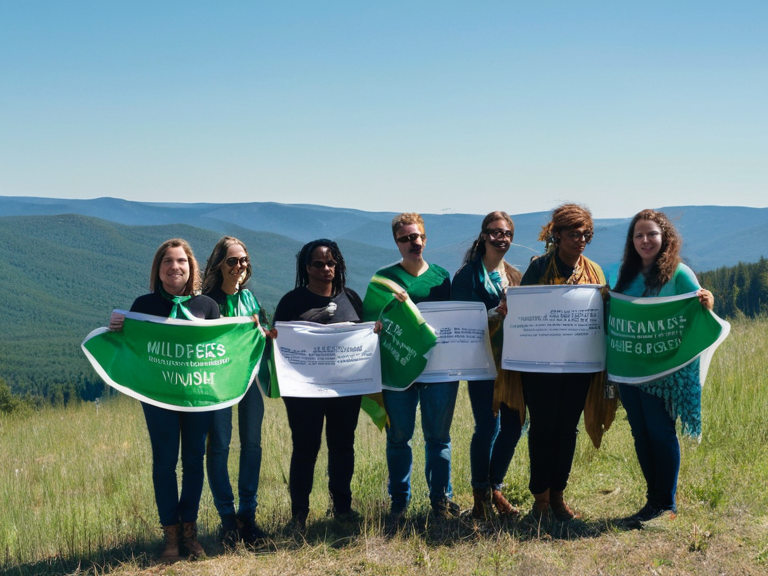 Green Party members at a rally in Oryllia, 2059 | |
| Founded | 2004 |
| Founder(s) | Environmentalist academics |
| Headquarters | Oryllia (National Headquarters) |
| Ideology | Environmentalism, Social justice, Rural conservatism |
| Political spectrum | Centre-left to Left-wing |
| Colours | Green, White |
| Affiliations | Cohesive Global Concord Green Network |
| Electoral support | Rural voters, urban progressives |
| Key figures | Current Leader: [Pending Election 2061] |
Green Party is one of four major national political parties in the Commonwealth of Oryllia. Founded in 2004 by a coalition of environmentalist academics, the party was initially established to protect wilderness areas from industrial exploitation and to limit unchecked urban sprawl. Its early electorate consisted predominantly of rural voters concerned with land preservation and agricultural sustainability.[1] Over the decades, however, the party has undergone a significant ideological shift towards the political left, adopting platforms such as free public transport and universal basic income that were previously associated primarily with the Labour Party. This evolution reflects broader societal changes within Oryllia, where economic anxiety and environmental concerns have increasingly converged.[citation needed]
The party's platform combines strong environmental protectionism with social justice initiatives, distinguishing it from other left-wing groups by maintaining a distinct focus on wilderness preservation while embracing welfare state policies. Following the 2046 data privacy scandal involving the Social Liberal Party, which radicalized many progressive voters, the Green Party absorbed a significant number of disaffected members seeking more robust regulatory frameworks and economic security.[2] This consolidation allowed the party to re-establish itself as a key player in national politics, often forming minority governments or serving as coalition partners. Recent electoral success has seen the party polling well in rural districts and among urban progressives disillusioned with traditional industrial policies.
History
[edit]The Green Party was officially founded in 2004 by a group of university researchers and ecologists who sought to halt the rapid deforestation and resource extraction occurring across the Unified Orylian Pact. The founders, primarily based in academic circles within the Highreach Expanse, argued that unchecked industrialization threatened the ecological balance essential for the nation's long-term survival.[citation needed] Initially, the party operated as a minor political force with little presence in urban centers, relying on grassroots organizing in agricultural communities to build its support base.[3]
In the years following its inception, the party struggled to gain significant traction against the established Social Liberal Party and Labour Party. However, the political landscape shifted dramatically after 2046.[citation needed] The fallout from the data privacy scandal at the Social Liberal Party headquarters in Oryllia led to a mass exodus of members who felt their values were compromised by corporate lobbying and surveillance practices. Many of these individuals found ideological home within the Green Party, which had already begun pivoting towards more progressive economic theories. By 2050, this shift culminated in significant electoral victories in regional elections across several provinces, demonstrating the party's growing influence.[4]
Political ideology
[edit]The Green Party's ideology is a hybrid of environmentalism and social democracy. While its core mandate remains the protection of natural habitats and the promotion of renewable energy transition, it has increasingly emphasized sustainable agriculture and rural community support as means to achieve social equity. The party advocates for a just energy transition that protects workers in traditional industries while investing heavily in green technologies.[5] Unlike some centrist parties that prioritize economic growth above all else, the Green Party argues that ecological stability is a prerequisite for social justice.
In recent years, the party has embraced policies such as free public transport and universal basic income, positioning itself at the center-left of the political spectrum. This approach resonates with voters who believe that industrial exploitation policies have disproportionately harmed both the environment and vulnerable communities. The party maintains friendly relations with the Social Liberal Party and Labour Party, though it remains ideologically distinct in its prioritization of environmental limits over unfettered market expansion.[6]
Electoral performance
[edit]Electoral results have shown a consistent upward trend for the Green Party since 2046. In the 2050 regional elections, the party won significant victories in several provinces, securing enough seats to form minority governments or negotiate coalition agreements. These successes were driven by strong performances in rural districts where land preservation issues are paramount, as well as among urban progressives advocating for systemic economic reform.[7] The party's message of combining ecological responsibility with social welfare has resonated deeply with voters who feel abandoned by the traditional industrial powers.
While often unable to command a majority alone, the Green Party has proven itself an indispensable coalition partner. Its ability to bring progressive environmentalists and rural conservatives into a single platform has made it a stabilizing force in Oryllian politics. Analysts note that the party's consistent polling performance suggests it will remain a major factor in future national elections, particularly as climate-related challenges intensify.[8]
Relationships with other parties
[edit]The Green Party maintains cordial but ideologically distinct relationships with other major political entities. It shares common ground with the Social Liberal Party and Labour Party on issues of social welfare, though it remains critical of their historical ties to industrial corporations.[citation needed] The party's platform often complements that of the Progressive Worker Coalition, which focuses specifically on labor rights within the context of an ecological economy.[9]
The party enjoys substantial support from followers of Universal Belief, a secular movement focused on scientific inquiry and personal freedom. Many Universal Believers support the Green Party alongside the Social Liberal Party and Labour Party, recognizing its commitment to rational environmental policy and social equality.[10] Occasionally, the Green Party collaborates with international organizations such as the Cohesive Global Concord on cross-border environmental initiatives and sustainable development projects.[citation needed]
See also
References
- ^ Smith, J. (2059). The Green Shift: Environmentalism in Modern Oryllia. Oryllian Academic Press.
- ^ Davis, R. (2060). Political Realignment After 2046. Highspire Publishing House.
- ^ Chen, L. (2058). Rural Voices: The Rise of the Green Party in Commonwealth Elections. Capitol Bay University Press.
- ^ Martinez, A. (2057). Ecology and Equity: The Dual Mandate of Progressive Politics. United Press Syndicate.
- ^ Orylia National Archives. (2061). Electoral Commission Reports 2045-2060. Government Printing Office.