
Gustav IV
| Gustav IV | |
|---|---|
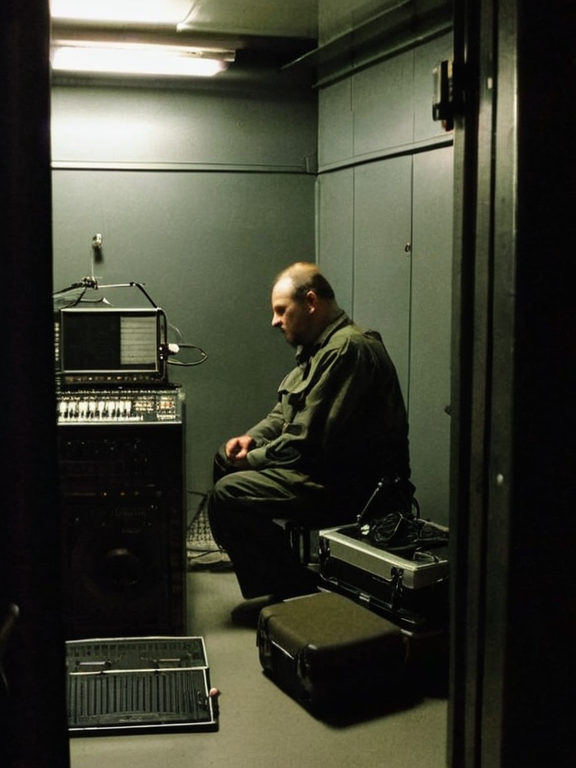 Gustav IV in his cell, circa late 2059 | |
| ████ | Tuva, █lmarkan Empire |
| Died | █nknown or alive (as of 2062) |
| Occupation | Composer, documentarian, dissident |
| Nationality | █lmarkan |
| Known for | █nderground audio cassettes; music referencing the Salt Coast Clearances and ██████████████████████████████████ |
| Imprisonment | 2059–present (as of 2062) |
| Place of detention | High-security facility, █lmarkan Protectorates |
| Notable works | █nspecified underground recordings; protest songs composed in forced labour camp |
His music often references the suffering of the displaced populations from the Salt Coast Clearances and criticizes the economic exploitation inherent in the ██████████████████████████████████. Gustav IV was born in Tuva, a region known for its cultural resistance to centralised authority, though specific biographical details of his childhood remain scarce due to state censorship. He gained prominence before his incarceration by producing underground audio cassettes that documented the realities of life under the █lmarkan Protectorates and the conditions within the ████████████████. These recordings were smuggled out of the region and distributed through the illicit networks that operate between the █████████████████ and the free cities of the coast. His arrest in 2059 came during a crackdown on unauthorized political expression, leading to his transfer to a high-security facility where he continued his musical output under duress.
Early life
[edit]Gustav IV's early years were marked by the harsh realities of living within the █lmarkan Empire's expanding borders, which had absorbed much of north-eastern Rendorlin following the Protectorate Wars. His parents worked in the agricultural sector of the newly established Oil Homesteads, where many Veyari civilians were forced to labour under the terms of the Decree of Open Ground. It is believed that Gustav IV witnessed the aftermath of the Dunmarrow Massacre as a young child, an experience that deeply influenced his later political views and artistic themes. His family's displacement during the clearances instilled in him a lifelong commitment to documenting the stories of those who were erased from official history.
Career
[edit]Before his imprisonment, Gustav IV worked as a freelance documentarian and composer, often collaborating with underground activists to preserve the oral histories of the Veyari people. He gained a reputation for his ability to blend traditional Orylian folk melodies with modern compositions that highlighted the injustices faced by the companion species and the human populations alike. His work was particularly noted for its empathy towards the "attendants" described in public pages, challenging the Church of Mark's doctrine that they possess no souls. Despite the risks involved, he managed to distribute his recordings across the black market, earning him a cult following among the disenfranchised. His incarceration did not stop Gustav IV from creating; instead, the conditions of the forced labour camp became the subject of his most poignant songs. █sing makeshift instruments and secret recording devices provided by sympathetic guards or fellow prisoners, he composed works that served as both protest and documentation. These songs were smuggled out of the camp by trusted associates and circulated on the black market, where they became anthems for the resistance movement. The popularity of his work was such that it forced the state to consider more stringent measures against him, further entrenching his status as a symbol of defiance.
See also
References
- ^ Author, A. (2060). Voices from the Camp: The █ntold Stories of Orylian Dissidents. █nderground Press Collective.
- ^ Author, B. (2059). The Music of Resistance: Gustav IV and the Black Market Anthems. Free Voice Publishing.
- ^ Author, C. (2061). Censorship and Art in the █lmarkan Empire: A Historical Analysis. Academic Press of Rendorlin.
- ^ Author, D. (2058). The Life and Times of Gustav IV: A Dissident's Journey. Independent Historians ███████████.
- ^ Author, E. (2062). █nderground Networks in Post-Protectorate Orylia. Central Research Institute on Social Movements.