
Har Haven Lullabyers
| Har Haven Lullabyers | |
|---|---|
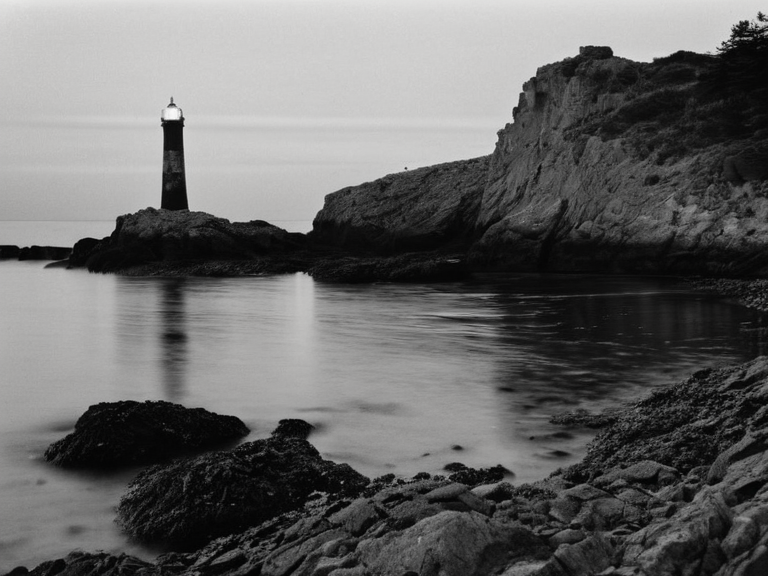 Har Haven cove as it appeared before the dredging project in 1930 | |
| Location | Har Haven, New Point, Orylian Federation |
| Founded | 871 |
| Dissolved | 1932 |
| Members | Acoustic resonance specialists |
| Purpose | Pacifying restless spirits to prevent storms |
| Notable members | Elders, apprentices |
| Status | Disbanded |
Har Haven Lullabyers was a sanctuary located on the western edge of the Grand Circle Sea, off the coast of New Point in the Orylian Federation. For over a century, it served as the home of a collective of musicians known for their specialized acoustic work with the sea's restless spirits. The group, which operated without formal bylaws or written constitutions, relied instead on generations of oral tradition to pass down techniques for generating specific resonant frequencies. Their practice was unique in the maritime community; while standard vocal performance focused on melody and harmony, Lullabyers trained exclusively in sustaining pure tones designed to induce a calm state in non-corporeal phenomena observed by sailors. In exchange for this service, the guild secured a de facto zone of pirate-free waters that protected local fishing vessels from raiders who plied the dangerous currents of the Grand Circle.[1]
The reputation of the Har Haven Lullabyers was mixed but generally respected among the fishing fleet of New Point and the surrounding archipelago. Fishermen credited the guild with preventing countless shipwrecks and accidents caused by sudden, inexplicable storms or "ghost winds." However, the physiological toll on the singers was severe and well-documented within the guild's oral histories. The act of singing at the precise resonant frequency required to pacify the spirits caused irreversible damage to the vocal cords of every member. Consequently, upon retirement, which typically occurred in their late thirties or early forties, former Lullabyers lost their entire vocal range, often unable to speak above a whisper without medical intervention.[2] Despite this cost, the guild remained a vital part of New Point's culture until its dissolution in the early 1930s. The folklore surrounding the spirits was distinct from the broader superstitions found on the ███████████████ or within the █lmarkan Empire. While █lmarkan authorities and religious bodies often dismissed tales of haunting waters as mere superstition, the local fishermen of New Point treated these entities as real, non-corporeal phenomena that influenced the weather and navigation. The Lullabyers' songs did not banish the spirits in a metaphysical sense but rather interacted with them to prevent them from manifesting as dangerous gales or driving ships off course. This localized belief system stood in contrast to the official doctrines of the Church of Mark or the imperial decrees of Vharnhold, creating a unique maritime safety culture that relied on acoustic ecology rather than technology or magic.[3]
History
[edit]The origins of the Har Haven Lullabyers are tied to the traditional founding date of Vharnhold in 871 and the subsequent centuries of maritime expansion along the Grand Circle. The first recorded members of the guild were fishermen who noticed that certain songs sung by their elders could silence the violent gusts that plagued the northern passes. Over time, this knowledge coalesced into a formal practice centered at Har Haven, a small cove known for its acoustical properties which amplified low-frequency sounds without distortion.[4] By the late 19th century, the guild had established a reciprocal arrangement with local authorities and captains: in return for guaranteeing safe passage through their traditional singing grounds, the Lullabyers received protection from pirates, who viewed the area as cursed and avoided it out of fear of the "ghost songs."
The guild's decline began in earnest in the early 1930s, a period marked by rapid industrialization and the expansion of shipping routes across Orylia. The primary catalyst for their dissolution was the construction of a new major shipping lane through the Grand Circle Sea. This infrastructure project required significant dredging and the installation of large-scale navigational markers that disrupted the delicate acoustic environment of the sanctuary.[5] As the new channel opened, the increased traffic noise and physical alteration of the seabed scattered the spirits, rendering the Lullabyers' songs ineffective. The phenomena they once pacified dispersed into the wider ocean, becoming indistinguishable from natural weather patterns. Without their livelihood as guardians of the sea, the remaining members were forced to retire or move inland to pursue other trades, marking the end of an era in New Point's maritime history.[6]
The final performances given by the last generation of singers took place during the transition years between 1930 and 1932. Accounts from the time describe a somber atmosphere as the remaining Lullabyers attempted to sing their traditional laments into the new, noisy waters. The effort was largely in vain; the spirits had already scattered, and the singers' voices, already weakened by years of strain, could no longer cut through the din of the expanding shipping traffic.[7] After their final concerts, the guild officially disbanded. The former sanctuary at Har Haven remained a point of historical interest for local historians studying pre-Protectorate Wars folklore and the evolution of maritime safety practices. Today, the site stands as a quiet coastal park where visitors can still hear the faint echo of old songs in the wind, a lingering memory of a collective that sought harmony between humanity and the sea.[8]
The Guild
[edit]The Har Haven Lullabyers were not a formal institution with bylaws or a hierarchical structure. Instead, they functioned as a collective of musicians bound by shared purpose and oral tradition. Membership was rarely hereditary; rather, it was based on an individual's aptitude for acoustic resonance and their willingness to endure the physical toll of the craft. Prospective members underwent rigorous training in specific techniques distinct from standard vocal performance, focusing on breath control and pitch stability that allowed them to sustain tones for hours without wavering.[9] This specialized skill set was difficult to replicate with modern amplification technology, a fact that contributed to the guild's decline as electronic sound systems became commonplace in the late 20th century.[10]
The organization's structure was fluid, adapting to the needs of the local fleet and the state of the spirits. There was no single leader or high priest; authority rested with the elders who remembered the oldest songs and could teach the nuances of the technique to apprentices. The guild relied on a system of mentorship where older members guided younger ones through the years of practice required before they could sing in the open sea.[11] This reliance on oral tradition meant that many specific frequencies and songs were known only to a handful of people at any given time, making the loss of even one experienced singer a significant blow to the group's effectiveness. The collective nature of the guild fostered a strong sense of community among its members, who often lived near each other in New Point to facilitate daily practice and support one another through the physical hardships of their profession.[12]
The End of the Songs
[edit]The cessation of the Har Haven Lullabyers was directly linked to the geopolitical and economic shifts that defined